MRC Cognition and Brain Sciences Unit, University of Cambridge, 15 Chaucer Road, Cambridge CB2 7EF, UK.
UCL Department of Experimental Psychology, 26 Bedford Way, London WC1H 0AP, UK.
Sci Adv. 2023 Jul 21;9(29):eade6903. doi: 10.1126/sciadv.ade6903.
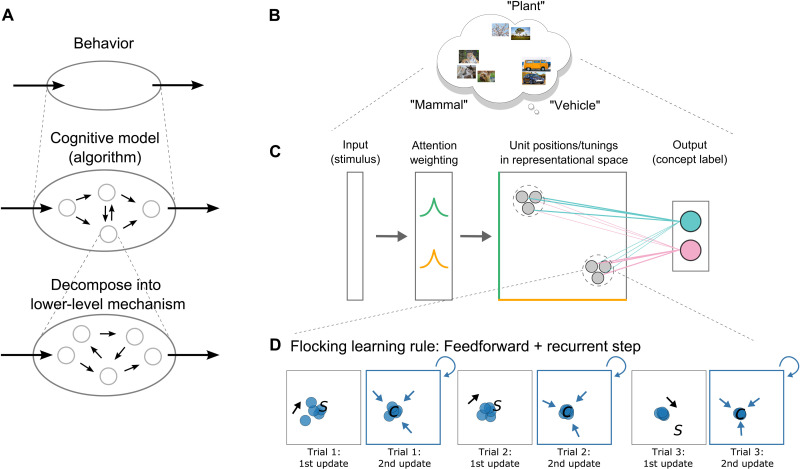
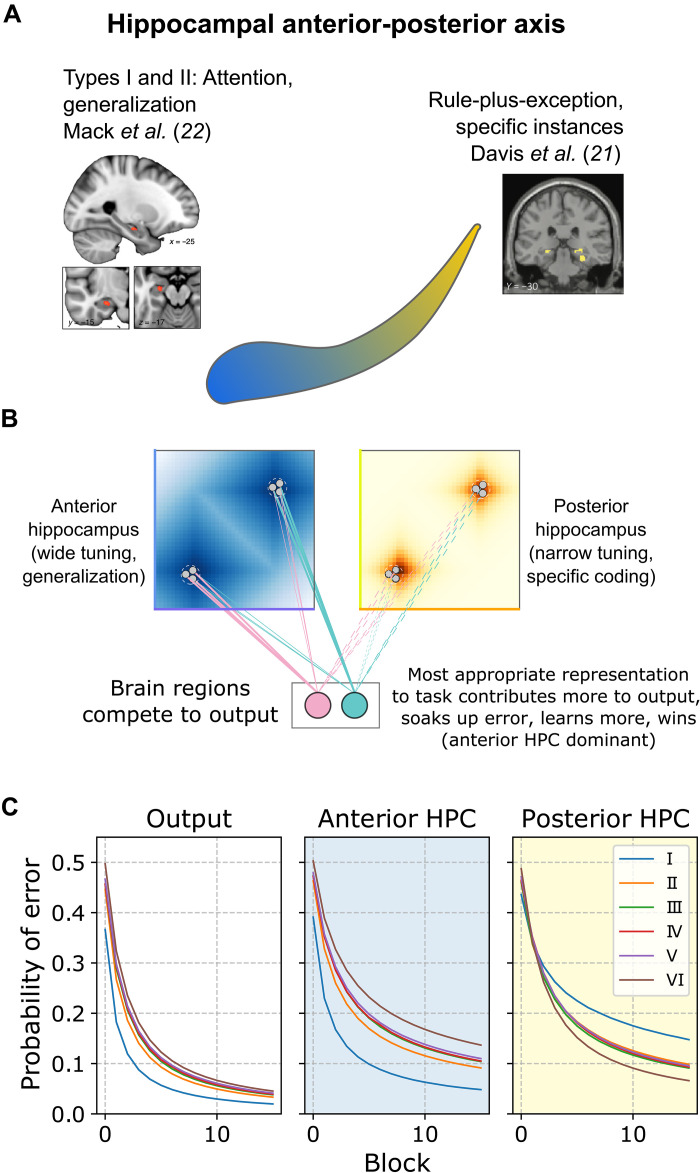
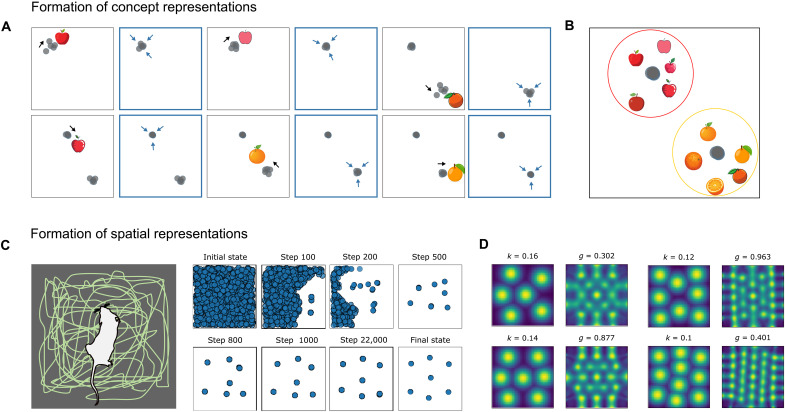
A complete neuroscience requires multilevel theories that address phenomena ranging from higher-level cognitive behaviors to activities within a cell. We propose an extension to the level of mechanism approach where a computational model of cognition sits in between behavior and brain: It explains the higher-level behavior and can be decomposed into lower-level component mechanisms to provide a richer understanding of the system than any level alone. Toward this end, we decomposed a cognitive model into neuron-like units using a neural flocking approach that parallels recurrent hippocampal activity. Neural flocking coordinates units that collectively form higher-level mental constructs. The decomposed model suggested how brain-scale neural populations coordinate to form assemblies encoding concept and spatial representations and why so many neurons are needed for robust performance at the cognitive level. This multilevel explanation provides a way to understand how cognition and symbol-like representations are supported by coordinated neural populations (assemblies) formed through learning.
完整的神经科学需要多层次的理论,以解决从高级认知行为到细胞内活动的各种现象。我们提出了对机制方法的扩展,在这种方法中,认知的计算模型位于行为和大脑之间:它解释了更高层次的行为,并且可以分解为更低层次的组成机制,从而提供比任何单一层次更丰富的系统理解。为此,我们使用类似于海马体活动的神经群集方法,将认知模型分解为类似神经元的单元。神经群集协调共同形成高级心理结构的单元。分解后的模型表明,大脑规模的神经群体如何协调形成编码概念和空间表示的集合,以及为什么在认知水平上需要如此多的神经元才能实现稳健的性能。这种多层次的解释提供了一种理解认知和类似符号的表示如何通过学习形成的协调神经群体(集合)来支持的方法。