• 文献检索
  • 文档翻译
  • 深度研究
  • 学术资讯
  • Suppr Zotero 插件Zotero 插件
  • 邀请有礼
  • 套餐&价格
  • 历史记录
应用&插件
Suppr Zotero 插件Zotero 插件浏览器插件Mac 客户端Windows 客户端微信小程序
定价
高级版会员购买积分包购买API积分包
服务
文献检索文档翻译深度研究API 文档MCP 服务
关于我们
关于 Suppr公司介绍联系我们用户协议隐私条款
关注我们

Suppr 超能文献

核心技术专利:CN118964589B侵权必究
粤ICP备2023148730 号-1Suppr @ 2026

文献检索

告别复杂PubMed语法,用中文像聊天一样搜索,搜遍4000万医学文献。AI智能推荐,让科研检索更轻松。

立即免费搜索

文件翻译

保留排版,准确专业,支持PDF/Word/PPT等文件格式,支持 12+语言互译。

免费翻译文档

深度研究

AI帮你快速写综述,25分钟生成高质量综述,智能提取关键信息,辅助科研写作。

立即免费体验

基泽尔——记录德国最年幼儿童食物摄入量的儿童营养调查。

KiESEL - The Children's Nutrition Survey to Record Food Consumption for the youngest in Germany.

作者信息

Nowak Nicole, Diouf Friederike, Golsong Nadine, Höpfner Tobias, Lindtner Oliver

机构信息

German Federal Institute for Risk Assessment, Berlin, Germany.

出版信息

BMC Nutr. 2022 Jul 14;8(1):64. doi: 10.1186/s40795-022-00527-6.

DOI:10.1186/s40795-022-00527-6
PMID:35836299
原文链接:https://pmc.ncbi.nlm.nih.gov/articles/PMC9284799/
Abstract

BACKGROUND

With KiESEL, the Children's Nutrition Survey to Record Food Consumption, the German Federal Institute for Risk Assessment (BfR) collected representative food consumption data for children aged six months up to five years. KiESEL was one of five modules of KiGGS Wave2 (German Health Interview and Examination Survey for Children and Adolescents) conducted by the Robert Koch Institute (RKI). The objective was to update the consumption data for children in Germany and to fill a data gap for the age group of five-year-old children. The study provides an up-to-date and comprehensive database that will be used for exposure assessment, as part of risk assessment of Germany's youngest consumers.

METHODS

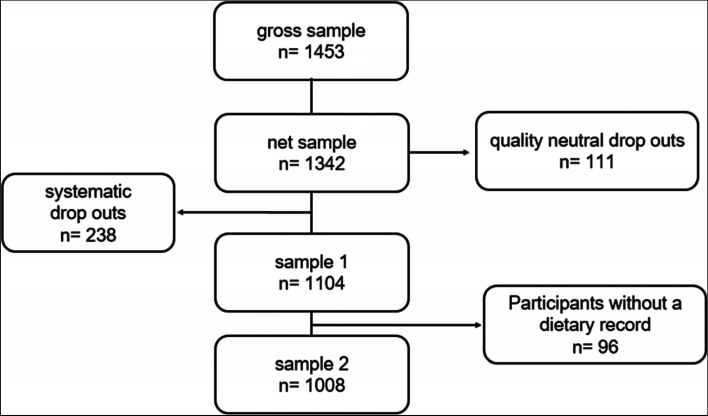
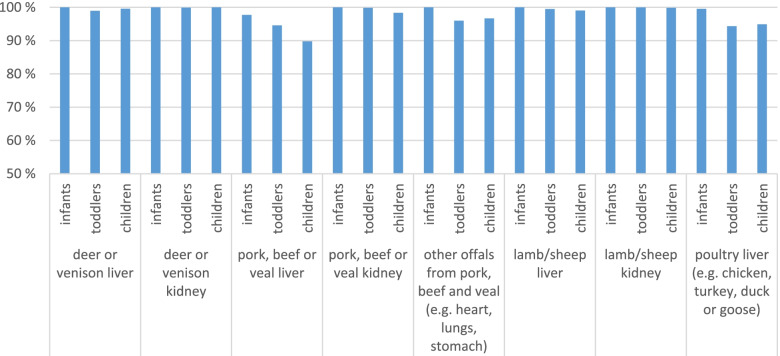
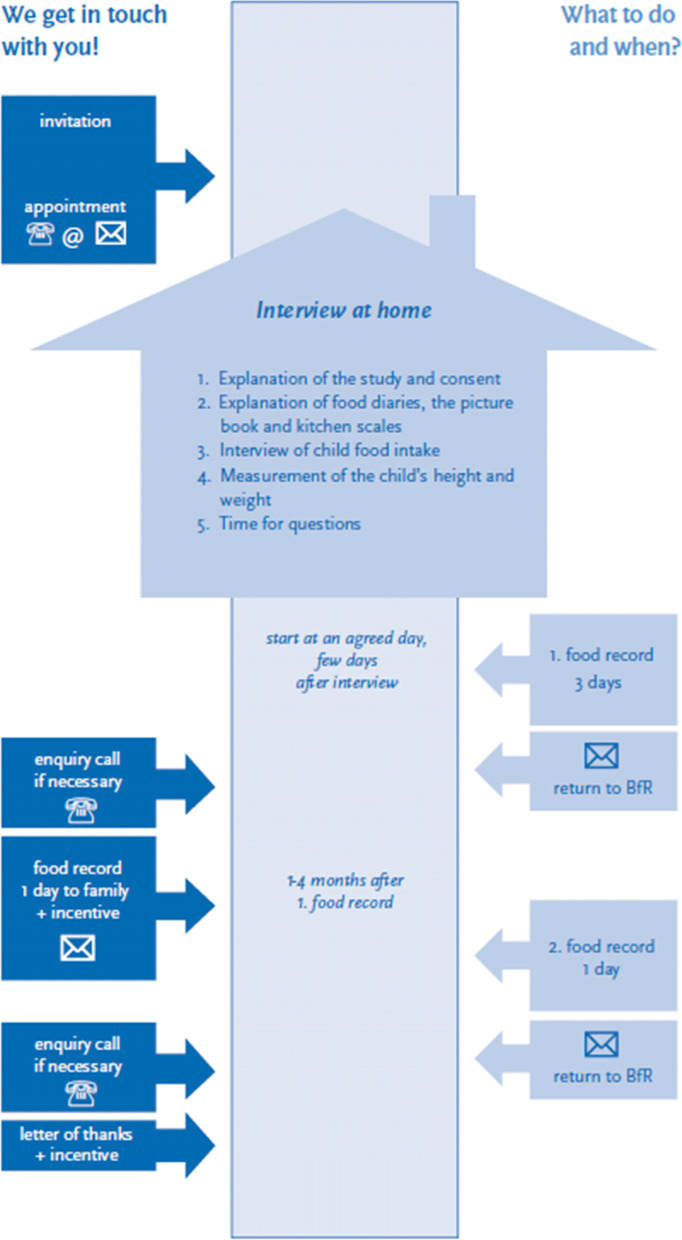
In the years 2014 to 2017, 1104 children from all over Germany participated in KiESEL. During home visits, survey staff conducted a questionnaire-based interview including a food propensity questionnaire (FPQ) on seldom eaten foods and questions concerning consumption outside home, dietary habits and diet during first year. The interviewer measured the children's height and weight. Families and childcare workers filled out a food record, covering three consecutive days and one independent day. Data are based on the FPQ and present consumption frequencies. Depending on the question, socioeconomic status (SES) and migration background were considered.

RESULTS

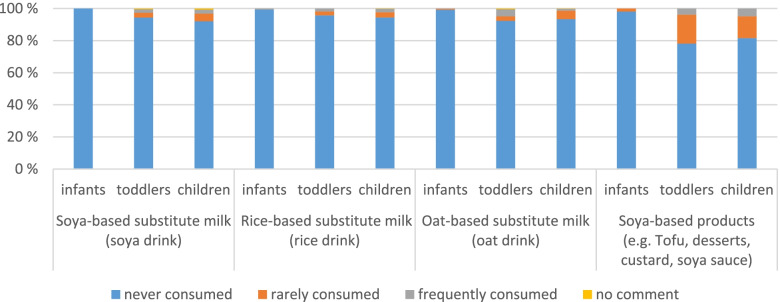
1104 participants had an interview and filled out the questionnaire on usual food intake, seldom eaten foods and consumption away from home. They were included in sample1. 1008 of these participants additionally reported food consumption of at least three days (sample2). 91.2% of the children follow no special diet and 0.8% are vegetarians. 7% of the older children consuming soya-drink. For some foods differences in consumption across SES or migration status were noted. Children from families with higher SES consume more often soya-based substitute milk as families with lower SES (p < 0.00005).

CONCLUSIONS

KiESEL gathered up-to-date consumption data for more than 1000 children living in Germany, aged six month up to including five years. The data will be used for risk assessments of the BfR and provided to national and international partners.

摘要

背景

德国联邦风险评估研究所(BfR)通过“儿童食物消费记录营养调查(KiESEL)”收集了6个月至5岁儿童具有代表性的食物消费数据。KiESEL是由罗伯特·科赫研究所(RKI)开展的德国儿童青少年健康访谈与检查调查(KiGGS Wave2)五个模块之一。其目的是更新德国儿童的消费数据,并填补5岁儿童年龄组的数据空白。该研究提供了一个最新且全面的数据库,将作为德国最年幼消费者风险评估的一部分用于暴露评估。

方法

2014年至2017年期间,来自德国各地的1104名儿童参与了KiESEL。在家庭访问期间,调查人员进行了基于问卷的访谈,包括一份关于很少食用食物的食物倾向问卷(FPQ)以及有关外出就餐、饮食习惯和一岁内饮食的问题。访谈人员测量了儿童的身高和体重。家庭和儿童保育工作者填写了一份食物记录,涵盖连续三天和一个独立日。数据基于FPQ并呈现消费频率。根据问题情况,考虑了社会经济地位(SES)和移民背景。

结果

1104名参与者接受了访谈并填写了关于日常食物摄入量、很少食用食物和外出就餐情况的问卷。他们被纳入样本1。其中1008名参与者还报告了至少三天的食物消费情况(样本2)。91.2%的儿童不遵循特殊饮食,0.8%是素食者。7%的大龄儿童饮用大豆饮料。注意到某些食物在不同社会经济地位或移民身份群体中的消费存在差异。社会经济地位较高家庭的儿童比社会经济地位较低家庭的儿童更常食用大豆基替代牛奶(p < 0.00005)。

结论

KiESEL收集了1000多名居住在德国、年龄从6个月至5岁儿童的最新消费数据。这些数据将用于德国联邦风险评估研究所的风险评估,并提供给国内和国际合作伙伴。
https://cdn.ncbi.nlm.nih.gov/pmc/blobs/d5dc/9284799/abe88173fa42/40795_2022_527_Fig8_HTML.jpg
https://cdn.ncbi.nlm.nih.gov/pmc/blobs/d5dc/9284799/cd1d24543bc2/40795_2022_527_Fig1_HTML.jpg
https://cdn.ncbi.nlm.nih.gov/pmc/blobs/d5dc/9284799/e341168b55f4/40795_2022_527_Fig2_HTML.jpg
https://cdn.ncbi.nlm.nih.gov/pmc/blobs/d5dc/9284799/1aff1c0171c7/40795_2022_527_Fig3_HTML.jpg
https://cdn.ncbi.nlm.nih.gov/pmc/blobs/d5dc/9284799/27ec76bb9d0f/40795_2022_527_Fig4_HTML.jpg
https://cdn.ncbi.nlm.nih.gov/pmc/blobs/d5dc/9284799/c6b13e10b686/40795_2022_527_Fig5_HTML.jpg
https://cdn.ncbi.nlm.nih.gov/pmc/blobs/d5dc/9284799/79a387b2c3ef/40795_2022_527_Fig6_HTML.jpg
https://cdn.ncbi.nlm.nih.gov/pmc/blobs/d5dc/9284799/24ac15df66fa/40795_2022_527_Fig7_HTML.jpg
https://cdn.ncbi.nlm.nih.gov/pmc/blobs/d5dc/9284799/abe88173fa42/40795_2022_527_Fig8_HTML.jpg
https://cdn.ncbi.nlm.nih.gov/pmc/blobs/d5dc/9284799/cd1d24543bc2/40795_2022_527_Fig1_HTML.jpg
https://cdn.ncbi.nlm.nih.gov/pmc/blobs/d5dc/9284799/e341168b55f4/40795_2022_527_Fig2_HTML.jpg
https://cdn.ncbi.nlm.nih.gov/pmc/blobs/d5dc/9284799/1aff1c0171c7/40795_2022_527_Fig3_HTML.jpg
https://cdn.ncbi.nlm.nih.gov/pmc/blobs/d5dc/9284799/27ec76bb9d0f/40795_2022_527_Fig4_HTML.jpg
https://cdn.ncbi.nlm.nih.gov/pmc/blobs/d5dc/9284799/c6b13e10b686/40795_2022_527_Fig5_HTML.jpg
https://cdn.ncbi.nlm.nih.gov/pmc/blobs/d5dc/9284799/79a387b2c3ef/40795_2022_527_Fig6_HTML.jpg
https://cdn.ncbi.nlm.nih.gov/pmc/blobs/d5dc/9284799/24ac15df66fa/40795_2022_527_Fig7_HTML.jpg
https://cdn.ncbi.nlm.nih.gov/pmc/blobs/d5dc/9284799/abe88173fa42/40795_2022_527_Fig8_HTML.jpg

相似文献

1
KiESEL - The Children's Nutrition Survey to Record Food Consumption for the youngest in Germany.基泽尔——记录德国最年幼儿童食物摄入量的儿童营养调查。
BMC Nutr. 2022 Jul 14;8(1):64. doi: 10.1186/s40795-022-00527-6.
2
KiESEL - the children's nutrition survey module in KiGGS Wave 2.基塞尔——德国儿童青少年健康监测与调查(KiGGS)第二轮中的儿童营养调查模块。
J Health Monit. 2017 Sep 27;2(Suppl 3):28-35. doi: 10.17886/RKI-GBE-2017-106. eCollection 2017 Sep.
3
Unfavorable food consumption in children up to school entry age: results from the nationwide German KiESEL study.入学前儿童的不良饮食消费:德国全国性基塞尔研究的结果。
Front Nutr. 2024 Jul 1;11:1335934. doi: 10.3389/fnut.2024.1335934. eCollection 2024.
4
Folic acid supplementation and malaria susceptibility and severity among people taking antifolate antimalarial drugs in endemic areas.在流行地区,服用抗叶酸抗疟药物的人群中,叶酸补充剂与疟疾易感性和严重程度的关系。
Cochrane Database Syst Rev. 2022 Feb 1;2(2022):CD014217. doi: 10.1002/14651858.CD014217.
5
Adherence to food-based dietary guidelines among adolescents in Germany according to socio-economic status and region: results from Eating Study as a KiGGS Module (EsKiMo) II.德国青少年根据社会经济地位和地区对基于食物的膳食指南的遵守情况:来自作为 KiGGS 模块的 Eating Study (EsKiMo) II 的结果。
Public Health Nutr. 2021 Apr;24(6):1216-1228. doi: 10.1017/S136898002100001X. Epub 2021 Jan 11.
6
[EsKiMo - the nutrition module in the German Health Interview and Examination Survey for Children and Adolescents (KiGGS)].[爱斯基摩人——德国儿童和青少年健康访谈与检查调查(KiGGS)中的营养模块]
Bundesgesundheitsblatt Gesundheitsforschung Gesundheitsschutz. 2007 May-Jun;50(5-6):902-8. doi: 10.1007/s00103-007-0254-2.
7
Beverage intake among preschool children and its effect on weight status.学龄前儿童的饮料摄入量及其对体重状况的影响。
Pediatrics. 2006 Oct;118(4):e1010-8. doi: 10.1542/peds.2005-2348.
8
Unfavorable nutrient intakes in children up to school entry age: results from the nationwide German KiESEL study.入学前儿童的不良营养摄入情况:德国全国性基塞尔研究的结果
Front Nutr. 2024 Jan 23;10:1302323. doi: 10.3389/fnut.2023.1302323. eCollection 2023.
9
[Dietary exposure assessment of substances in foods : The BfR MEAL study - the first German total diet study].[食品中物质的膳食暴露评估:德国联邦风险评估研究所膳食研究——德国首次总膳食研究]
Bundesgesundheitsblatt Gesundheitsforschung Gesundheitsschutz. 2017 Jul;60(7):689-696. doi: 10.1007/s00103-017-2566-1.
10
Examining the Frequency and Contribution of Foods Eaten Away From Home in the Diets of 18- to 30-Year-Old Australians Using Smartphone Dietary Assessment (MYMeals): Protocol for a Cross-Sectional Study.使用智能手机饮食评估(MYMeals)研究18至30岁澳大利亚人外出就餐食物在饮食中的频率和贡献:一项横断面研究方案
JMIR Res Protoc. 2018 Jan 26;7(1):e24. doi: 10.2196/resprot.9038.

引用本文的文献

1
Vitamin A concentration in bovine liver and milk does not only depend on characteristics of the farming system.牛肝和牛奶中的维生素A浓度不仅取决于养殖系统的特点。
NPJ Sci Food. 2025 Mar 17;9(1):32. doi: 10.1038/s41538-025-00397-9.
2
Critical vitamin D and iron intakes in infants aged 6-11 months: results from the nationwide German KiESEL study.6至11个月婴儿的关键维生素D和铁摄入量:德国全国性KiESEL研究的结果
Front Nutr. 2025 Feb 17;12:1472685. doi: 10.3389/fnut.2025.1472685. eCollection 2025.
3
Unfavorable food consumption in children up to school entry age: results from the nationwide German KiESEL study.

本文引用的文献

1
KiESEL - the children's nutrition survey module in KiGGS Wave 2.基塞尔——德国儿童青少年健康监测与调查(KiGGS)第二轮中的儿童营养调查模块。
J Health Monit. 2017 Sep 27;2(Suppl 3):28-35. doi: 10.17886/RKI-GBE-2017-106. eCollection 2017 Sep.
2
New data for action. Data collection for KiGGS Wave 2 has been completed.采取行动的新数据。德国儿童青少年健康监测与促进项目(KiGGS)第二轮的数据收集工作已经完成。
J Health Monit. 2017 Sep 27;2(Suppl 3):2-27. doi: 10.17886/RKI-GBE-2017-105. eCollection 2017 Sep.
3
German Environmental Survey for Children and Adolescents 2014-2017 (GerES V) - the environmental module of KiGGS Wave 2.
入学前儿童的不良饮食消费:德国全国性基塞尔研究的结果。
Front Nutr. 2024 Jul 1;11:1335934. doi: 10.3389/fnut.2024.1335934. eCollection 2024.
4
Results of the BfR MEAL Study: Acrylamide in foods from the German market with highest levels in vegetable crisps.德国联邦风险评估研究所(BfR)膳食研究结果:德国市场食品中的丙烯酰胺,蔬菜脆片中含量最高
Food Chem X. 2024 Apr 23;22:101403. doi: 10.1016/j.fochx.2024.101403. eCollection 2024 Jun 30.
5
Unfavorable nutrient intakes in children up to school entry age: results from the nationwide German KiESEL study.入学前儿童的不良营养摄入情况:德国全国性基塞尔研究的结果
Front Nutr. 2024 Jan 23;10:1302323. doi: 10.3389/fnut.2023.1302323. eCollection 2023.
6
National Nutrition Surveys Applying Dietary Records or 24-h Dietary Recalls with Questionnaires: A Scoping Review.全国营养调查应用膳食记录或 24 小时膳食回忆与问卷:范围综述。
Nutrients. 2023 Nov 9;15(22):4739. doi: 10.3390/nu15224739.
7
Reusability of Germany´s total diet study food list upon availability of new food consumption data-comparison of three update strategies.德国总膳食研究食品清单的可重复性在新食品消费数据可用性的基础上-三种更新策略的比较。
J Expo Sci Environ Epidemiol. 2023 Sep;33(5):794-804. doi: 10.1038/s41370-023-00522-4. Epub 2023 Feb 1.
2014 - 2017年德国儿童和青少年环境调查(GerES V)——KiGGS第二轮调查的环境模块。
J Health Monit. 2017 Sep 27;2(Suppl 3):45-51. doi: 10.17886/RKI-GBE-2017-108. eCollection 2017 Sep.
4
Prevalence of persons following a vegetarian diet in Germany.德国遵循素食饮食的人群比例。
J Health Monit. 2016 Dec 14;1(2):2-14. doi: 10.17886/RKI-GBE-2016-039. eCollection 2016 Dec.
5
Socioeconomic status and subjective social status measurement in KiGGS Wave 2.德国儿童青少年健康访谈与检查调查(KiGGS)第二轮中的社会经济地位和主观社会地位测量
J Health Monit. 2018 Mar 15;3(1):108-125. doi: 10.17886/RKI-GBE-2018-033. eCollection 2018 Mar.
6
Evaluation of Nutrient Intake and Food Consumption among Dutch Toddlers.评估荷兰幼儿的营养摄入量和食物消费情况。
Nutrients. 2021 May 1;13(5):1531. doi: 10.3390/nu13051531.
7
Exposure assessment of methylmercury in samples of the BfR MEAL Study.BfR MEAL 研究样本中甲基汞的暴露评估。
Food Chem Toxicol. 2021 Mar;149:112005. doi: 10.1016/j.fct.2021.112005. Epub 2021 Jan 22.
8
Total arsenic and water-soluble arsenic species in foods of the first German total diet study (BfR MEAL Study).食物中总砷和水溶性砷形态的研究——德国首次总膳食研究(BfR MEAL 研究)
Food Chem. 2021 Jun 1;346:128913. doi: 10.1016/j.foodchem.2020.128913. Epub 2021 Jan 5.
9
Risks for human health related to the presence of pyrrolizidine alkaloids in honey, tea, herbal infusions and food supplements.蜂蜜、茶、草药浸液和食品补充剂中存在吡咯里西啶生物碱对人体健康的风险。
EFSA J. 2017 Jul 27;15(7):e04908. doi: 10.2903/j.efsa.2017.4908. eCollection 2017 Jul.
10
Risk assessment of pyrrolizidine alkaloids in food of plant and animal origin.食品中植物源和动物源吡咯里西啶生物碱的风险评估。
Food Chem Toxicol. 2018 May;115:63-72. doi: 10.1016/j.fct.2018.03.005. Epub 2018 Mar 7.