Paściak Agnieszka, Marin Riccardo, Abiven Lise, Pilch-Wróbel Aleksandra, Misiak Małgorzata, Xu Wujun, Prorok Katarzyna, Bezkrovnyi Oleksii, Marciniak Łukasz, Chanéac Corinne, Gazeau Florence, Bazzi Rana, Roux Stéphane, Viana Bruno, Lehto Vesa-Pekka, Jaque Daniel, Bednarkiewicz Artur
Institute of Low Temperature and Structure Research, Polish Academy of Sciences, Okólna 2, 50-422 Wroclaw, Poland.
Nanomaterials for Bioimaging Group (nanoBIG), Departamento de Física de Materiales, Facultad de Ciencias, Universidad Autónoma de Madrid, C/Francisco Tomás y Valiente 7, Madrid 28049, Spain.
ACS Appl Mater Interfaces. 2022 Jul 18;14(29):33555-66. doi: 10.1021/acsami.2c08013.
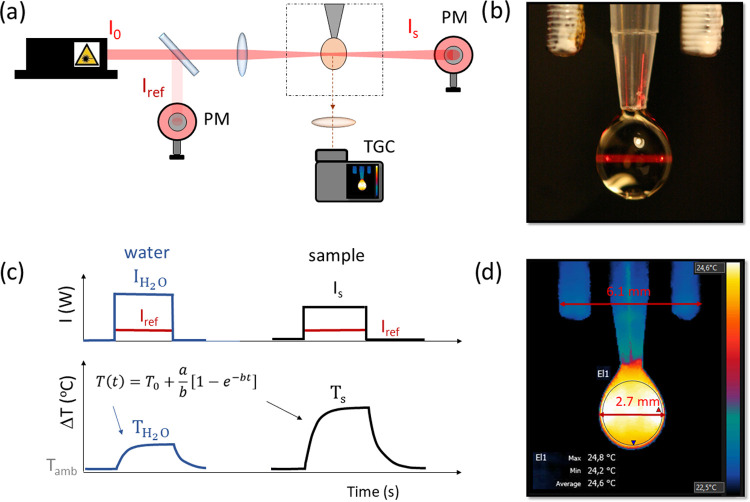
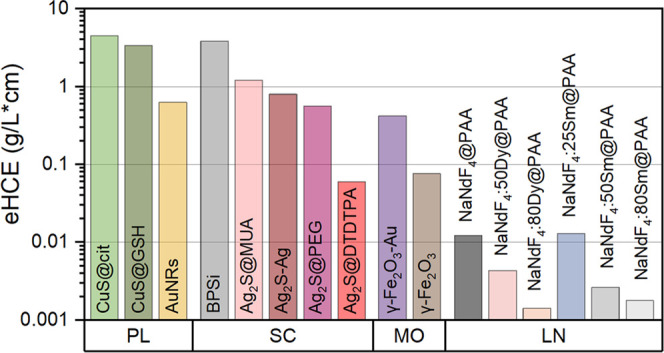
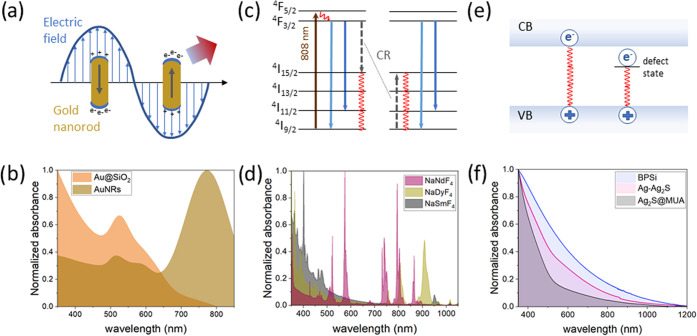
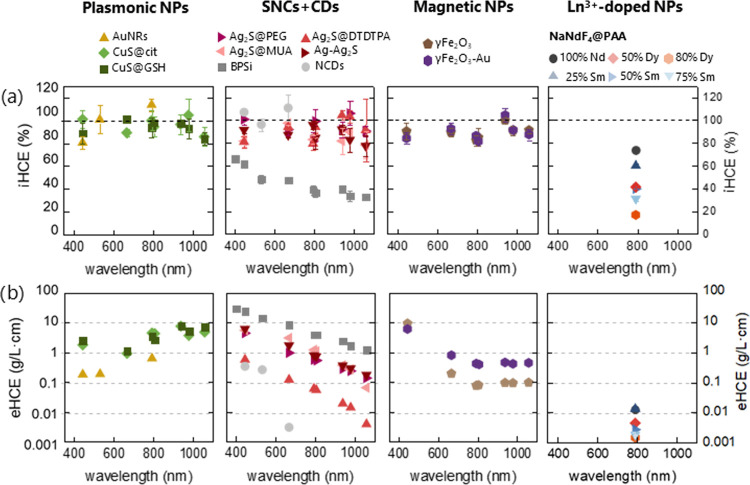
Functional colloidal nanoparticles capable of converting between various energy types are finding an increasing number of applications. One of the relevant examples concerns light-to-heat-converting colloidal nanoparticles that may be useful for localized photothermal therapy of cancers. Unfortunately, quantitative comparison and ranking of nanoheaters are not straightforward as materials of different compositions and structures have different photophysical and chemical properties and may interact differently with the biological environment. In terms of photophysical properties, the most relevant information to rank these nanoheaters is the light-to-heat conversion efficiency, which, along with information on the absorption capacity of the material, can be used to directly compare materials. In this work, we evaluate the light-to-heat conversion properties of 17 different nanoheaters belonging to different groups (plasmonic, semiconductor, lanthanide-doped nanocrystals, carbon nanocrystals, and metal oxides). We conclude that the light-to-heat conversion efficiency alone is not meaningful enough as many materials have similar conversion efficiencies─in the range of 80-99%─while they significantly differ in their extinction coefficient. We therefore constructed their qualitative ranking based on the external conversion efficiency, which takes into account the conventionally defined light-to-heat conversion efficiency and its absorption capacity. This ranking demonstrated the differences between the samples more meaningfully. Among the studied systems, the top-ranking materials were black porous silicon and CuS nanocrystals. These results allow us to select the most favorable materials for photo-based theranostics and set a new standard in the characterization of nanoheaters.
能够在各种能量类型之间转换的功能性胶体纳米颗粒正得到越来越多的应用。一个相关的例子是光热转换胶体纳米颗粒,它可能对癌症的局部光热治疗有用。不幸的是,由于不同组成和结构的材料具有不同的光物理和化学性质,并且与生物环境的相互作用可能不同,因此对纳米加热器进行定量比较和排名并非易事。就光物理性质而言,对这些纳米加热器进行排名最相关的信息是光热转换效率,它与材料的吸收能力信息一起,可用于直接比较材料。在这项工作中,我们评估了17种不同的纳米加热器的光热转换特性,这些纳米加热器属于不同的类别(等离子体、半导体、掺杂镧系元素的纳米晶体、碳纳米晶体和金属氧化物)。我们得出结论,仅光热转换效率的意义不够大,因为许多材料具有相似的转换效率(在80%-99%范围内),而它们的消光系数却有显著差异。因此,我们基于外部转换效率构建了它们的定性排名,该排名考虑了传统定义的光热转换效率及其吸收能力。这种排名更有意义地展示了样品之间的差异。在所研究的体系中,排名靠前的材料是黑色多孔硅和硫化铜纳米晶体。这些结果使我们能够为基于光的治疗诊断选择最有利的材料,并为纳米加热器的表征设定新的标准。