Faculty of Health, Department of Health Professions, Psychology, & Social Care, Manchester Metropolitan University, Manchester, United Kingdom.
Faculty of Health, Department of Psychology, Psychology, & Social Care, Manchester Metropolitan University, Manchester, United Kingdom.
PLoS One. 2022 Jul 21;17(7):e0271213. doi: 10.1371/journal.pone.0271213. eCollection 2022.
This review sought to address an evidence gap and lay a foundation for future Chronic Traumatic Encephalopathy (CTE) management studies by evaluating and appraising the literature which reports the effect that active rehabilitation has on other tauopathies, a group of conditions with hyperphosphorylation and aggregation of tau protein that can lead to neurodegeneration.
Umbrella review.
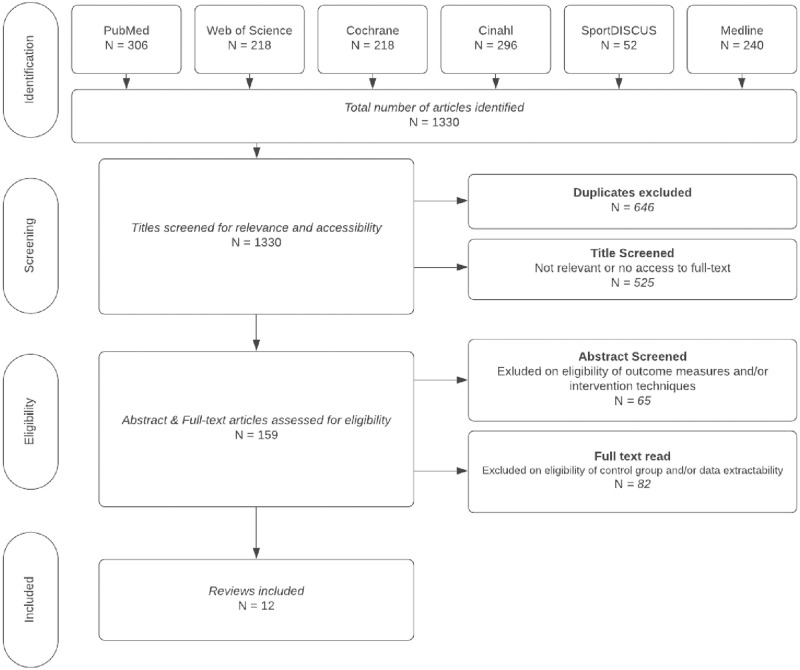
Meta-analyses and systematic reviews were identified using CINAHL, Medline, Cochrane, Web of Science, PubMed, and SPORTDiscus.
Systematic review or meta-analyses that examine the effect active rehabilitation has on outcome measures of symptoms associated with CTE. Studies with men and women diagnosed with Alzheimer's disease, Parkinson's disease, Lewy Body dementia, Frontotemporal degeneration/dementia or Corticobasal degeneration. All types of active rehabilitation were included. Control group was usual care, no intervention, or light-intensity physical activity.
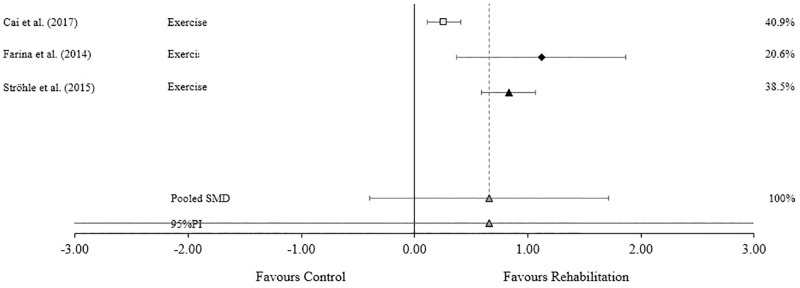
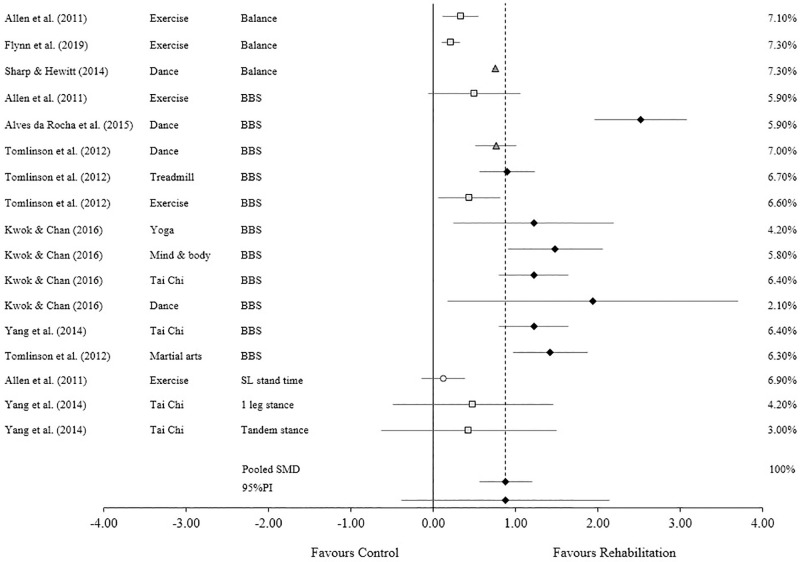
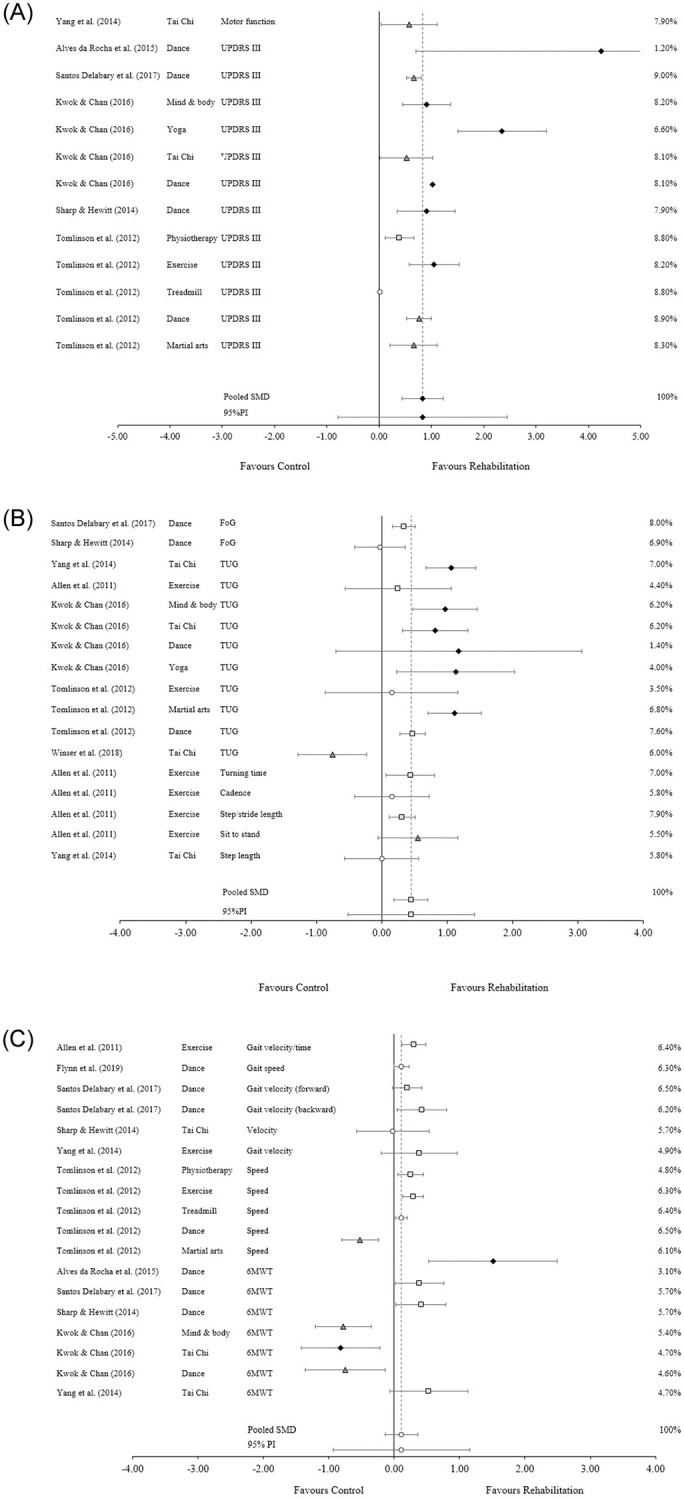
Twelve reviews were included. A large pooled standardized mean difference (SMD) was observed for balance (SMD = 0.88, P<0.001) and motor function (SMD = 0.83, P<0.001). A moderate pooled SMD was observed for cognitive function (SMD = 0.66, P<0.116). A small pooled SMD was observed for mobility (SMD = 0.45, P = 0.002). A trivial pooled SMD was observed for gait speed/velocity (SMD = 0.11, P = 0.372). No findings for mood/behavioral symptoms. All pooled effects demonstrated substantial to considerable heterogeneity (74.3% to 91.9%, P<0.001).
A positive effect of active rehabilitation was observed in patients with tau pathologies suffering from motor, vestibular and cognitive impairments supporting the use of active rehabilitation for CTE management; however, the findings need to be considered with caution given the limited research in some of the tau pathologies, large between-study heterogeneity and wide 95% prediction intervals.
通过评估和评价报告活跃康复对其他 tau 病影响的文献,为未来的慢性创伤性脑病 (CTE) 管理研究奠定基础,这种病是一组由于 tau 蛋白过度磷酸化和聚集导致神经退行性变的疾病。
伞式审查。
使用 CINAHL、Medline、Cochrane、Web of Science、PubMed 和 SPORTDiscus 确定了荟萃分析和系统评价。
系统评价或荟萃分析,检查活跃康复对与 CTE 相关症状的结局测量的影响。研究对象为男性和女性,诊断为阿尔茨海默病、帕金森病、路易体痴呆、额颞叶变性/痴呆或皮质基底节变性。包括所有类型的活跃康复。对照组为常规护理、无干预或低强度体力活动。
共纳入 12 项综述。观察到平衡(SMD = 0.88,P<0.001)和运动功能(SMD = 0.83,P<0.001)的大型 pooled 标准化均数差(SMD)。观察到认知功能的中度 pooled SMD(SMD = 0.66,P<0.116)。观察到移动性的小 pooled SMD(SMD = 0.45,P = 0.002)。观察到步态速度/速度的微不足道的 pooled SMD(SMD = 0.11,P = 0.372)。没有情绪/行为症状的发现。所有 pooled 效应均显示出高度至中度异质性(74.3%至 91.9%,P<0.001)。
在患有运动、前庭和认知障碍的 tau 病理患者中,活跃康复具有积极的影响,支持使用活跃康复来管理 CTE;然而,鉴于某些 tau 病理的研究有限、研究之间存在较大的异质性以及 95%预测区间较宽,这些发现需要谨慎考虑。