Department of Pulmonary Medicine, Affiliated Hospital of Jiangsu University, Zhenjiang, China.
Department of Respiratory Disease, Yancheng Third People's Hospital, Yancheng, China.
Cancer Med. 2023 Jan;12(2):1655-1672. doi: 10.1002/cam4.5013. Epub 2022 Jul 24.
Circulating long noncoding RNAs (lncRNAs) are considered a new class of biomarkers for the diagnosis and prognosis of various malignancies. We aimed to identify circulating lncRNAs as biomarkers for the diagnosis and prognosis of non-small cell lung cancer (NSCLC).
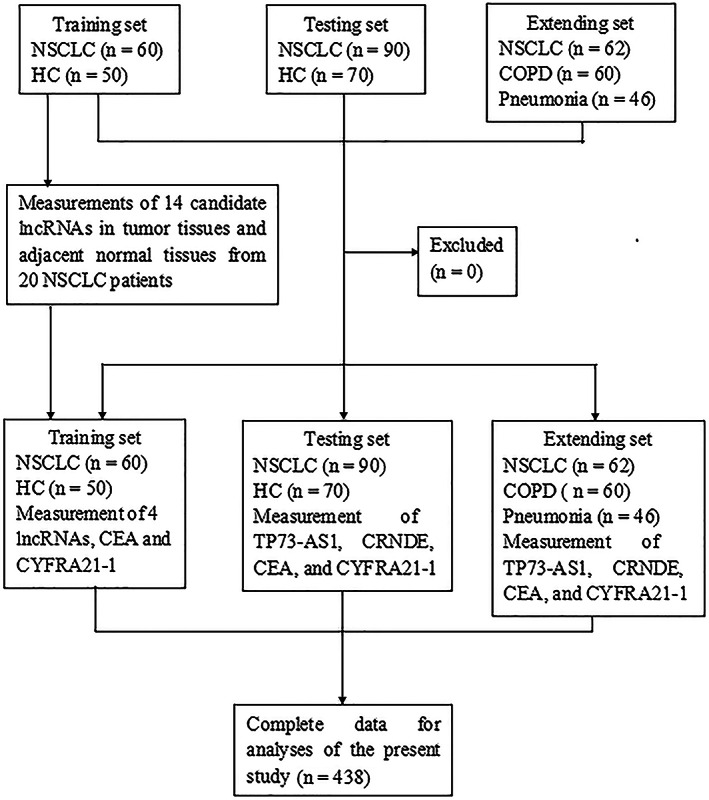
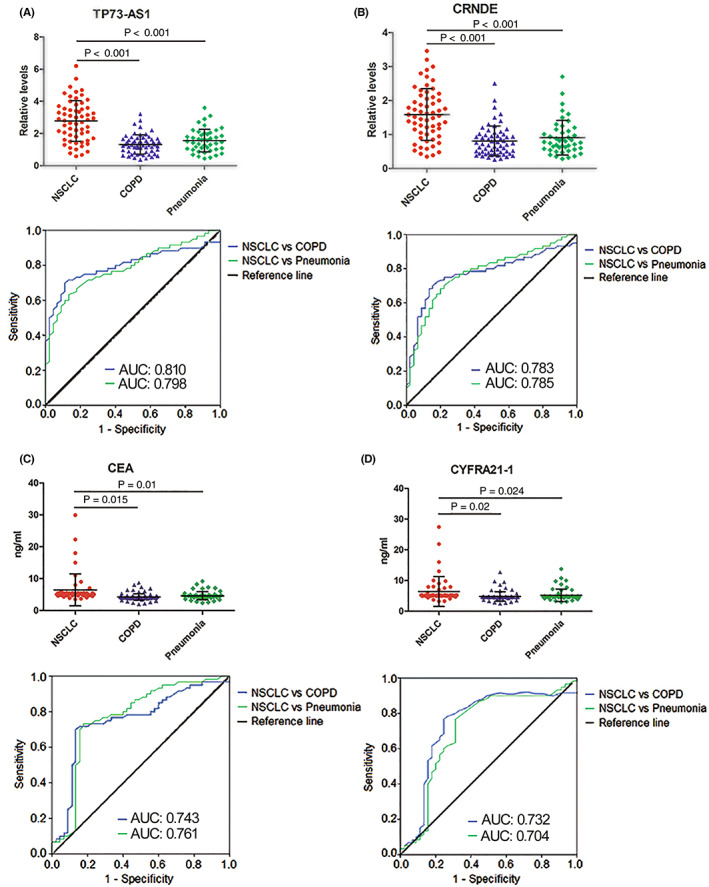
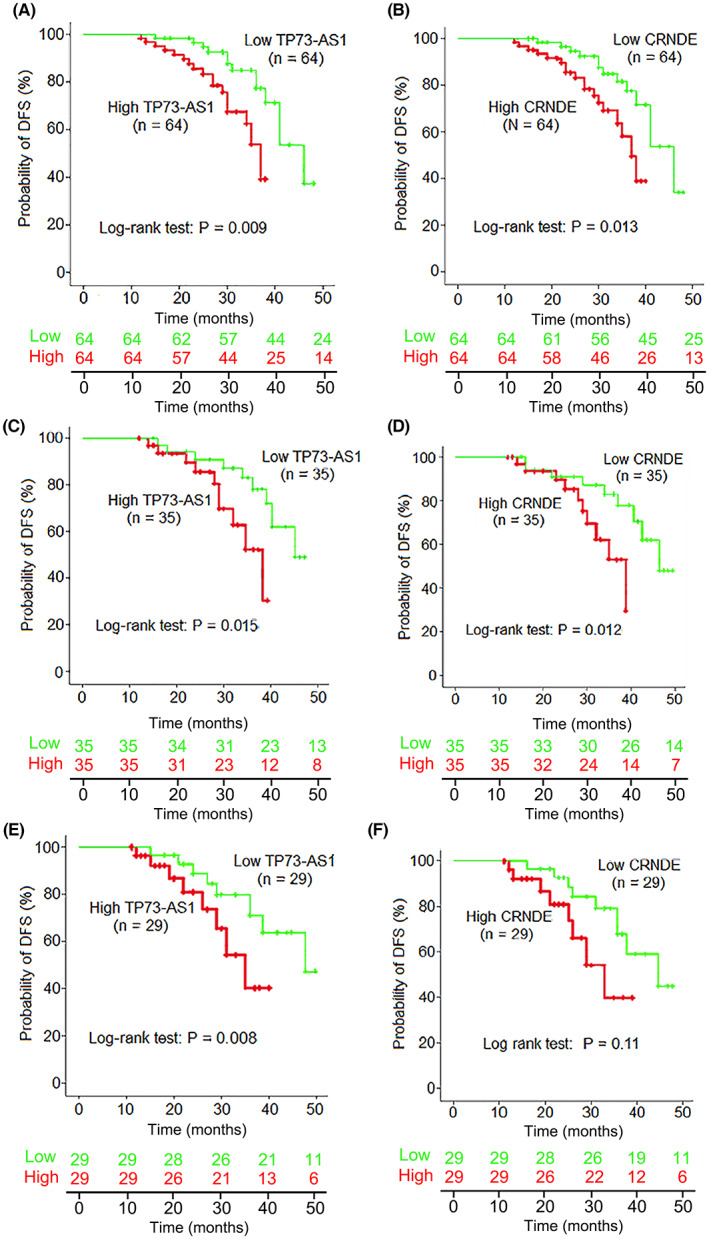
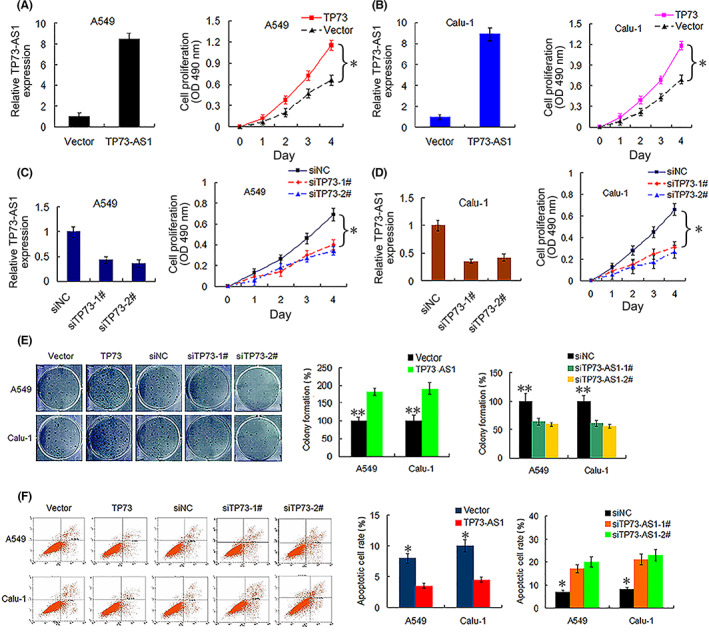
The expression of 14 candidate lncRNAs was measured in matched cancer and ipsilateral normal lung tissues of 20 patients with NSCLC using quantitative reverse-transcription PCR. In plasma samples from training and testing sets, significantly and aberrantly expressed lncRNAs, TA73-AS1 and CRNDE, were further analyzed. Receiver operating characteristic (ROC) curves were constructed, and the areas under the ROC curves (AUC) were obtained to assess diagnostic performance. The Kaplan-Meier survival analysis was used to assess the impact of plasma TA73-AS1 and CRNDE expression on tumor-free survival (TFS) of patients with NSCLC. The effect of TP73-AS1 expression on NSCLC cells was investigated in vitro.
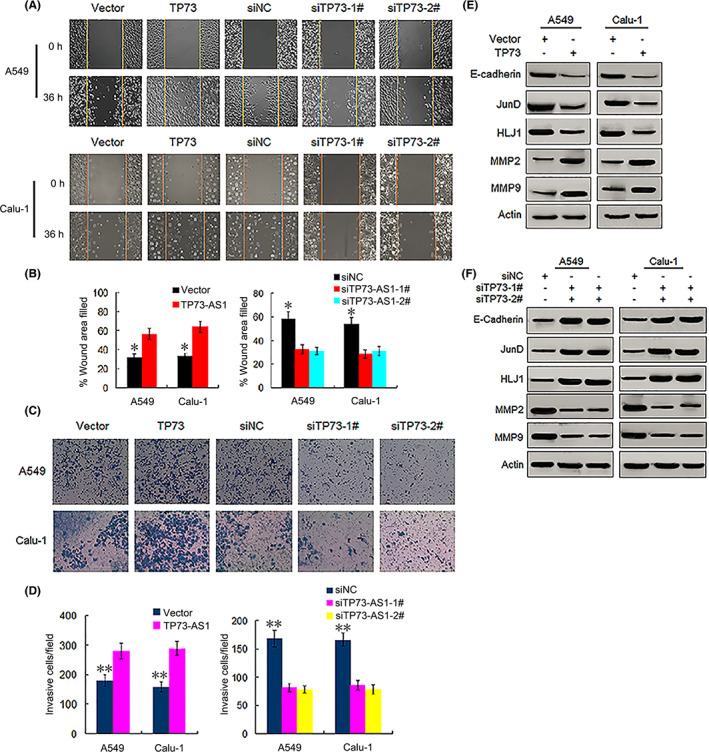
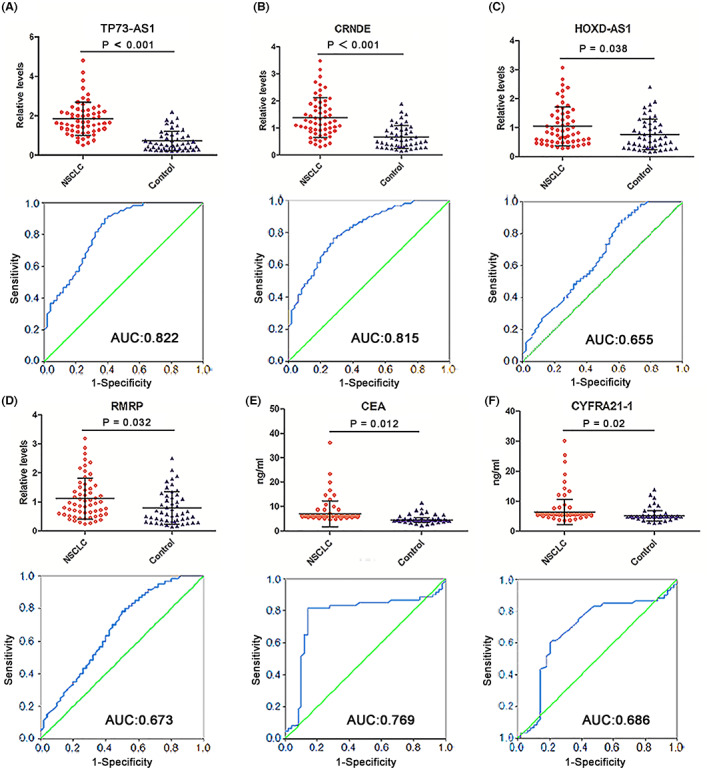
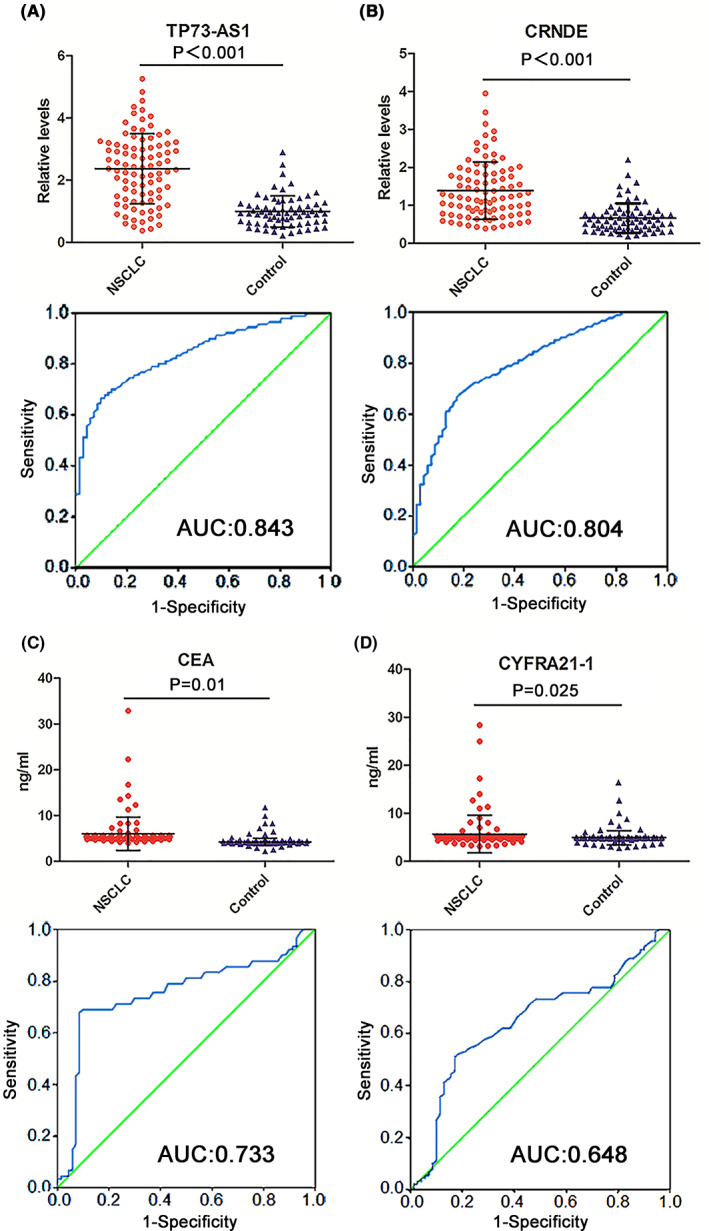
AUC values of plasma TA73-AS1 and CRNDE were 0.822 and 0.815 in the training set and 0.843 and 0.804 in the testing set, respectively, to distinguish NSCLC from healthy controls. The combination of plasma TP73-AS1, CRNDE, and two classical tumor markers, carcinoembryonic antigen (CEA) and cytokeratin 19 fragment (CYFRA21-1), showed excellent diagnostic performance for NSCLC (AUC =0.927 in the training set; AUC = 0.925 in the testing set). Furthermore, the high expression of the two plasma lncRNAs correlated with worse TFS in patients with NSCLC. In vitro cell model studies revealed that TP73-AS1 overexpression facilitated NSCLC cell survival, invasion, and migration.
Circulating TP73-AS1 and CRNDE could be potential biomarkers for the diagnosis and prognostic prediction of NSCLC.
循环长非编码 RNA(lncRNA)被认为是诊断和预测各种恶性肿瘤的一种新型生物标志物。我们旨在确定循环 lncRNA 作为非小细胞肺癌(NSCLC)诊断和预后的生物标志物。
采用实时定量逆转录 PCR 技术检测 20 例 NSCLC 患者癌组织及配对的同侧正常肺组织中 14 种候选 lncRNA 的表达情况。在训练集和测试集中,进一步分析血浆中差异表达且异常表达的 lncRNA,TA73-AS1 和 CRNDE。构建受试者工作特征(ROC)曲线,获得 ROC 曲线下面积(AUC)以评估诊断性能。采用 Kaplan-Meier 生存分析评估 NSCLC 患者血浆 TA73-AS1 和 CRNDE 表达对无肿瘤生存(TFS)的影响。在体外研究 TP73-AS1 表达对 NSCLC 细胞的影响。
血浆 TA73-AS1 和 CRNDE 在训练集和测试集区分 NSCLC 与健康对照的 AUC 值分别为 0.822 和 0.815,0.843 和 0.804。血浆 TP73-AS1、CRNDE 与两种经典肿瘤标志物癌胚抗原(CEA)和细胞角蛋白 19 片段(CYFRA21-1)联合对 NSCLC 具有良好的诊断性能(训练集 AUC=0.927;测试集 AUC=0.925)。此外,两种血浆 lncRNA 的高表达与 NSCLC 患者的 TFS 较差相关。体外细胞模型研究表明,TP73-AS1 过表达促进 NSCLC 细胞的存活、侵袭和迁移。
循环 TP73-AS1 和 CRNDE 可能是 NSCLC 诊断和预后预测的潜在生物标志物。