Knepp Kristen A, Knepp Michael M
Department of Family and Community Medicine, Northeast Ohio Medical University, Rootstown, OH USA.
Department of Psychology, Neuroscience, and Human Development, University of Mount Union, Alliance, OH USA.
Soc Psychol Educ. 2022;25(5):1113-1134. doi: 10.1007/s11218-022-09716-4. Epub 2022 Jul 18.
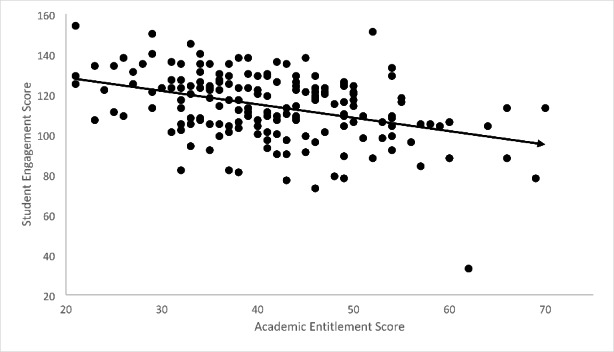
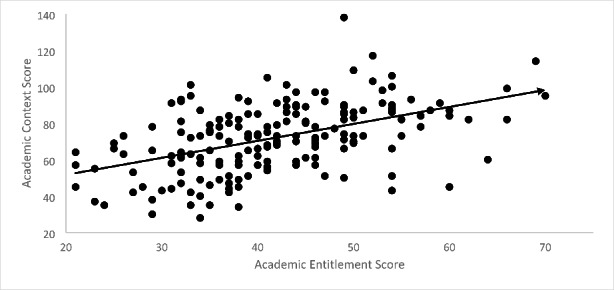
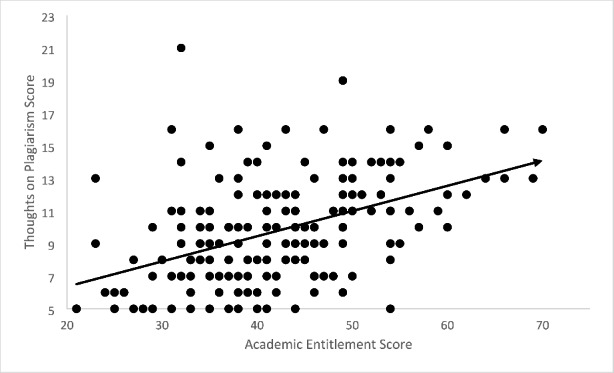
Previous research has indicated that academic entitlement can serve as a barrier between students and the benefits of a university education. As entitled students function as consumers and externalize responsibility for their learning outcomes, they risk lower grades and anti-intellectualism attitudes. This study explored how academic entitlement can be damaging to the student via engagement and social interaction deficits, as well as to faculty and the university at large through a lack of civility and appropriate classroom behaviors. One hundred ninety-seven undergraduate students completed scales on academic entitlement, student and schoolwork engagement, social adjustment to college, emotion regulation, plagiarism attitudes, classroom citizenship, and classroom incivility behaviors. Increased academic entitlement was associated with decreased engagement in and out of the classroom; poor social adjustment to university; poor academic emotion regulation strategies; a lack of appropriate classroom behaviors; and a greater acceptance of plagiarism, academic dishonesty, and incivility. Future research exploring how academic entitlement decreases university affiliation, commitment, and retention is recommended.
先前的研究表明,学术特权可能成为学生与大学教育益处之间的障碍。由于享有特权的学生将自己视为消费者,并将学习成果的责任外化,他们面临成绩较低和反智主义态度的风险。本研究探讨了学术特权如何通过参与度和社交互动不足对学生造成损害,以及如何通过缺乏文明和适当的课堂行为对教师和整个大学造成损害。197名本科生完成了关于学术特权、学生与学业参与度、对大学的社会适应、情绪调节、对抄袭的态度、课堂公民意识和课堂不文明行为的量表。学术特权的增加与课堂内外参与度的降低、对大学的社会适应不良、学术情绪调节策略不佳、缺乏适当的课堂行为以及对抄袭、学术不诚实和不文明行为的更大接受度相关。建议未来开展研究,探讨学术特权如何降低学生对大学的归属感、投入度和留校率。