Zhu Huaxin, Ouyang Hengyang, Pan Xinyi, Zhang Zhixiong, Tan Jiacong, Yu Nianzu, Li Meihua, Zhao Yeyu
Department of Neurosurgery, First Affiliated Hospital of Nanchang University, Nanchang, China.
Huankui Academy, Nanchang University, Nangchang, China.
Front Oncol. 2022 Jul 6;12:912101. doi: 10.3389/fonc.2022.912101. eCollection 2022.
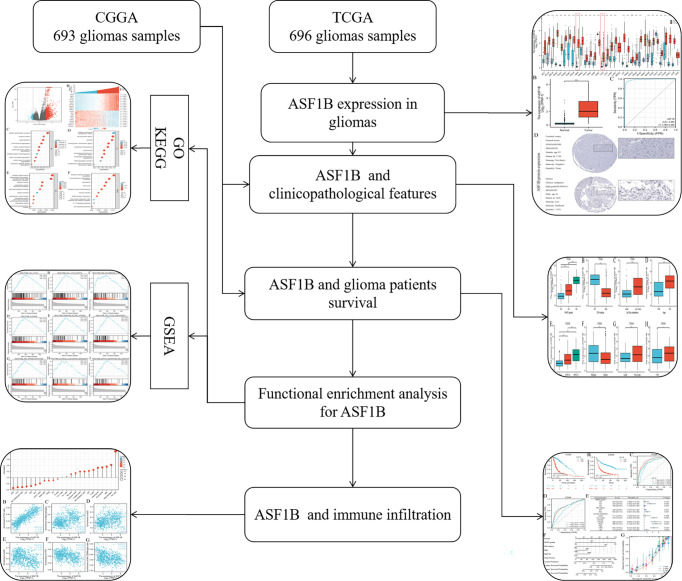
Several studies have suggested that anti-silencing function 1 B (ASF1B) can serve as a good potential marker for predicting tumor prognosis. But the values of ASF1B in gliomas have not been elucidated and further confirmation is needed.
Transcriptomic and clinical data were downloaded from The Cancer Genome Atlas database (TCGA), genotypic tissue expression (GTEx), and the Chinese Gliomas Genome Atlas database (CGGA). Univariate and multivariate Cox regression analyses were used to investigate the link between clinical variables and ASF1B. Survival analysis was used to assess the association between ASF1B expression and overall survival (OS). The relationship between ASF1B expression and OS was studied using survival analysis. To investigate the probable function and immunological infiltration, researchers used gene ontology (GO) analysis, gene set enrichment analysis (GSEA), and single-sample GSEA (ssGSEA).
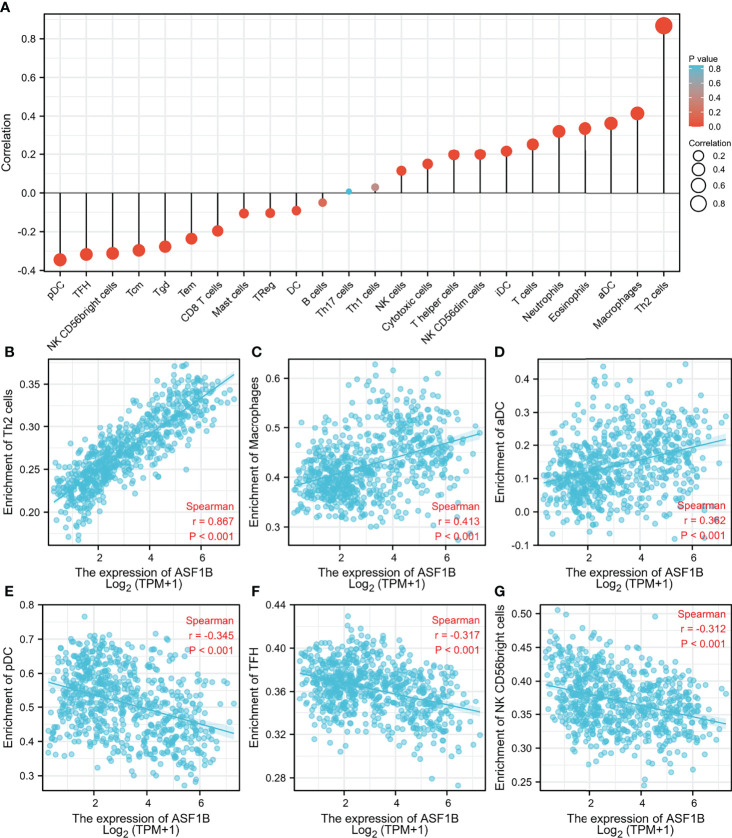
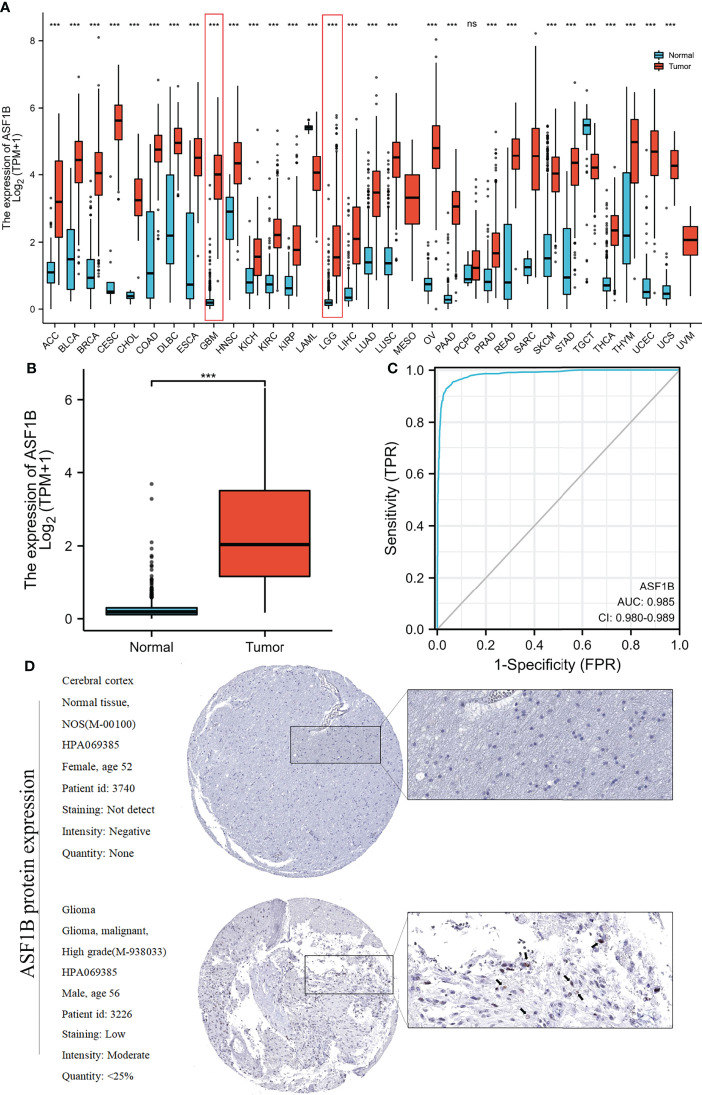
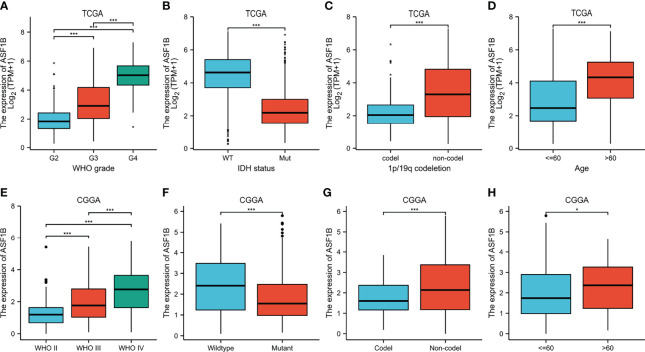
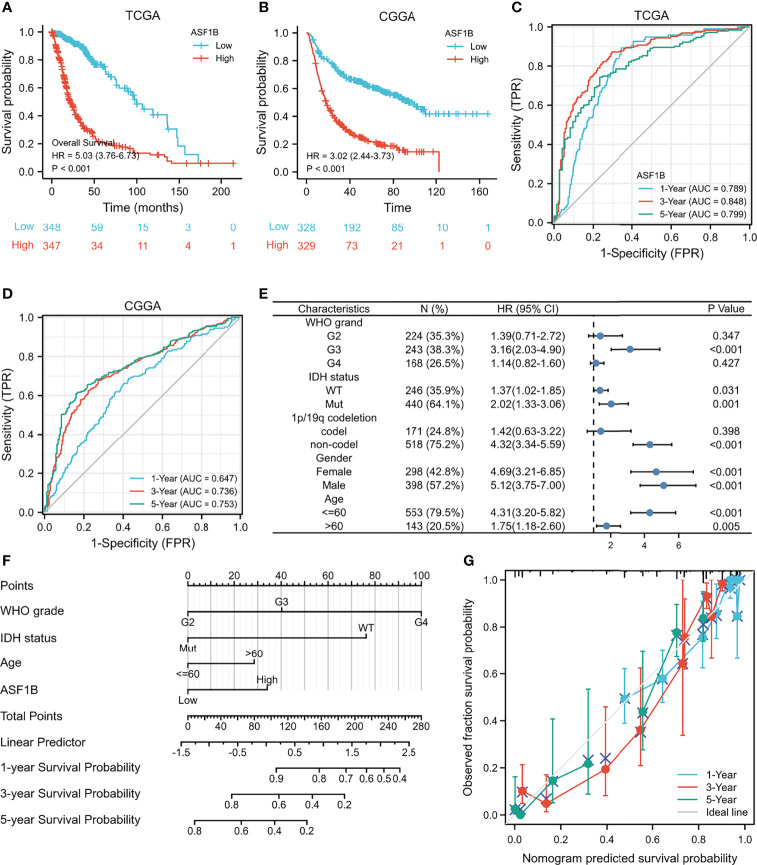
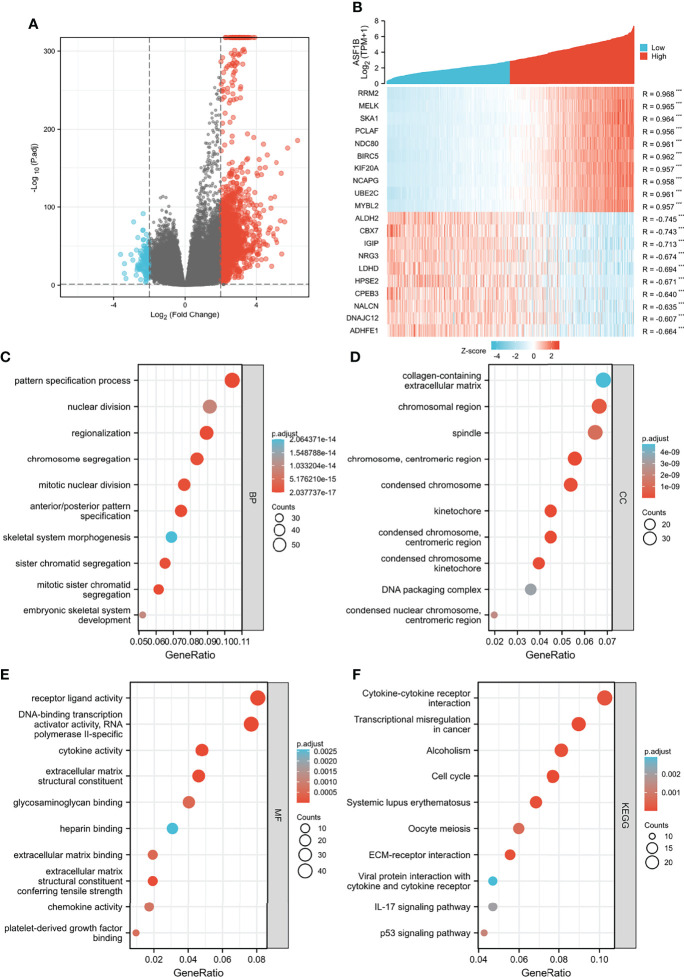
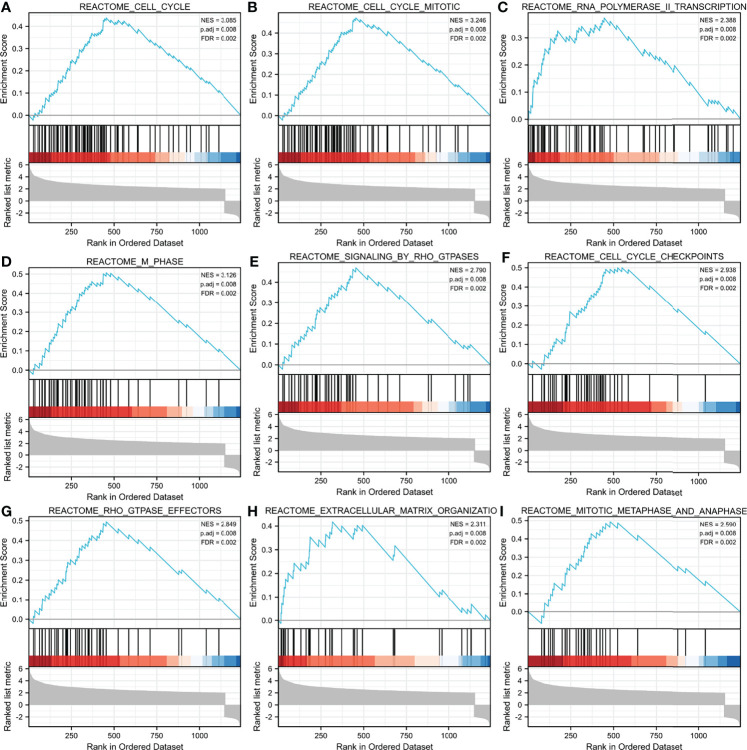
In glioma tissues, ASF1B expression was considerably higher than in normal tissues. The survival analysis found that increased ASF1B expression was linked with a poor prognosis in glioma patients. ASF1B demonstrated a high diagnostic value in glioma patients, according to a Receiver Operating Characteristic (ROC) analysis. ASF1B was found to be an independent predictive factor for OS in a Cox regression study (HR = 1.573, 95% CI: 1.053-2.350, p = 0.027). GO, KEGG, and GSEA functional enrichment analysis revealed that ASF1B was associated with nuclear division, cell cycle, m-phase, and cell cycle checkpoints. Immuno-infiltration analysis revealed that ASF1B was positively related to Th2 cells, macrophages, and aDC and was negatively related to pDC, TFH, and NK CD56 bright cells.
A high level of ASF1B mRNA expression was correlated with a poor prognosis in glioma patients in this study, implying that it could be a reliable prognostic biomarker for glioma patients.
多项研究表明,抗沉默功能1B(ASF1B)可作为预测肿瘤预后的良好潜在标志物。但ASF1B在胶质瘤中的价值尚未阐明,需要进一步证实。
从癌症基因组图谱数据库(TCGA)、基因型组织表达数据库(GTEx)和中国胶质瘤基因组图谱数据库(CGGA)下载转录组和临床数据。采用单因素和多因素Cox回归分析来研究临床变量与ASF1B之间的联系。生存分析用于评估ASF1B表达与总生存期(OS)之间的关联。使用生存分析研究ASF1B表达与OS之间的关系。为了研究其可能的功能和免疫浸润情况,研究人员采用了基因本体(GO)分析、基因集富集分析(GSEA)和单样本GSEA(ssGSEA)。
在胶质瘤组织中,ASF1B表达明显高于正常组织。生存分析发现,ASF1B表达增加与胶质瘤患者预后不良相关。根据受试者工作特征(ROC)分析,ASF1B在胶质瘤患者中具有较高的诊断价值。在Cox回归研究中发现ASF1B是OS的独立预测因素(HR = 1.573,95%CI:1.053 - 2.350,p = 0.027)。GO、KEGG和GSEA功能富集分析显示,ASF1B与核分裂、细胞周期、M期和细胞周期检查点相关。免疫浸润分析显示,ASF1B与Th2细胞、巨噬细胞和aDC呈正相关,与pDC、TFH和NK CD56bright细胞呈负相关。
本研究中ASF1B mRNA高表达与胶质瘤患者预后不良相关,这意味着它可能是胶质瘤患者可靠的预后生物标志物。