Wu Cuiyun, Yu Shufeng, Zhang Yang, Zhu Li, Chen Shuangxi, Liu Yang
Cancer Center, Department of Radiology, Zhejiang Provincial People's Hospital (Affiliated People's Hospital, Hangzhou Medical College), Hangzhou, China.
Cancer Center, Department of Ultrasound Medicine, Zhejiang Provincial People's Hospital (Affiliated People's Hospital, Hangzhou Medical College), Hangzhou, China.
Front Oncol. 2022 Jul 7;12:896002. doi: 10.3389/fonc.2022.896002. eCollection 2022.
To develop and validate an intuitive computed tomography (CT)-based radiomics nomogram for the prediction and risk stratification of early recurrence (ER) in hepatocellular carcinoma (HCC) patients after partial hepatectomy.
A total of 132 HCC patients treated with partial hepatectomy were retrospectively enrolled and assigned to training and test sets. Least absolute shrinkage and selection operator and gradient boosting decision tree were used to extract quantitative radiomics features from preoperative contrast-enhanced CT images of the HCC patients. The radiomics features with predictive value for ER were used, either alone or in combination with other predictive features, to construct predictive models. The best performing model was then selected to develop an intuitive, simple-to-use nomogram, and its performance in the prediction and risk stratification of ER was evaluated using the area under the receiver operating characteristic curve (AUC), calibration curve, and decision curve analysis (DCA).
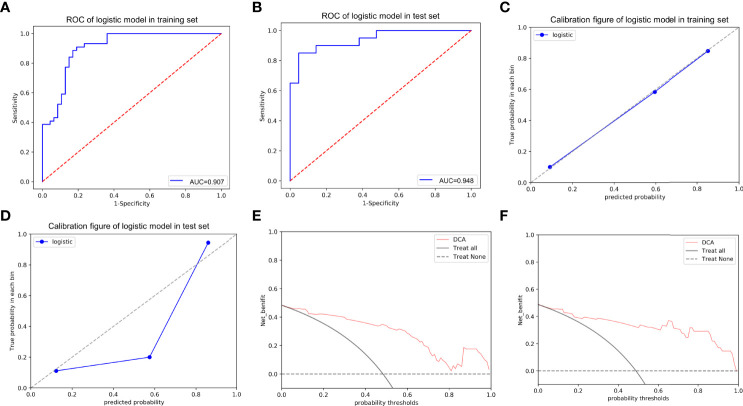
The radiomics model based on the radiomics score (Rad-score) achieved AUCs of 0.870 and 0.890 in the training and test sets, respectively. Among the six predictive models, the combined model based on the Rad-score, Edmondson grade, and tumor size had the highest AUCs of 0.907 in the training set and 0.948 in the test set and was used to develop an intuitive nomogram. Notably, the calibration curve and DCA for the nomogram showed good calibration and clinical application. Moreover, the risk of ER was significantly different between the high- and low-risk groups stratified by the nomogram (0.001).
The CT-based radiomics nomogram developed in this study exhibits outstanding performance for ER prediction and risk stratification. As such, this intuitive nomogram holds promise as a more effective and user-friendly tool in predicting ER for HCC patients after partial hepatectomy.
开发并验证一种基于计算机断层扫描(CT)的直观放射组学列线图,用于预测肝细胞癌(HCC)患者肝部分切除术后早期复发(ER)及进行风险分层。
回顾性纳入132例行肝部分切除术的HCC患者,并将其分为训练集和测试集。采用最小绝对收缩和选择算子以及梯度提升决策树从HCC患者术前增强CT图像中提取定量放射组学特征。将对ER具有预测价值的放射组学特征单独或与其他预测特征结合使用,构建预测模型。然后选择性能最佳的模型来开发直观、易用的列线图,并使用受试者操作特征曲线下面积(AUC)、校准曲线和决策曲线分析(DCA)评估其在ER预测和风险分层中的性能。
基于放射组学评分(Rad-score)的放射组学模型在训练集和测试集中的AUC分别为0.870和0.890。在六个预测模型中,基于Rad-score、Edmondson分级和肿瘤大小的联合模型在训练集中的AUC最高,为0.907,在测试集中为0.948,并用于开发直观的列线图。值得注意的是,列线图的校准曲线和DCA显示出良好的校准和临床应用效果。此外,通过列线图分层的高风险组和低风险组之间的ER风险存在显著差异(P=0.001)。
本研究开发的基于CT的放射组学列线图在ER预测和风险分层方面表现出色。因此,这种直观的列线图有望成为预测肝部分切除术后HCC患者ER的更有效且用户友好的工具。