Kuhl-Nagel Theresa, Rodriguez Patricia Antonia, Gantner Isabella, Chowdhury Soumitra Paul, Schwehn Patrick, Rosenkranz Maaria, Weber Baris, Schnitzler Jörg-Peter, Kublik Susanne, Schloter Michael, Rothballer Michael, Falter-Braun Pascal
Institute for Network Biology, Helmholtz Center Munich, German Research Center for Environmental Health (GmbH), Neuherberg, Germany.
Microbe-Host Interactions, Faculty of Biology, Ludwig-Maximilians-University of Munich, Munich, Germany.
Front Microbiol. 2022 Jun 27;13:923515. doi: 10.3389/fmicb.2022.923515. eCollection 2022.
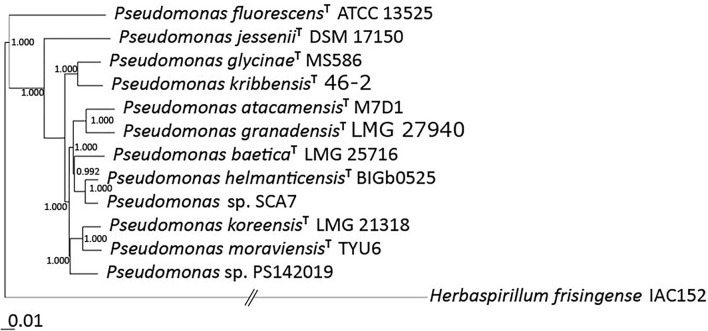
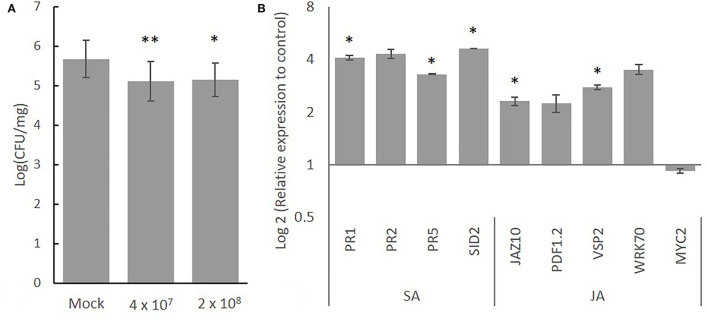
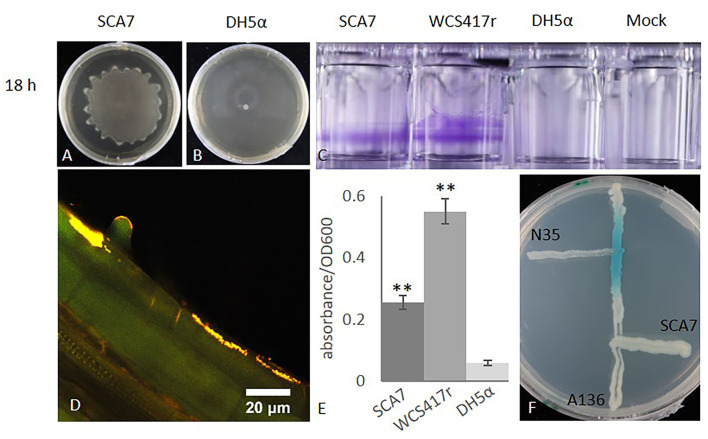
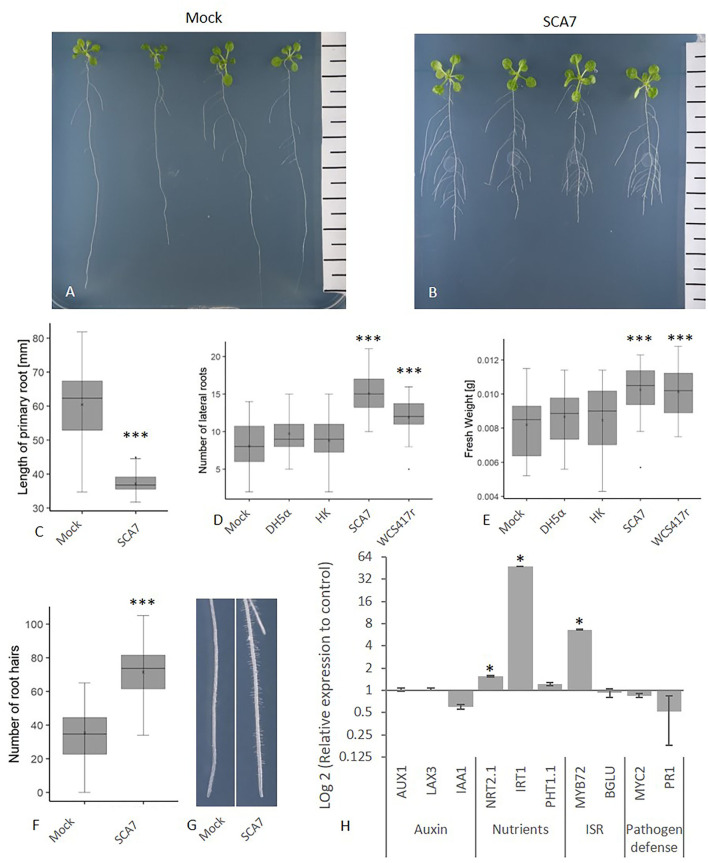
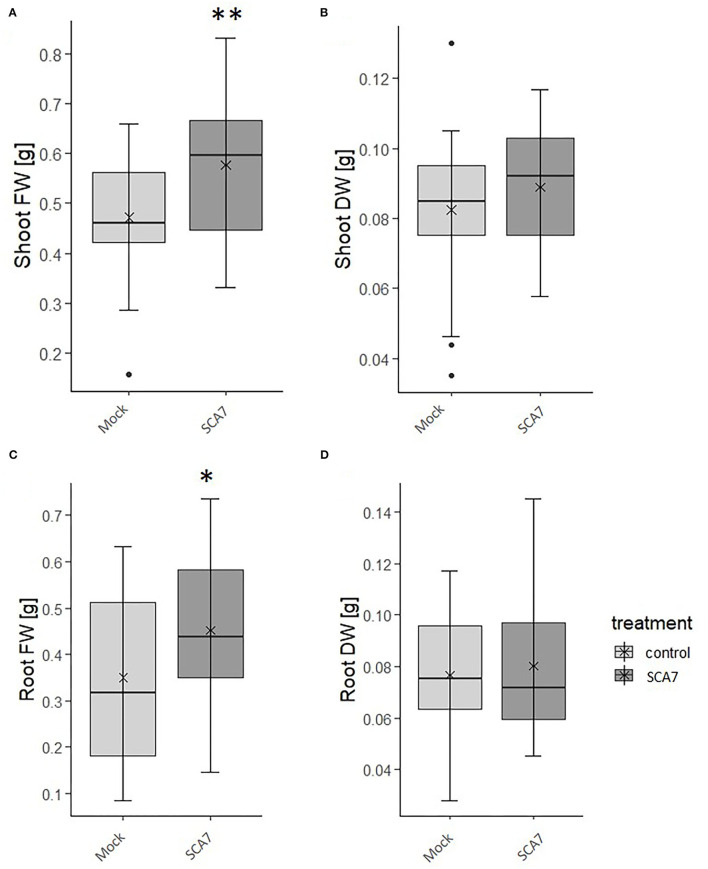
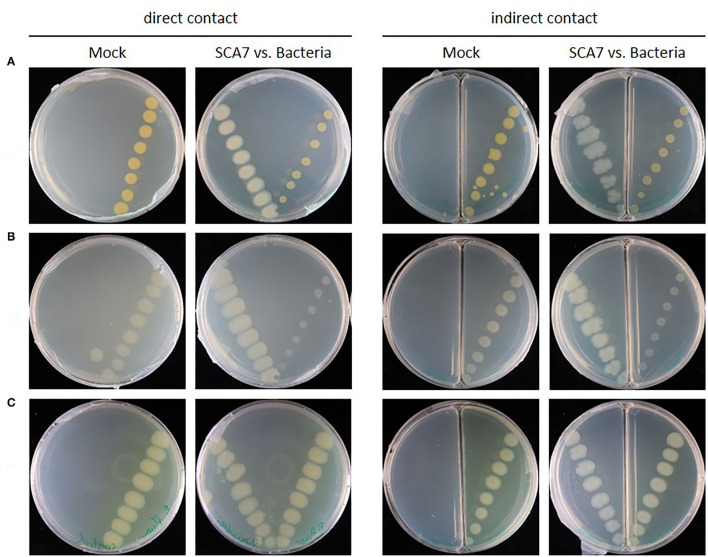
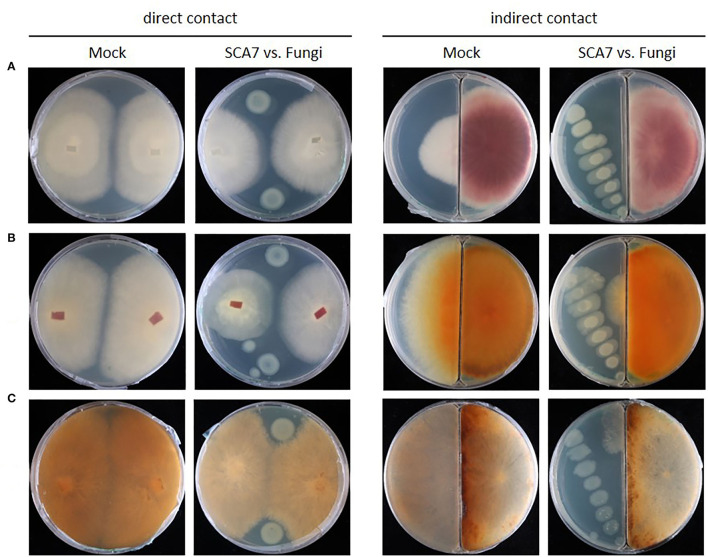
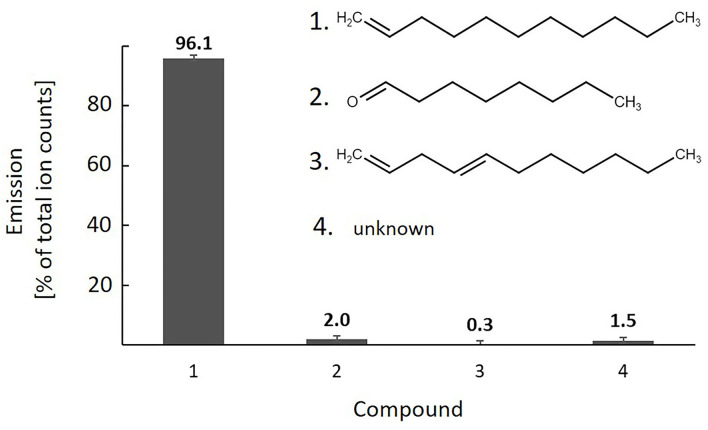
sp. SCA7, characterized in this study, was isolated from roots of the bread wheat . Sequencing and annotation of the complete SCA7 genome revealed that it represents a potential new sp. with a remarkable repertoire of plant beneficial functions. and experiments with the reference dicot plant and the original monocot host were conducted to identify the functional properties of SCA7. The isolate was able to colonize roots, modify root architecture, and promote growth in . Moreover, the isolate increased plant fresh weight in under unchallenged conditions. Gene expression analysis of SCA7-inoculated indicated a role of SCA7 in nutrient uptake and priming of plants. Moreover, confrontational assays of SCA7 with fungal and bacterial plant pathogens revealed growth restriction of the pathogens by SCA7 in direct as well as indirect contact. The latter indicated involvement of microbial volatile organic compounds (mVOCs) in this interaction. Gas chromatography-mass spectrometry (GC-MS) analyses revealed 1-undecene as the major mVOC, and octanal and 1,4-undecadiene as minor abundant compounds in the emission pattern of SCA7. Additionally, SCA7 enhanced resistance of against infection with the plant pathogen DC3000. In line with these results, SA- and JA/ET-related gene expression in during infection with DC3000 was upregulated upon treatment with SCA7, indicating the ability of SCA7 to induce systemic resistance. The thorough characterization of the novel sp. SCA7 showed a remarkable genomic and functional potential of plant beneficial traits, rendering it a promising candidate for application as a biocontrol or a biostimulation agent.
本研究中鉴定的SCA7菌株,是从小麦根部分离得到的。对SCA7完整基因组的测序和注释表明,它代表了一种具有显著植物有益功能的潜在新菌株。我们使用参考双子叶植物和原始单子叶宿主进行了实验,以确定SCA7的功能特性。该分离株能够定殖于根部,改变根系结构,并促进[植物名称]的生长。此外,在未受胁迫条件下,该分离株增加了[植物名称]的鲜重。对接种SCA7的[植物名称]进行基因表达分析表明,SCA7在植物养分吸收和引发过程中发挥作用。此外,SCA7与植物真菌和细菌病原体的对峙试验表明,SCA7在直接和间接接触中均能限制病原体的生长。后者表明微生物挥发性有机化合物(mVOCs)参与了这种相互作用。气相色谱-质谱(GC-MS)分析显示,1-十一碳烯是SCA7排放模式中的主要mVOC,辛醛和1,4-十一碳二烯是次要的丰富化合物。此外,SCA7增强了[植物名称]对植物病原体丁香假单胞菌DC3000感染的抗性。与这些结果一致,在用SCA7处理后,丁香假单胞菌DC3000感染期间[植物名称]中与水杨酸(SA)和茉莉酸/乙烯(JA/ET)相关的基因表达上调,表明SCA7具有诱导系统抗性的能力。对新型菌株SCA7的全面表征显示了其在植物有益性状方面具有显著的基因组和功能潜力,使其成为作为生物防治或生物刺激剂应用的有前途的候选者。