Department of Mechanical and Industrial Engineering, University of Illinois at Chicago (UIC), 842 W Taylor Street, MC 251, Chicago, IL, 60607, USA.
Departments of Medicine and Pharmacy Systems, Outcomes and Policy, UIC, Chicago, USA.
BMC Med Inform Decis Mak. 2022 Jul 25;22(1):194. doi: 10.1186/s12911-022-01934-2.
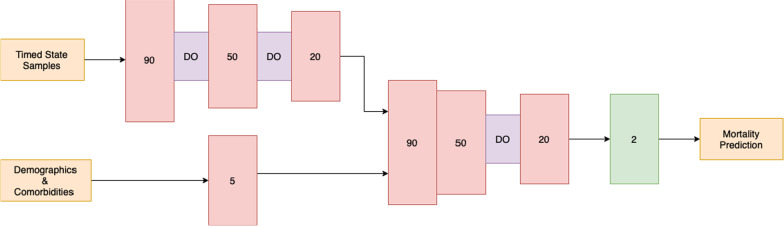
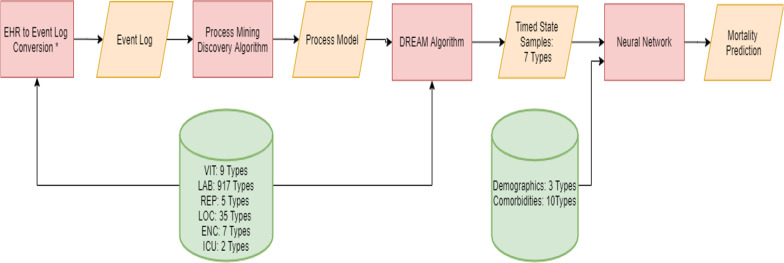
Various machine learning and artificial intelligence methods have been used to predict outcomes of hospitalized COVID-19 patients. However, process mining has not yet been used for COVID-19 prediction. We developed a process mining/deep learning approach to predict mortality among COVID-19 patients and updated the prediction in 6-h intervals during the first 72 h after hospital admission.
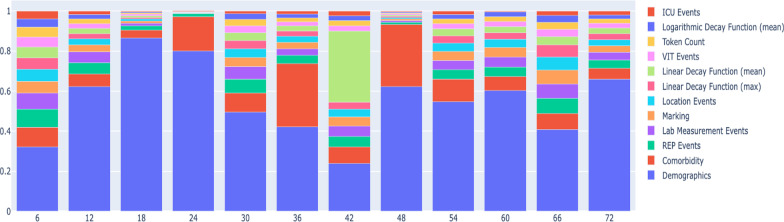
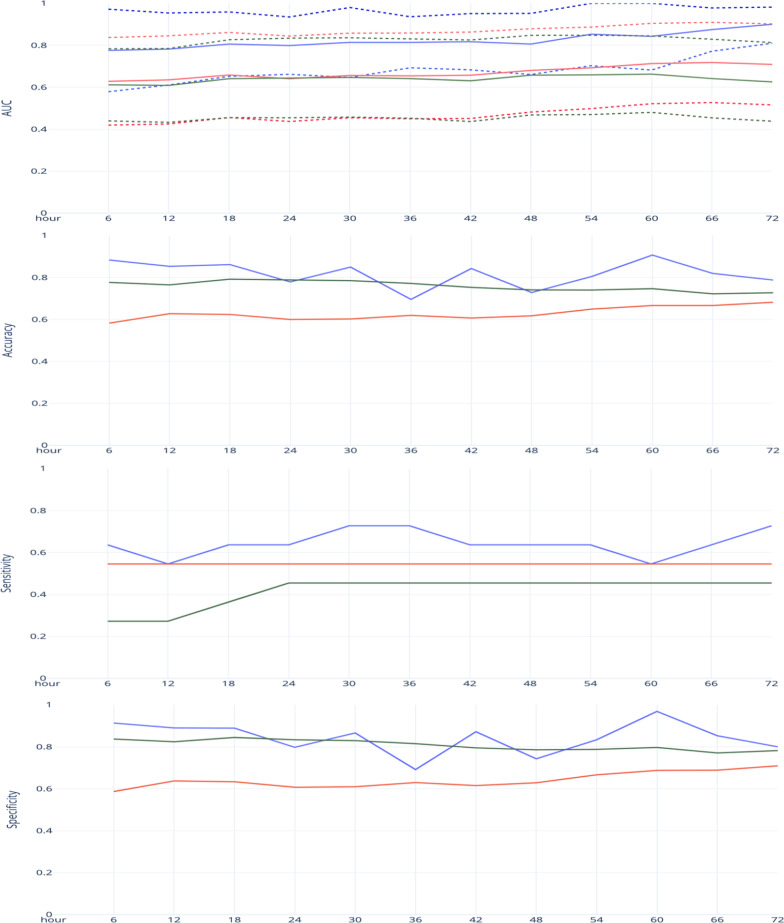
The process mining/deep learning model produced temporal information related to the variables and incorporated demographic and clinical data to predict mortality. The mortality prediction was updated in 6-h intervals during the first 72 h after hospital admission. Moreover, the performance of the model was compared with published and self-developed traditional machine learning models that did not use time as a variable. The performance was compared using the Area Under the Receiver Operator Curve (AUROC), accuracy, sensitivity, and specificity.
The proposed process mining/deep learning model outperformed the comparison models in almost all time intervals with a robust AUROC above 80% on a dataset that was imbalanced.
Our proposed process mining/deep learning model performed significantly better than commonly used machine learning approaches that ignore time information. Thus, time information should be incorporated in models to predict outcomes more accurately.
各种机器学习和人工智能方法已被用于预测住院 COVID-19 患者的结局。然而,流程挖掘尚未用于 COVID-19 预测。我们开发了一种流程挖掘/深度学习方法来预测 COVID-19 患者的死亡率,并在入院后 72 小时内每 6 小时更新一次预测。
该流程挖掘/深度学习模型生成了与变量相关的时间信息,并整合了人口统计学和临床数据来预测死亡率。在入院后 72 小时内,每 6 小时更新一次死亡率预测。此外,还将模型的性能与未使用时间作为变量的已发表和自行开发的传统机器学习模型进行了比较。使用接收者操作特征曲线下的面积(AUROC)、准确性、敏感性和特异性来比较性能。
在所研究的几乎所有时间段内,所提出的流程挖掘/深度学习模型的性能均优于比较模型,在不平衡数据集上的 AUROC 稳健性高于 80%。
我们提出的流程挖掘/深度学习模型的性能明显优于通常忽略时间信息的机器学习方法。因此,应在模型中纳入时间信息以更准确地预测结局。