Department of Thoracic Surgery, The Second Hospital of Hebei Medical University, Shijiazhuang, China.
School of Clinical Medicine of Hebei Medical University, Shijiazhuang, China.
Front Immunol. 2022 Jul 8;13:918154. doi: 10.3389/fimmu.2022.918154. eCollection 2022.
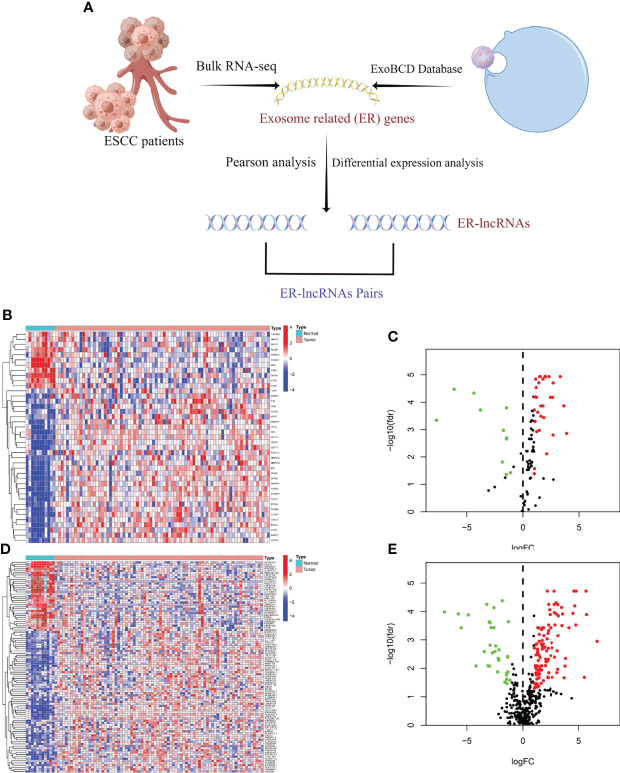
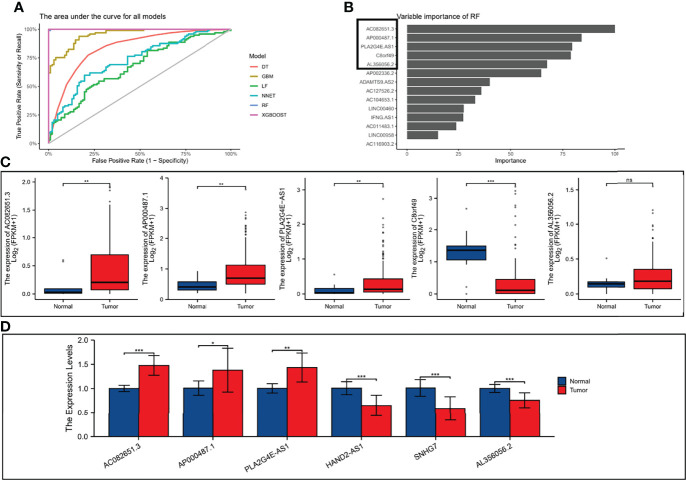
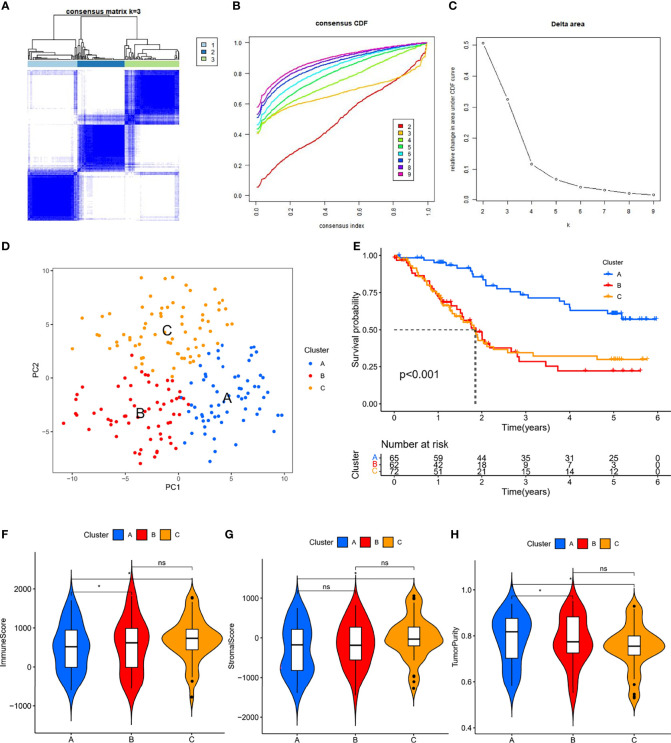
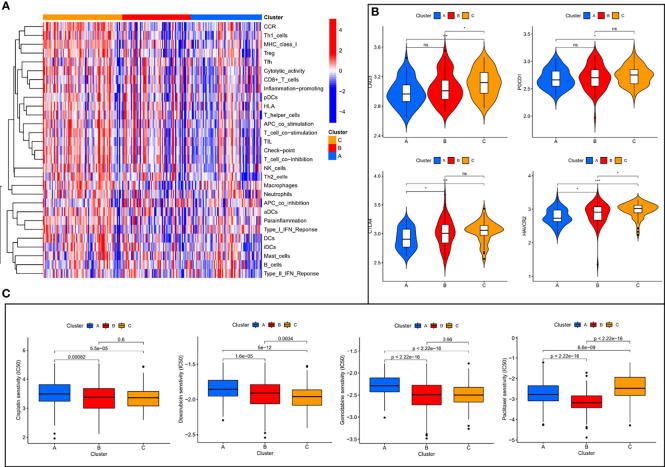
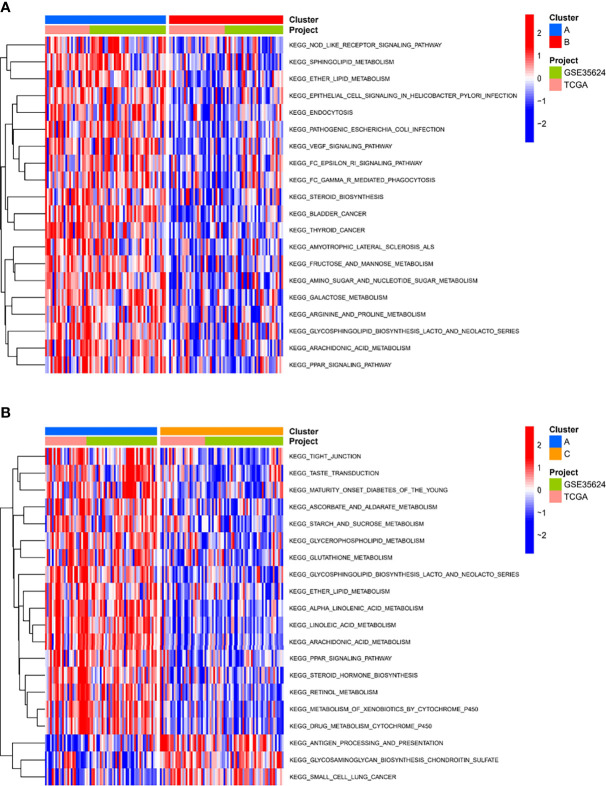
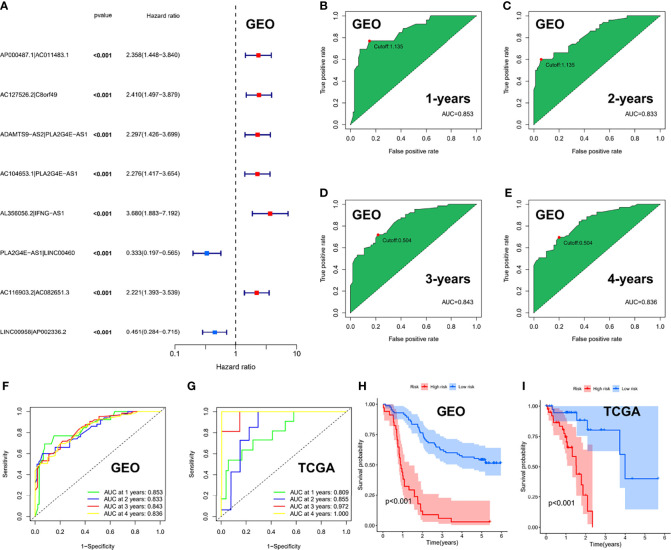
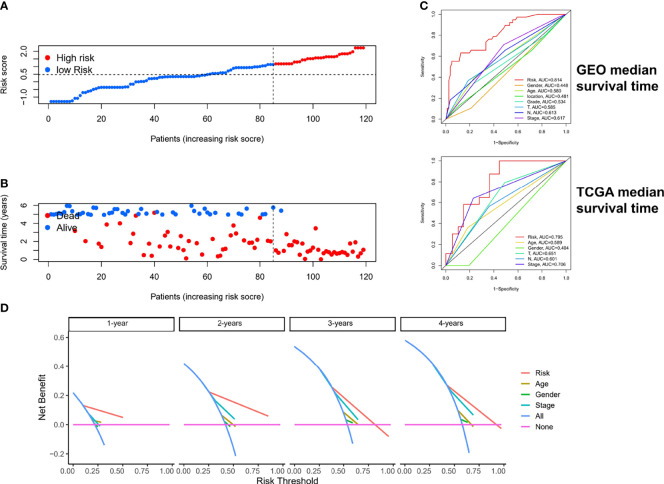
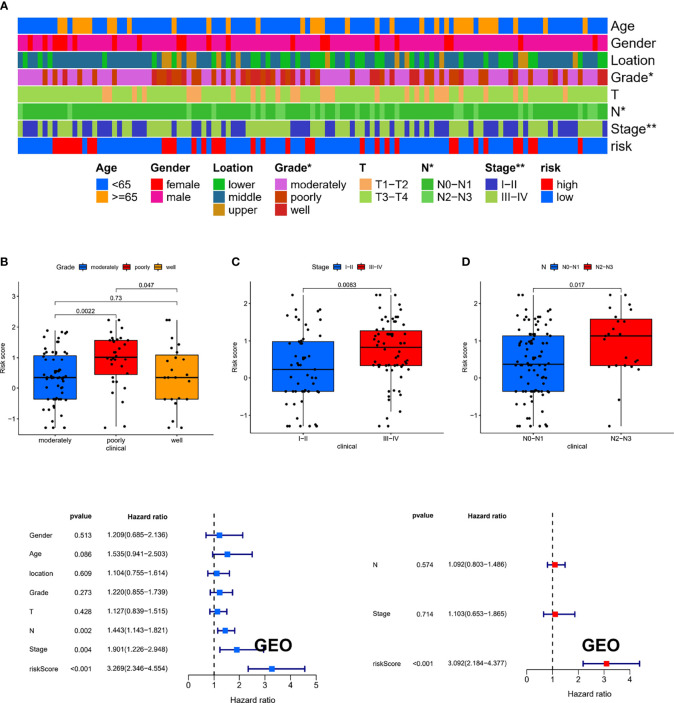
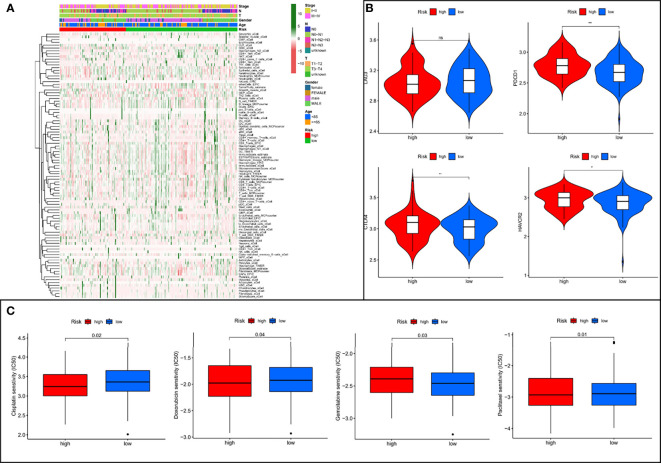
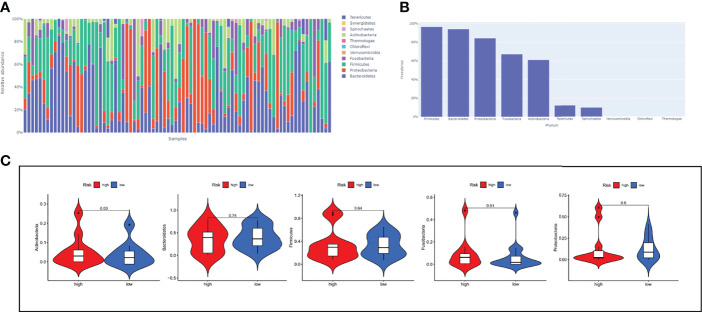
Accumulating studies have demonstrated the indispensable roles of exosomes and long non-coding RNAs (lncRNAs) in cancer progression and the tumor microenvironment (TME). However, the clinical relevance of exosome-related lncRNAs (ER-lncRNAs) in esophageal squamous cell carcinoma (ESCC) remains unclear. Three subtypes were identified by consensus clustering of 3459 valid ER-lncRNA pairs, of which subtype A is preferentially related to favorable prognosis, lower stromal and immune scores, and higher tumor purity scores. Higher immune cell infiltration, higher mRNA levels of immune checkpoints, higher stromal and immune scores, and lower tumor purity were found in subtype C, which presented a poor prognosis. We developed a prognostic risk score model based on 8 ER-lncRNA pairs in the GEO cohort using univariate Cox regression analysis and LASSO Cox regression analysis. Patients were divided into a high risk-score group and low risk-score group by the cut-off values of the 1-year ROC curves in the training set (GEO cohort) and the validation set (TCGA cohort). Receiver operating characteristic (ROC) curves, Decision curve analysis (DCA), clinical correlation analysis, and univariate and multivariate Cox regression all confirmed that the prognostic model has good predictive power and that the risk score can be used as an independent prognostic factor in different cohorts. By further analyzing the TME based on the risk model, higher immune cell infiltration and more active TME were found in the high-risk group, which presented a poor prognosis. Patients with high risk scores also exhibited higher mRNA levels of immune checkpoints and lower IC50 values, indicating that these patients may be more prone to profit from chemotherapy and immunotherapy. The top five most abundant microbial phyla in ESCC was also identified. The best ER-lncRNAs (AC082651.3, AP000487.1, PLA2G4E-AS1, C8orf49 and AL356056.2) were identified based on machine learning algorithms. Subsequently, the expression levels of the above ER-lncRNAs were analyzed by combining the GTEx and TCGA databases. In addition, qRT-PCR analysis based on clinical samples from our hospital showed a high degree of consistency. This study fills the gap of ER-lncRNA model in predicting the prognosis of patients with ESCC and the risk score-based risk stratification could facilitate the determination of therapeutic option to improve prognoses.
越来越多的研究表明,外泌体和长链非编码 RNA(lncRNA)在癌症进展和肿瘤微环境(TME)中起着不可或缺的作用。然而,外泌体相关 lncRNA(ER-lncRNA)在食管鳞状细胞癌(ESCC)中的临床相关性尚不清楚。通过对 3459 对有效 ER-lncRNA 对进行共识聚类,鉴定出 3 种亚型,其中亚型 A 与有利的预后、较低的基质和免疫评分以及较高的肿瘤纯度评分相关。在 C 型中发现更高的免疫细胞浸润、更高的免疫检查点 mRNA 水平、更高的基质和免疫评分以及更低的肿瘤纯度,提示预后不良。我们使用单因素 Cox 回归分析和 LASSO Cox 回归分析,基于 GEO 队列中的 8 个 ER-lncRNA 对建立了预后风险评分模型。通过训练集(GEO 队列)和验证集(TCGA 队列)的 1 年 ROC 曲线的截断值,将患者分为高风险评分组和低风险评分组。ROC 曲线、决策曲线分析(DCA)、临床相关性分析、单因素和多因素 Cox 回归均证实该预后模型具有良好的预测能力,风险评分可作为不同队列中的独立预后因素。通过进一步基于风险模型分析 TME,发现高危组的免疫细胞浸润更高,TME 更活跃,预后较差。高风险评分的患者还表现出更高的免疫检查点 mRNA 水平和更低的 IC50 值,表明这些患者可能更容易从化疗和免疫治疗中获益。还确定了 ESCC 中最丰富的五种微生物门。基于机器学习算法,确定了最佳 ER-lncRNA(AC082651.3、AP000487.1、PLA2G4E-AS1、C8orf49 和 AL356056.2)。随后,通过结合 GTEx 和 TCGA 数据库分析上述 ER-lncRNA 的表达水平。此外,基于我们医院临床样本的 qRT-PCR 分析显示出高度一致性。这项研究填补了 ER-lncRNA 模型预测 ESCC 患者预后的空白,基于风险评分的风险分层有助于确定治疗方案,以改善预后。