Padamati Sandeep Kumar, Vedelaar Thea Annie, Perona Martínez Felipe, Nusantara Anggrek Citra, Schirhagl Romana
University Medical Center Groningen, University of Groningen, Antonius Deusinglaan 1, 9713AW Groningen, The Netherlands.
Nanomaterials (Basel). 2022 Jul 15;12(14):2422. doi: 10.3390/nano12142422.
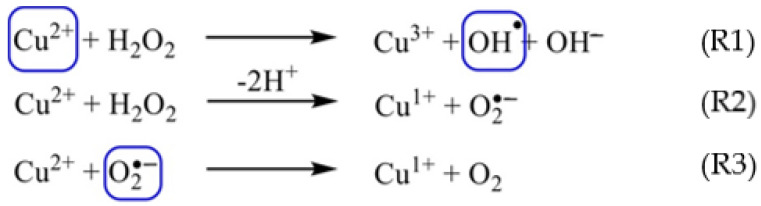
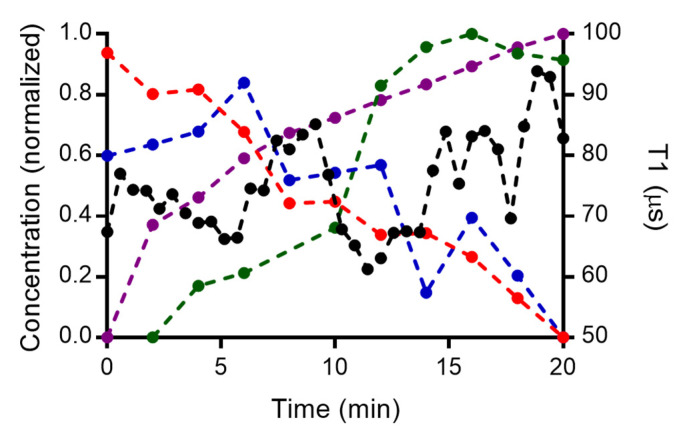
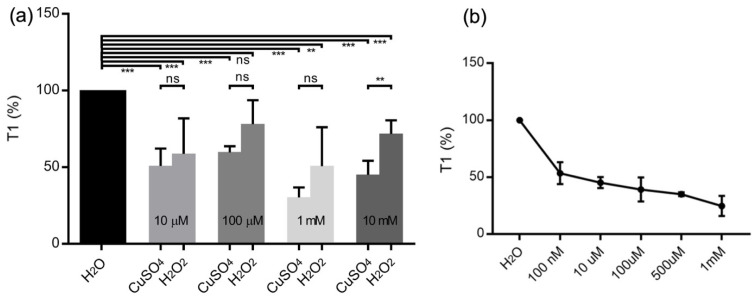
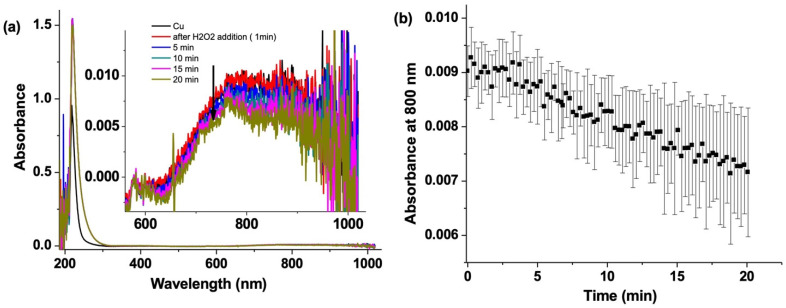
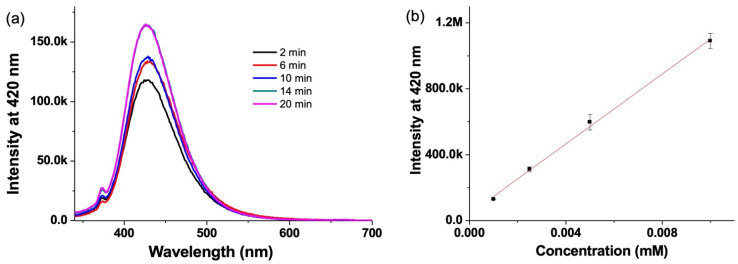
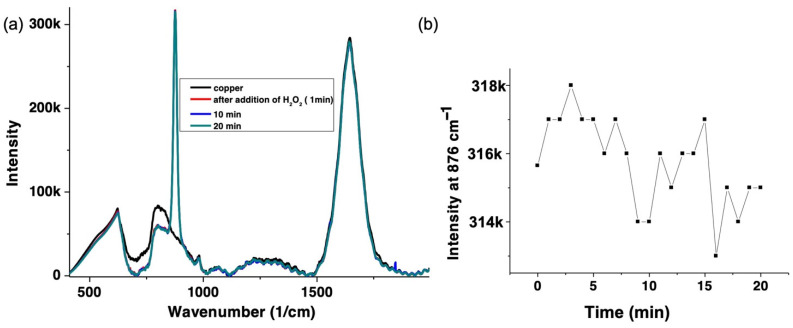
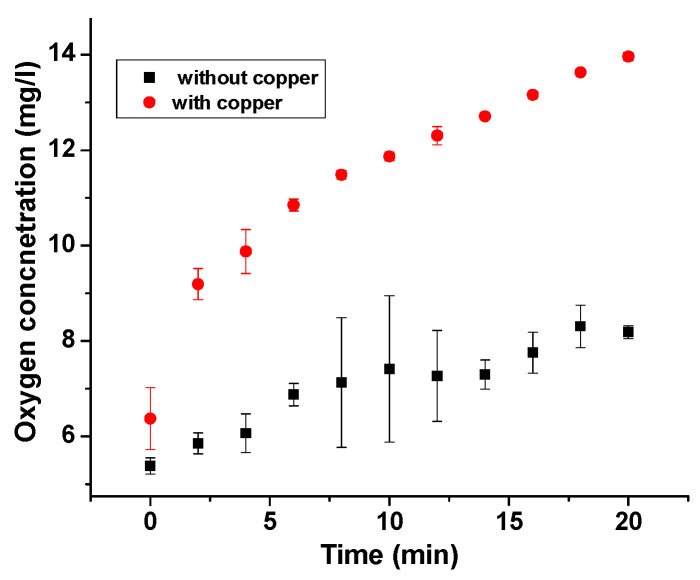
Copper has several biological functions, but also some toxicity, as it can act as a catalyst for oxidative damage to tissues. This is especially relevant in the presence of HO, a by-product of oxygen metabolism. In this study, the reactions of copper with HO have been investigated with spectroscopic techniques. These results were complemented by a new quantum sensing technique (relaxometry), which allows nanoscale magnetic resonance measurements at room temperature, and at nanomolar concentrations. For this purpose, we used fluorescent nanodiamonds (FNDs) containing ensembles of specific defects called nitrogen-vacancy (NV) centers. More specifically, we performed so-called T1 measurements. We use this method to provide real-time measurements of copper during a Fenton-like reaction. Unlike with other chemical fluorescent probes, we can determine both the increase and decrease in copper formed in real time.
铜具有多种生物学功能,但也有一定毒性,因为它可作为组织氧化损伤的催化剂。在氧代谢副产物过氧化氢(HO)存在的情况下,这一点尤为重要。在本研究中,利用光谱技术研究了铜与过氧化氢的反应。这些结果通过一种新的量子传感技术(弛豫测量法)得到补充,该技术可在室温下以纳摩尔浓度进行纳米级磁共振测量。为此,我们使用了含有特定缺陷集合体(称为氮空位(NV)中心)的荧光纳米金刚石(FND)。更具体地说,我们进行了所谓的T1测量。我们使用这种方法在类芬顿反应过程中对铜进行实时测量。与其他化学荧光探针不同,我们可以实时测定生成的铜的增加量和减少量。