Diller Robert B, Tabor Aaron J
Department of Biological Sciences, Northern Arizona University, Flagstaff, AZ 86011, USA.
Biomimetics (Basel). 2022 Jul 1;7(3):87. doi: 10.3390/biomimetics7030087.
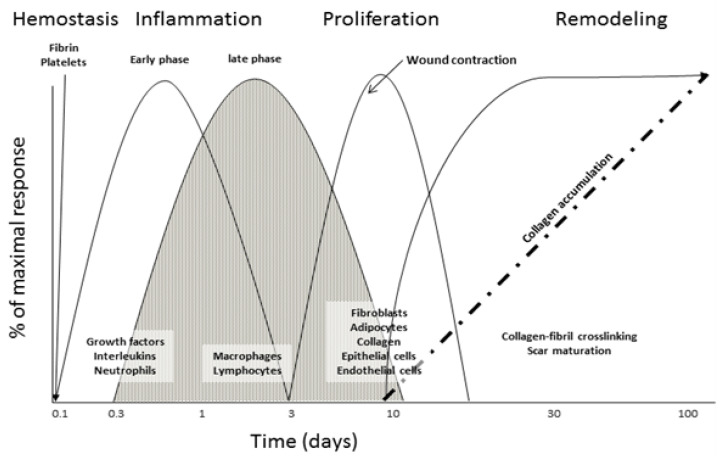
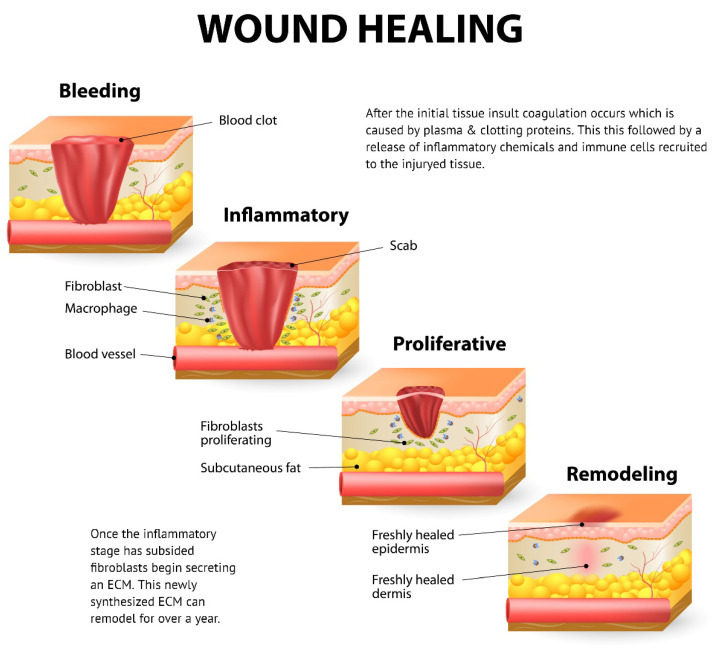
The extracellular matrix (ECM) is a 3-dimensional structure and an essential component in all human tissues. It is comprised of varying proteins, including collagens, elastin, and smaller quantities of structural proteins. Studies have demonstrated the ECM aids in cellular adherence, tissue anchoring, cellular signaling, and recruitment of cells. During times of integumentary injury or damage, either acute or chronic, the ECM is damaged. Through a series of overlapping events called the wound healing phases-hemostasis, inflammation, proliferation, and remodeling-the ECM is synthesized and ideally returned to its native state. This article synthesizes current and historical literature to demonstrate the involvement of the ECM in the varying phases of the wound healing cascade.
细胞外基质(ECM)是一种三维结构,是所有人体组织中的重要组成部分。它由多种蛋白质组成,包括胶原蛋白、弹性蛋白以及少量结构蛋白。研究表明,细胞外基质有助于细胞黏附、组织锚定、细胞信号传导以及细胞募集。在急性或慢性皮肤损伤或损害期间,细胞外基质会受到破坏。通过一系列称为伤口愈合阶段(止血、炎症、增殖和重塑)的重叠事件,细胞外基质得以合成,并理想地恢复到其原始状态。本文综合了当前和历史文献,以证明细胞外基质在伤口愈合级联反应不同阶段中的作用。