Department of Translational Research, Western University of Health Sciences, Pomona, CA 91766, USA.
College of Podiatric Medicine, Western University of Health Sciences, Pomona, CA 91766, USA.
Cells. 2022 Jul 25;11(15):2287. doi: 10.3390/cells11152287.
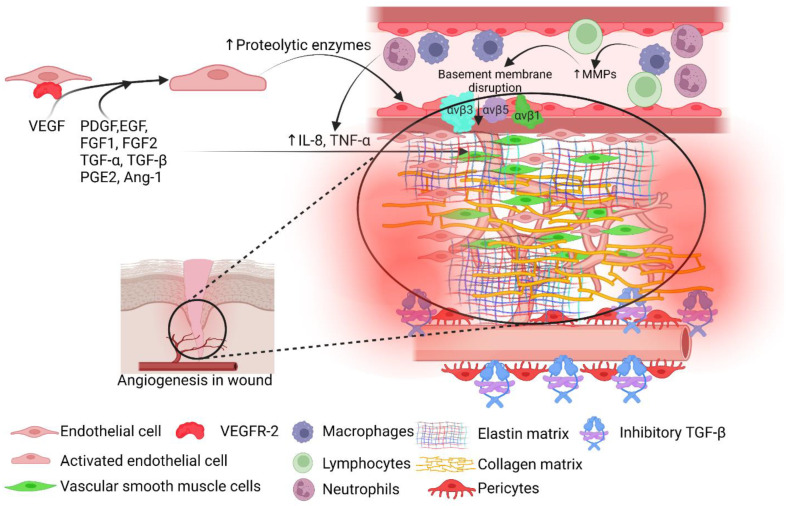
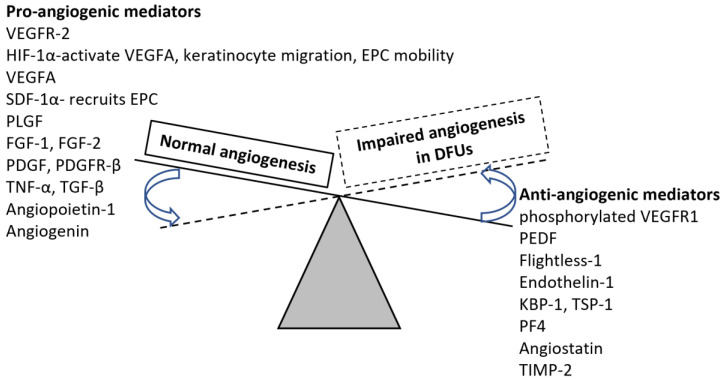
Nonhealing diabetic foot ulcers (DFUs) are a continuing clinical issue despite the improved treatment with wound debridement, off-loading the ulcer, medication, wound dressings, and preventing infection by keeping the ulcer clean. Wound healing is associated with granulation tissue formation and angiogenesis favoring the wound to enter the resolution phase of healing followed by healing. However, chronic inflammation and reduced angiogenesis in a hyperglycemic environment impair the normal healing cascade and result in chronically non-healing diabetic foot ulcers. Promoting angiogenesis is associated with enhanced wound healing and using vascular endothelial growth factors has been proven beneficial to promote neo-angiogenesis. However, still, nonhealing DFUs persist with increased risks of amputation. Regenerative medicine is an evolving branch applicable in wound healing with the use of stem cells to promote angiogenesis. Various studies have reported promising results, but the associated limitations need in-depth research. This article focuses on summarizing and critically reviewing the published literature since 2021 on the use of stem cells to promote angiogenesis and enhance wound healing in chronic non-healing DFUs.
非愈合性糖尿病足溃疡(DFU)是一个持续存在的临床问题,尽管通过清创、减轻溃疡负担、药物治疗、伤口敷料以及保持溃疡清洁来预防感染,治疗方法有所改善。伤口愈合与肉芽组织形成和血管生成有关,有利于伤口进入愈合的消退阶段,然后再愈合。然而,高血糖环境中的慢性炎症和血管生成减少会损害正常的愈合级联反应,导致慢性不愈合的糖尿病足溃疡。促进血管生成与增强伤口愈合有关,使用血管内皮生长因子已被证明有助于促进新血管生成。然而,非愈合性 DFU 仍然存在,截肢风险增加。再生医学是一个不断发展的分支,适用于伤口愈合,使用干细胞来促进血管生成。各种研究已经报告了有希望的结果,但相关的局限性需要深入研究。本文重点总结和批判性回顾了 2021 年以来发表的关于使用干细胞促进血管生成和增强慢性非愈合性 DFU 伤口愈合的文献。