Department of Pulmonary Medicine, Shanghai Chest Hospital, School of Medicine, Shanghai Jiao Tong University, Shanghai, China.
Department of Radiology, Shanghai Chest Hospital, School of Medicine, Shanghai Jiao Tong University, Shanghai, China.
J Transl Med. 2022 Jul 28;20(1):339. doi: 10.1186/s12967-022-03547-9.
The overall survival (OS) of stage I operable lung cancer is relatively low, and not all patients can benefit from adjuvant chemotherapy. This study aimed to develop and validate a radiomic signature (RS) for prediction of OS and adjuvant chemotherapy candidates in stage I lung adenocarcinoma.
A total of 474 patients from 2 centers were divided into 1 training (n = 287), 1 internal validation (n = 122), and 1 external validation (n = 65) cohorts. We extracted 1218 radiomic features from preoperative CT images and constructed RS. We further investigated the prognostic value of the RS in survival analysis. Interaction between treatment and RS was assessed to evaluate its predictive value. Propensity score matching (PSM) was conducted.
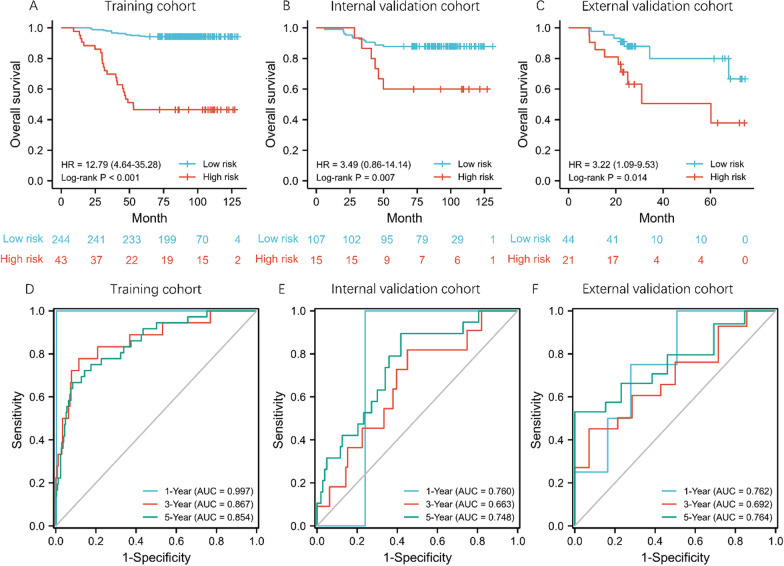
Overall, 474 eligible patients with stage I lung adenocarcinoma (214 men [45.1%]; median age, 60 years) were identified. The RS was significantly associated with OS in the training and two validation cohorts (hazard ratios [HRs] > = 3.22). In multivariable analysis, the RS remained an independent prognostic factor adjusting for clinicopathologic variables (adjusted HRs > = 2.63). The prognostic value of RS was also confirmed in PSM analysis. In stage I patients, the interaction between RS status and adjuvant chemotherapy was significant (interaction P = 0.020). Within the stratified analysis, good chemotherapy efficacy was only observed for patients with stage IB disease (interaction P < 0.001).
Our results suggested that the radiomic signature was associated with overall survival in patients with stage I lung adenocarcinoma and might predict adjuvant chemotherapy benefit, especially in stage IB patients. The potential of radiomic signature as a noninvasive predictor needed to be confirmed in future studies.
可手术的 I 期肺癌的总体生存率(OS)相对较低,并非所有患者都能从辅助化疗中获益。本研究旨在开发和验证一种预测 I 期肺腺癌 OS 和辅助化疗候选者的放射组学特征(RS)。
从 2 个中心共纳入 474 名患者,分为 1 个训练队列(n=287)、1 个内部验证队列(n=122)和 1 个外部验证队列(n=65)。我们从术前 CT 图像中提取了 1218 个放射组学特征并构建了 RS。我们进一步在生存分析中研究了 RS 的预后价值。评估了治疗与 RS 之间的交互作用以评估其预测价值。进行了倾向评分匹配(PSM)。
总体而言,共纳入了 474 名符合条件的 I 期肺腺癌患者(214 名男性[45.1%];中位年龄为 60 岁)。在训练和两个验证队列中,RS 与 OS 显著相关(风险比[HR] > = 3.22)。在多变量分析中,RS 仍然是调整临床病理变量后的独立预后因素(调整后的 HRs > = 2.63)。在 PSM 分析中也证实了 RS 的预后价值。在 I 期患者中,RS 状态与辅助化疗之间的交互作用具有统计学意义(交互作用 P = 0.020)。在分层分析中,仅在 IB 期疾病患者中观察到良好的化疗效果(交互作用 P < 0.001)。
我们的研究结果表明,放射组学特征与 I 期肺腺癌患者的总生存率相关,并且可能预测辅助化疗获益,特别是在 IB 期患者中。放射组学特征作为一种非侵入性预测指标的潜力需要在未来的研究中进一步证实。