University of Fribourg, Department of Biology, Fribourg, Switzerland.
Centro Andaluz de Biología Molecular y Medicina Regenerativa - CABIMER, Consejo Superior de Investigaciones Científicas, Universidad de Sevilla, Seville, Spain.
Elife. 2022 Jul 29;11:e80497. doi: 10.7554/eLife.80497.
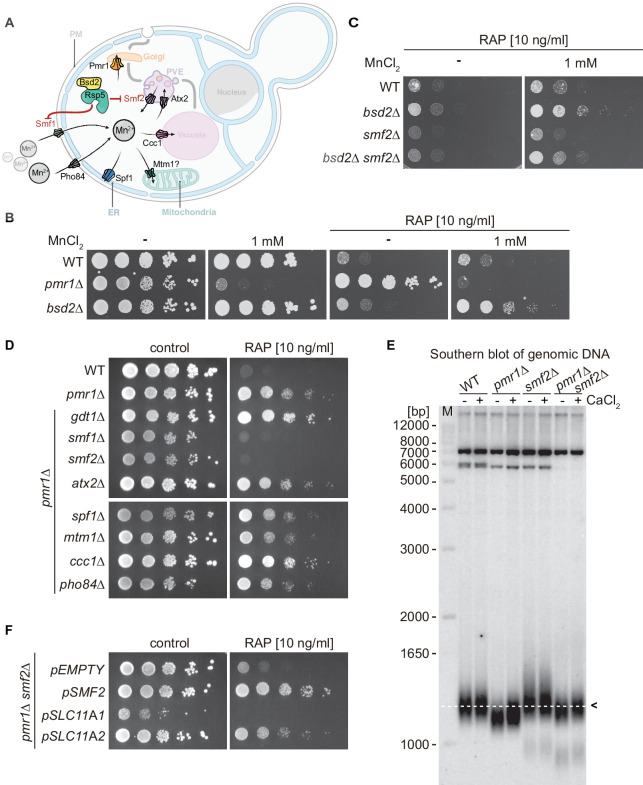
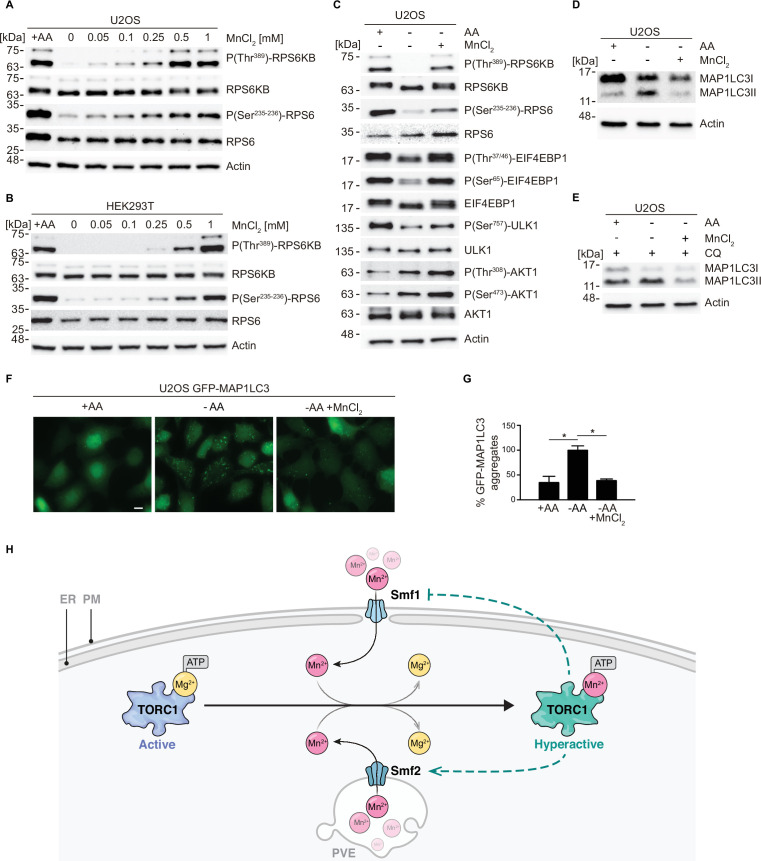
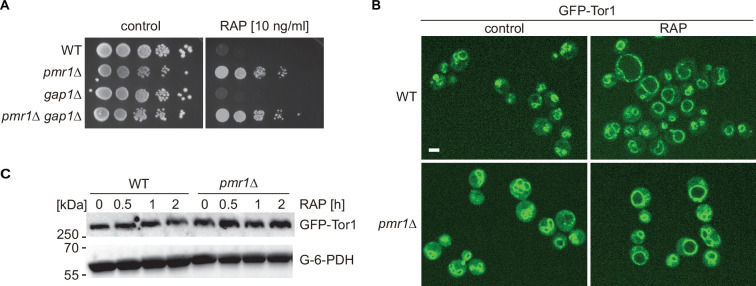
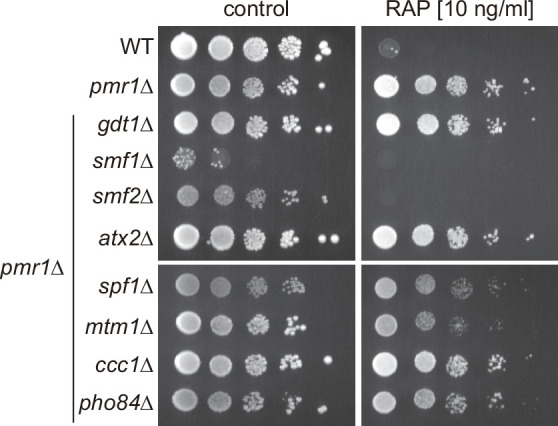
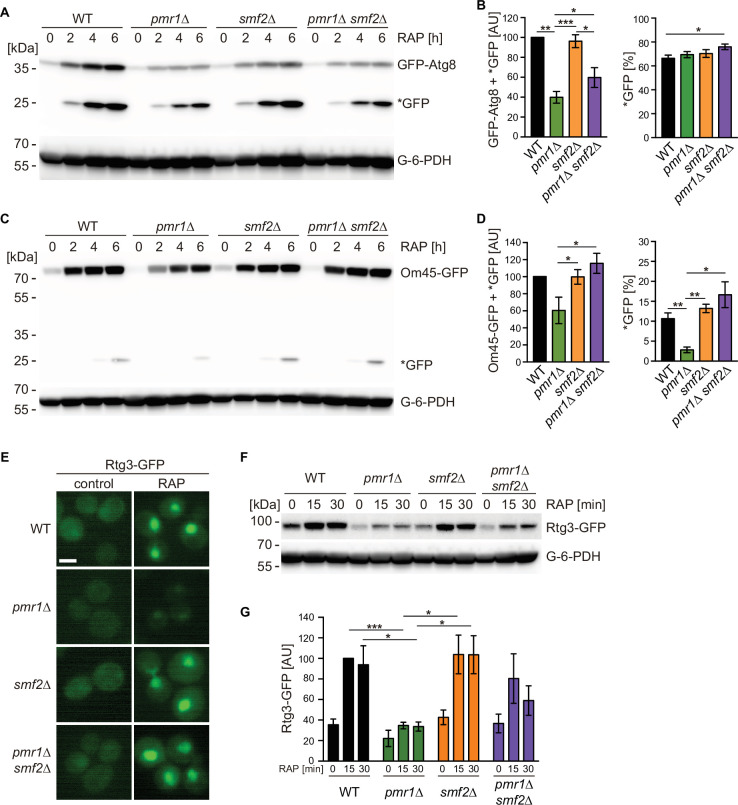
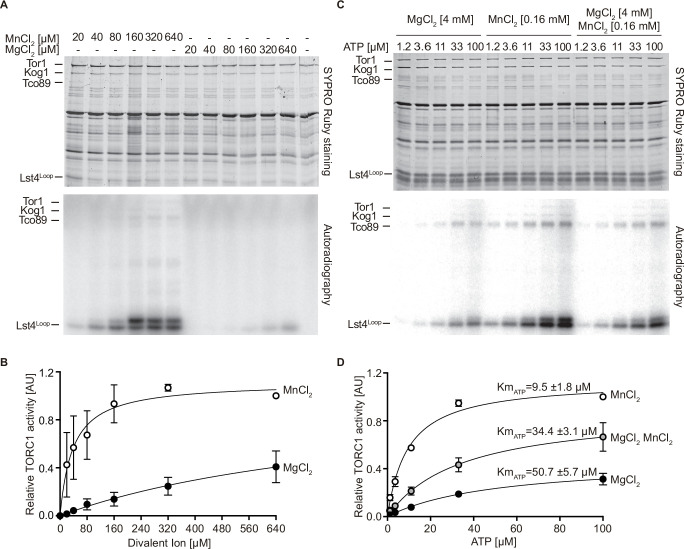
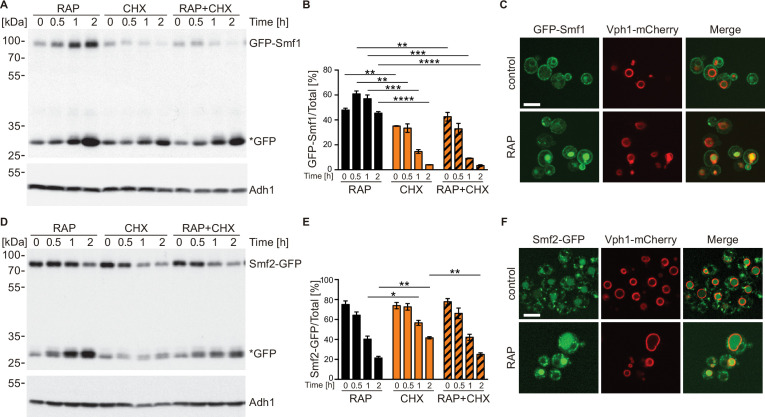
The essential biometal manganese (Mn) serves as a cofactor for several enzymes that are crucial for the prevention of human diseases. Whether intracellular Mn levels may be sensed and modulate intracellular signaling events has so far remained largely unexplored. The highly conserved target of rapamycin complex 1 (TORC1, mTORC1 in mammals) protein kinase requires divalent metal cofactors such as magnesium (Mg) to phosphorylate effectors as part of a homeostatic process that coordinates cell growth and metabolism with nutrient and/or growth factor availability. Here, our genetic approaches reveal that TORC1 activity is stimulated in vivo by elevated cytoplasmic Mn levels, which can be induced by loss of the Golgi-resident Mn transporter Pmr1 and which depend on the natural resistance-associated macrophage protein (NRAMP) metal ion transporters Smf1 and Smf2. Accordingly, genetic interventions that increase cytoplasmic Mn levels antagonize the effects of rapamycin in triggering autophagy, mitophagy, and Rtg1-Rtg3-dependent mitochondrion-to-nucleus retrograde signaling. Surprisingly, our in vitro protein kinase assays uncovered that Mn activates TORC1 substantially better than Mg, which is primarily due to its ability to lower the K for ATP, thereby allowing more efficient ATP coordination in the catalytic cleft of TORC1. These findings, therefore, provide both a mechanism to explain our genetic observations in yeast and a rationale for how fluctuations in trace amounts of Mn can become physiologically relevant. Supporting this notion, TORC1 is also wired to feedback control mechanisms that impinge on Smf1 and Smf2. Finally, we also show that Mn-mediated control of TORC1 is evolutionarily conserved in mammals, which may prove relevant for our understanding of the role of Mn in human diseases.
必需的生物金属锰 (Mn) 作为几种酶的辅助因子,这些酶对于预防人类疾病至关重要。迄今为止,细胞内 Mn 水平是否可以被感知并调节细胞内信号事件在很大程度上仍未得到探索。高度保守的雷帕霉素靶蛋白复合物 1(TORC1,哺乳动物中的 mTORC1)蛋白激酶需要二价金属辅助因子,如镁(Mg),以磷酸化效应物,作为协调细胞生长和代谢与营养和/或生长因子可用性的稳态过程的一部分。在这里,我们的遗传方法表明,TORC1 活性在体内受到升高的细胞质 Mn 水平的刺激,这种刺激可以通过高尔基体驻留的 Mn 转运蛋白 Pmr1 的缺失诱导,并且依赖于天然抗性相关巨噬细胞蛋白 (NRAMP) 金属离子转运蛋白 Smf1 和 Smf2。因此,增加细胞质 Mn 水平的遗传干预拮抗了雷帕霉素触发自噬、线粒体自噬和 Rtg1-Rtg3 依赖性线粒体到核逆行信号的作用。令人惊讶的是,我们的体外蛋白激酶测定揭示 Mn 可大大激活 TORC1,比 Mg 更好,这主要是由于其降低 ATP K 的能力,从而允许在 TORC1 的催化裂缝中更有效地协调 ATP。因此,这些发现为我们在酵母中的遗传观察提供了一种解释机制,以及微量 Mn 波动如何变得具有生理相关性的原理。支持这一观点,TORC1 也与影响 Smf1 和 Smf2 的反馈控制机制相连。最后,我们还表明,Mn 对 TORC1 的控制在哺乳动物中是进化保守的,这对于我们理解 Mn 在人类疾病中的作用可能是相关的。