Laboratory of Molecular Iron Metabolism, Ministry of Education Key Laboratory of Molecular and Cellular Biology, Hebei Key Laboratory of Animal Physiology, Biochemistry and Molecular Biology, College of Life Sciences, Hebei Normal University, 050024, Shijiazhuang, Hebei Province, China.
Department of Nutrition, Research Center for Nutrition and Health, Institute of Nutrition and Food Safety, School of Public Health, School of Medicine, Zhejiang University, Hangzhou, 310058, Zhejiang Province, China.
Cell Death Dis. 2022 Aug 1;13(8):667. doi: 10.1038/s41419-022-05043-w.
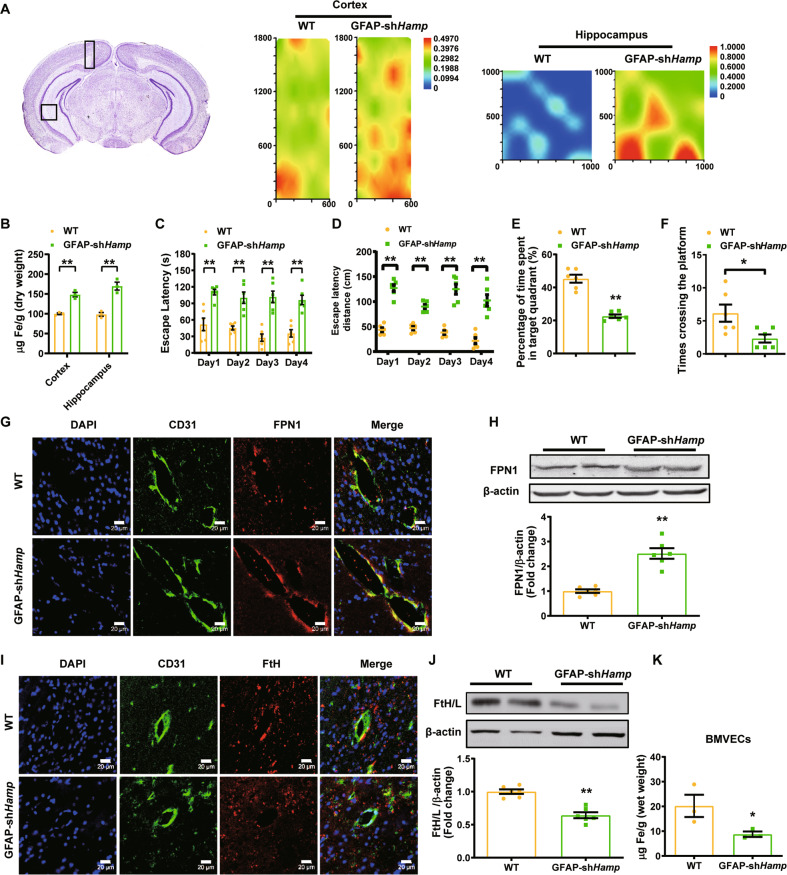
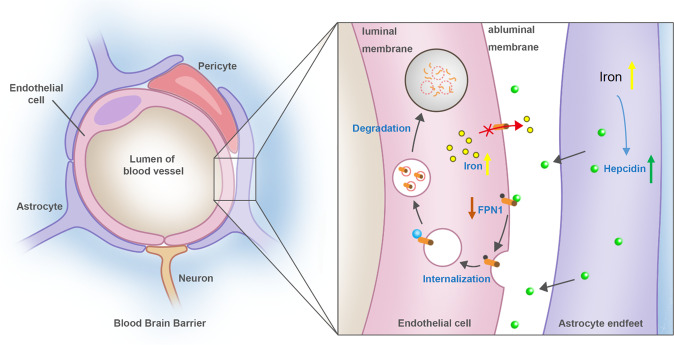
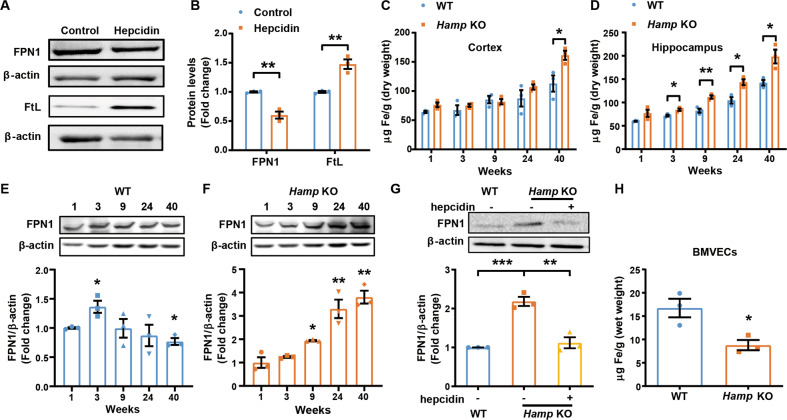
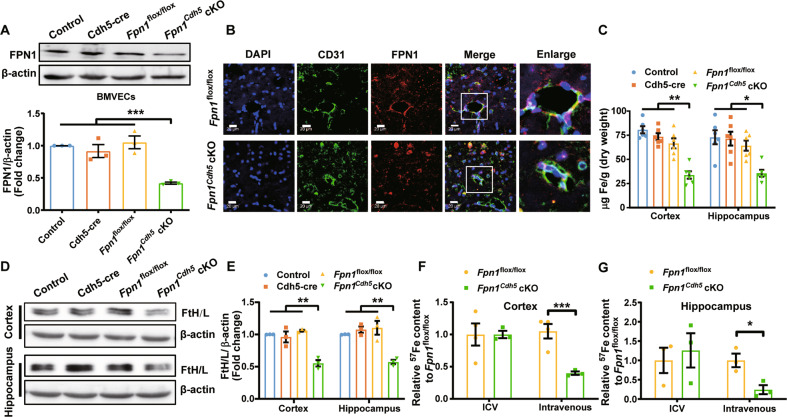
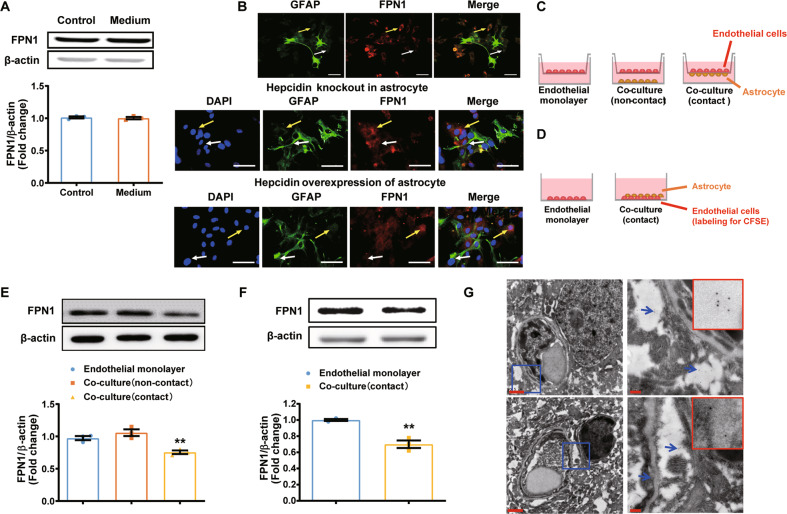
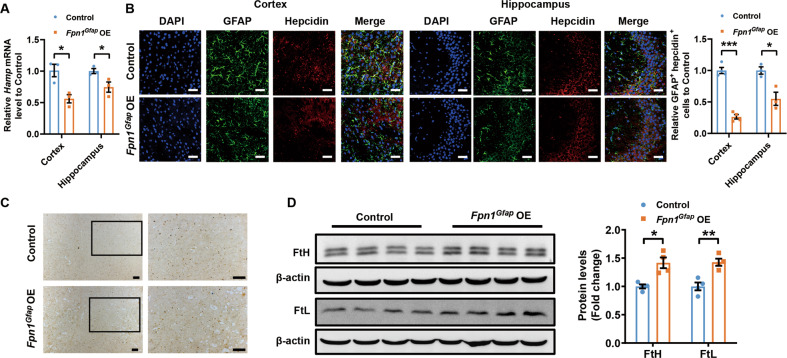
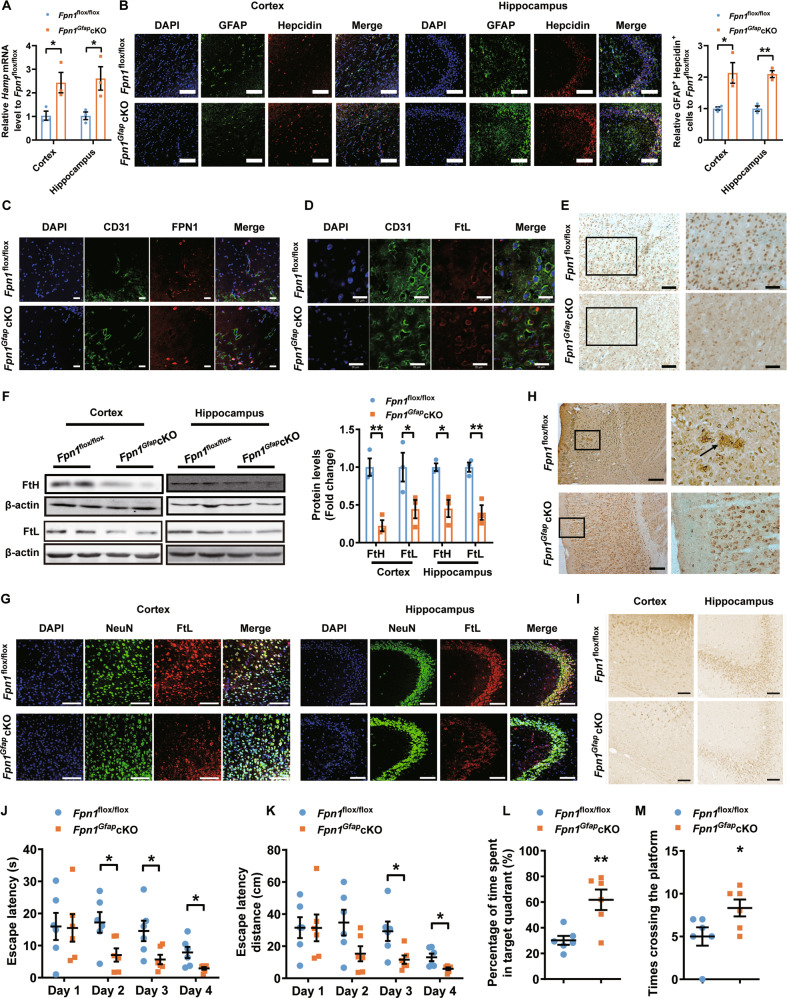
Brain iron dysregulation associated with aging is closely related to motor and cognitive impairments in neurodegenerative diseases. The regulation of iron traffic at the blood-brain barrier (BBB) is crucial to maintain brain iron homeostasis. However, the specific mechanism has not been clarified in detail. Using various conditional gene knockout and overexpression mice, as well as cell co-culture of astrocyte and bEND.3 in the transwell, we found that astrocyte hepcidin knockdown increased the expression of ferroportin 1 (FPN1) of brain microvascular endothelial cells (BMVECs), and that it also induced brain iron overload and cognitive decline in mice. Moreover, BMVECs FPN1 knockout decreased iron contents in the cortex and hippocampus. Furthermore, hepcidin regulates the level of FPN1 of BMVECs with conditional gene overexpression in vivo and in vitro. Our results revealed that astrocytes responded to the intracellular high iron level and increased the secretion of hepcidin, which in turn diminished iron uptake at BBB from circulation through directly regulating FPN1 of BMVECs. Our results demonstrate that FPN1 of BMVECs is a gateway for iron transport into the brain from circulation, and the controller of this gateway is hepcidin secreted by astrocyte at its endfeet through physical contact with BMVECs. This regulation is indeed the major checkpoint for iron transport from the blood circulation to the brain. This study delineates the pathway and regulation of iron entry into the brain, providing potential therapeutic targets for iron dysregulation-related neurological diseases.
脑铁代谢失调与衰老密切相关,并且与神经退行性疾病中的运动和认知障碍有关。血脑屏障 (BBB) 中铁运输的调节对于维持脑内铁稳态至关重要。然而,其具体机制尚未详细阐明。通过使用各种条件性基因敲除和过表达小鼠,以及星形胶质细胞和 bEND.3 在 Transwell 中的共培养,我们发现星形胶质细胞铁调素敲低增加了脑微血管内皮细胞 (BMVEC) 的铁蛋白 1 (FPN1) 的表达,并且还导致了小鼠脑铁过载和认知能力下降。此外,BMVECs 的 FPN1 敲除降低了皮质和海马体中的铁含量。此外,铁调素通过体内和体外的条件性基因过表达调节 BMVECs 的 FPN1 水平。我们的研究结果表明,星形胶质细胞对细胞内高铁水平做出反应并增加铁调素的分泌,这反过来又通过直接调节 BMVECs 的 FPN1 来减少从循环中摄取到 BBB 的铁。我们的研究结果表明,BMVECs 的 FPN1 是铁从循环进入大脑的运输门户,而这个门户的控制器是星形胶质细胞通过与 BMVECs 的物理接触在其终足分泌的铁调素。这种调节确实是铁从血液循环到大脑的主要运输检查点。本研究描绘了铁进入大脑的途径和调节,为与铁代谢失调相关的神经退行性疾病提供了潜在的治疗靶点。