Bækken Lasse V, Holden Geir, Gjelstad Astrid, Lauritzen Fredrik
Nordic Athlete Passport Management Unit, Norwegian Doping Control Laboratory, Department of Pharmacology, Oslo University Hospital, Oslo, Norway.
Department of Testing, Investigations and Legal, Anti-doping Norway, Oslo, Norway.
Front Sports Act Living. 2022 Jul 19;4:954479. doi: 10.3389/fspor.2022.954479. eCollection 2022.
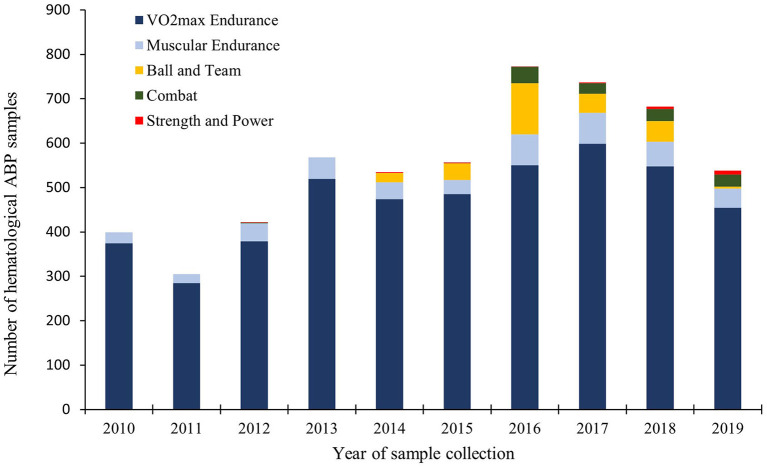
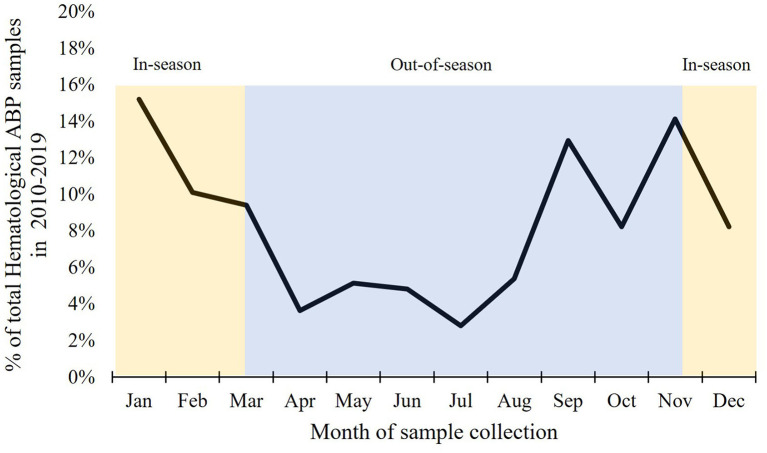
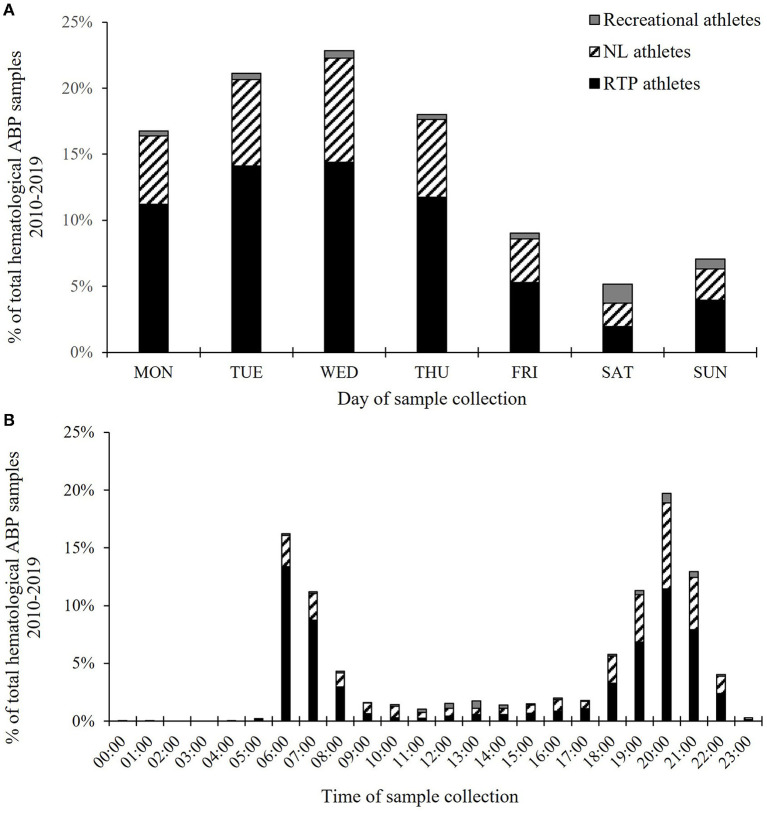
The hematological module of the Athlete Biological Passport (ABP) aims to reveal blood doping indirectly by looking at selected biomarkers of doping over time. For Anti-Doping Organizations (ADOs), the ABP is a vital tool in the fight against doping in sports through improved target testing and analysis, investigations, deterrence, and as indirect evidence for use of prohibited methods or substances. The physiological characteristics of sport disciplines is an important risk factor in the overall risk assessment and when implementing the hematological module. Sharing of experiences with implementing the hematological ABP between ADOs is key to further strengthen and extend its use. In this study, we present 10 years of experience with the hematological ABP program from the perspectives of a National ADO with special attention to sport disciplines' physiological characteristics as a potential risk factor for blood doping. Not surprisingly, most samples were collected in sport disciplines where the aerobic capacity is vital for performance. The study highlights strengths in Anti-Doping Norway's testing program but also areas that could be improved. For example, it was shown that samples were collected both in and out of season in a subset of the data material that included three popular sports in Norway (Cross-Country Skiing, Nordic Combined, and Biathlon), however, from the total data material it was clear that athletes were more likely to be tested out of competition and on certain days of the week and times of the day. The use of doping control officers with a flexible time schedule and testing outside an athlete's 60 min time-slot could help with a more even distribution during the week and day, and thus reduce the predictability of testing. In addition to promoting a discussion on testing strategies, the study can be used as a starting point for other ADOs on how to examine their own testing program.
运动员生物护照(ABP)的血液学模块旨在通过长期观察选定的兴奋剂生物标志物来间接揭示血液兴奋剂使用情况。对于反兴奋剂组织(ADO)而言,ABP是通过改进目标检测与分析、调查、威慑以及作为使用违禁方法或物质的间接证据,在打击体育界兴奋剂行为方面的一项重要工具。体育项目的生理特征是整体风险评估以及实施血液学模块时的一个重要风险因素。ADO之间分享实施血液学ABP的经验是进一步加强和扩大其使用的关键。在本研究中,我们从一个国家反兴奋剂组织的角度介绍了血液学ABP项目的十年经验,特别关注体育项目的生理特征作为血液兴奋剂使用的潜在风险因素。不出所料,大多数样本是在有氧能力对成绩至关重要的体育项目中采集的。该研究突出了挪威反兴奋剂组织检测项目的优势,但也指出了可以改进的领域。例如,在包括挪威三项热门运动(越野滑雪、北欧两项和冬季两项)的部分数据资料中,样本在赛季内和赛季外均有采集,然而,从全部数据资料来看,很明显运动员在非比赛期间以及一周中的某些日子和一天中的某些时段接受检测的可能性更大。使用工作时间灵活的兴奋剂检查官员并在运动员60分钟的时间窗口之外进行检测,有助于在一周和一天内实现更均匀的分布,从而降低检测的可预测性。除了促进关于检测策略的讨论外,该研究还可作为其他反兴奋剂组织审视自身检测项目的一个起点。