From the Department of Neurology, King Fahad General Hospital, Madinah, Saudi Arabia.
From the Department of Neurosciences, King Faisal Specialist Hospital and Research Centre-Jeddah, Jeddah, Saudi Arabia.
Ann Saudi Med. 2022 Jul-Aug;42(4):262-268. doi: 10.5144/0256-4947.2022.262. Epub 2022 Aug 4.
Vitamin D deficiency has been linked to various medical conditions such as bone loss, decreased mineralization, endocrine disorders, and central nervous system disorders, including epilepsy. Vitamin D deficiency is prevalent among patients with epilepsy (PWE). However, the specific association between vitamin D levels and age in PWE is unclear.
Identify the relation between vitamin D level and age in PWE and evaluate factors that may play a role in seizure control.
Retrospective analytical medical record review SETTING: Outpatient epilepsy research clinic in Saudi Arabia PATIENTS AND METHODS: Between November 2016 and April 2020, we selected eligible PWE aged older than 14 years whose vita-min D levels were recorded at least once after reviewing 1550 patient electronic files. We analyzed data on serum vitamin D level by age and other factors, vitamin D supplement use, seizure classification, and conducted a multivariate logistic regression to assess associations with seizure control.
Relationships between vitamin D levels and age and factors that might affect seizure control.
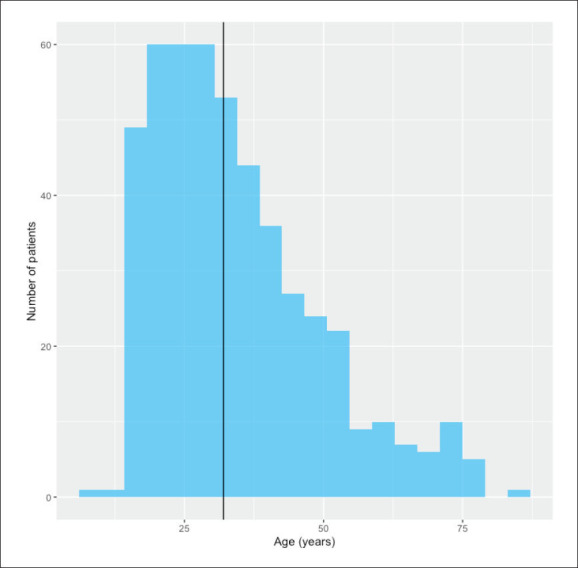
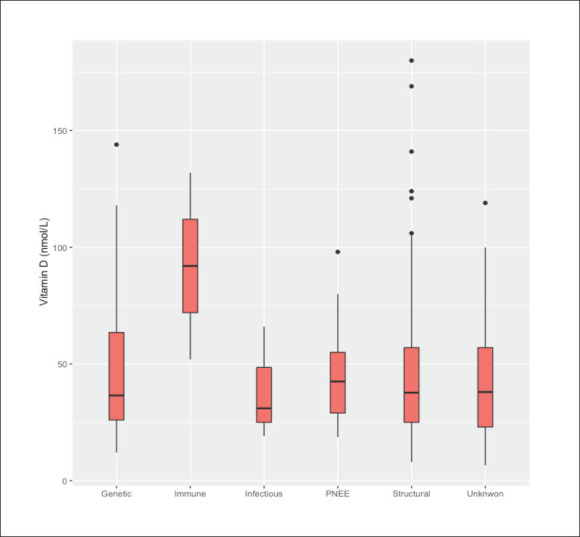
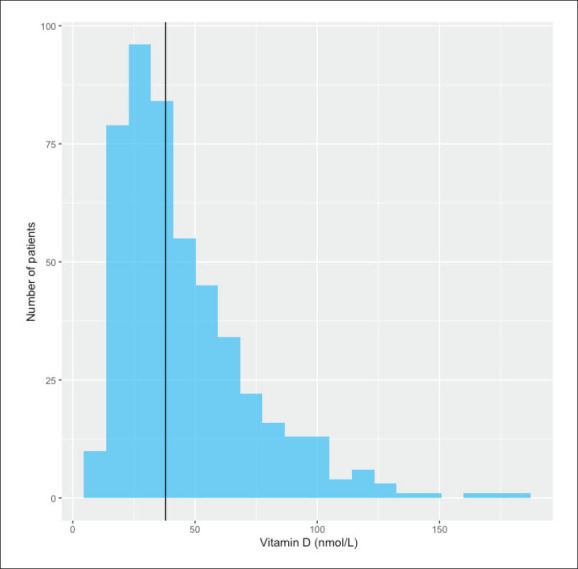
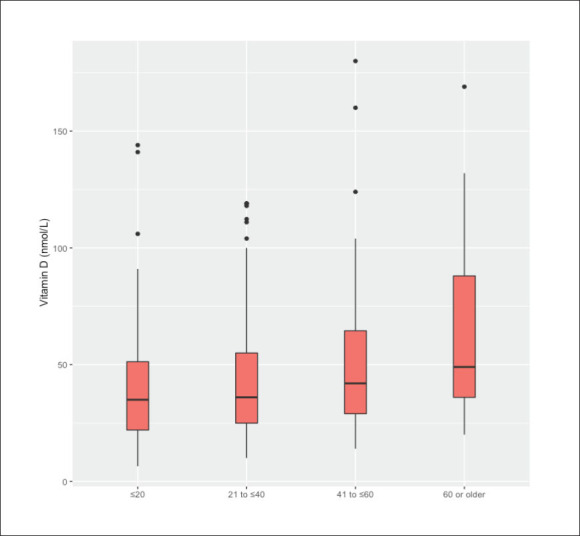
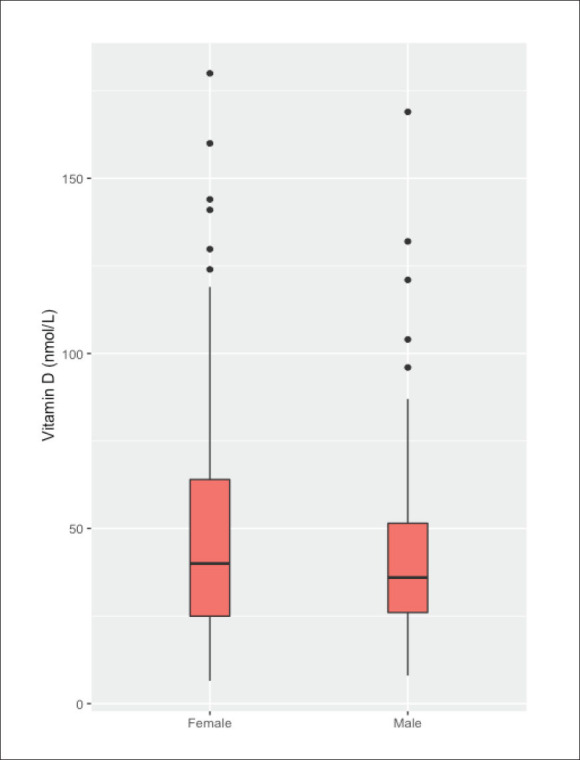
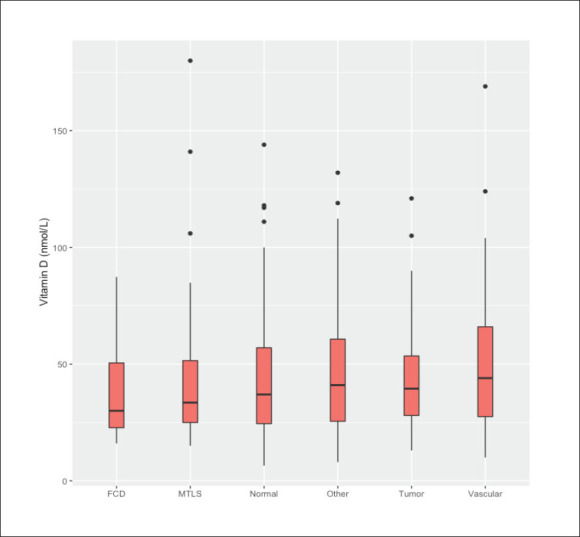
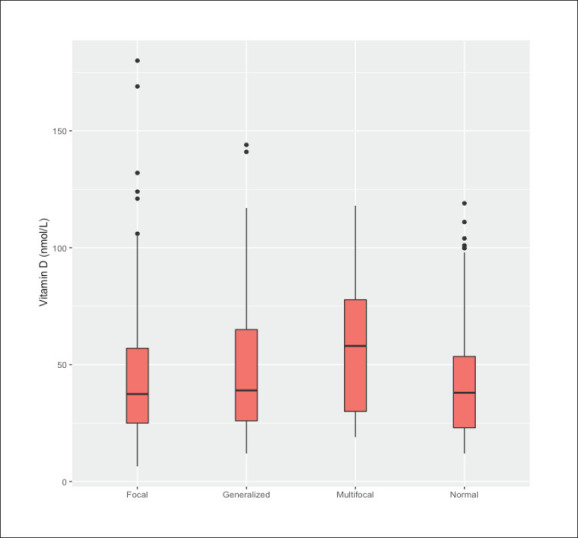
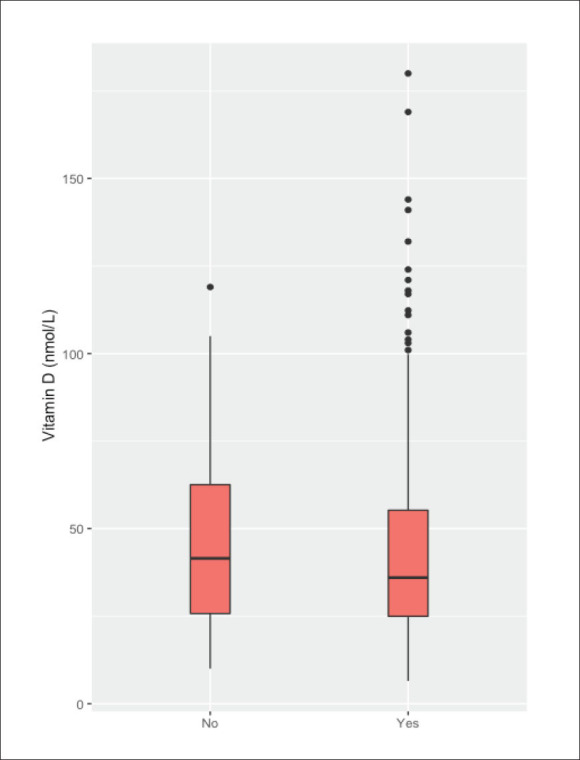
524 patients RESULTS: The prevalence of low serum vitamin D levels was high (86.8%). The median vitamin D level in all patients was low (38 nmol/L), and was lower in young PWE than in adult PWE (<.01). Only 146 patients received vitamin D supplements. High vitamin D levels were associated with a 40% seizure reduction.
Vitamin D deficiency is underestimated in PWE in Saudi Arabia, and is more prevalent among young adults and patients on polytherapy than in other PWE. Patients with high vitamin D levels had good seizure control compared with those with low levels. The effect of vitamin D supplements on seizure control should be further investigated in randomized control trials.
Retrospective study and no categorization by presence of supplementation.
None.
维生素 D 缺乏与各种医学病症有关,如骨质疏松症、矿物质减少、内分泌紊乱和中枢神经系统紊乱,包括癫痫。癫痫患者(PWE)中维生素 D 缺乏较为常见。然而,PWE 中维生素 D 水平与年龄之间的具体关系尚不清楚。
确定 PWE 中维生素 D 水平与年龄之间的关系,并评估可能影响癫痫发作控制的因素。
回顾性分析医疗记录
沙特阿拉伯的门诊癫痫研究诊所
在 2016 年 11 月至 2020 年 4 月期间,我们选择了年龄在 14 岁以上的符合条件的 PWE,他们的维生素 D 水平在查看了 1550 名患者的电子档案后至少记录了一次。我们分析了血清维生素 D 水平按年龄和其他因素的变化、维生素 D 补充剂的使用情况以及癫痫发作的分类,并进行了多元逻辑回归分析以评估与癫痫发作控制的关系。
维生素 D 水平与年龄之间的关系以及可能影响癫痫发作控制的因素。
524 例患者
低血清维生素 D 水平的患病率很高(86.8%)。所有患者的中位维生素 D 水平较低(38 nmol/L),年轻 PWE 中的维生素 D 水平低于成年 PWE(<.01)。只有 146 名患者接受了维生素 D 补充剂。高维生素 D 水平与癫痫发作减少 40%相关。
在沙特阿拉伯,癫痫患者中维生素 D 缺乏被低估,在年轻成年人和接受多种药物治疗的患者中比其他 PWE 更常见。与低水平相比,高水平的维生素 D 与良好的癫痫发作控制相关。维生素 D 补充剂对癫痫发作控制的影响应在随机对照试验中进一步研究。
回顾性研究,且未按补充剂的存在进行分类。
无。