Department of Neurology, University of California-San Francisco, San Francisco, California; Neuroscape, University of California-San Francisco, San Francisco, California.
Departments of Medical Social Sciences and Pediatrics, Northwestern University, Chicago, Illinois.
Neuroimage. 2022 Nov 15;262:119547. doi: 10.1016/j.neuroimage.2022.119547. Epub 2022 Aug 5.
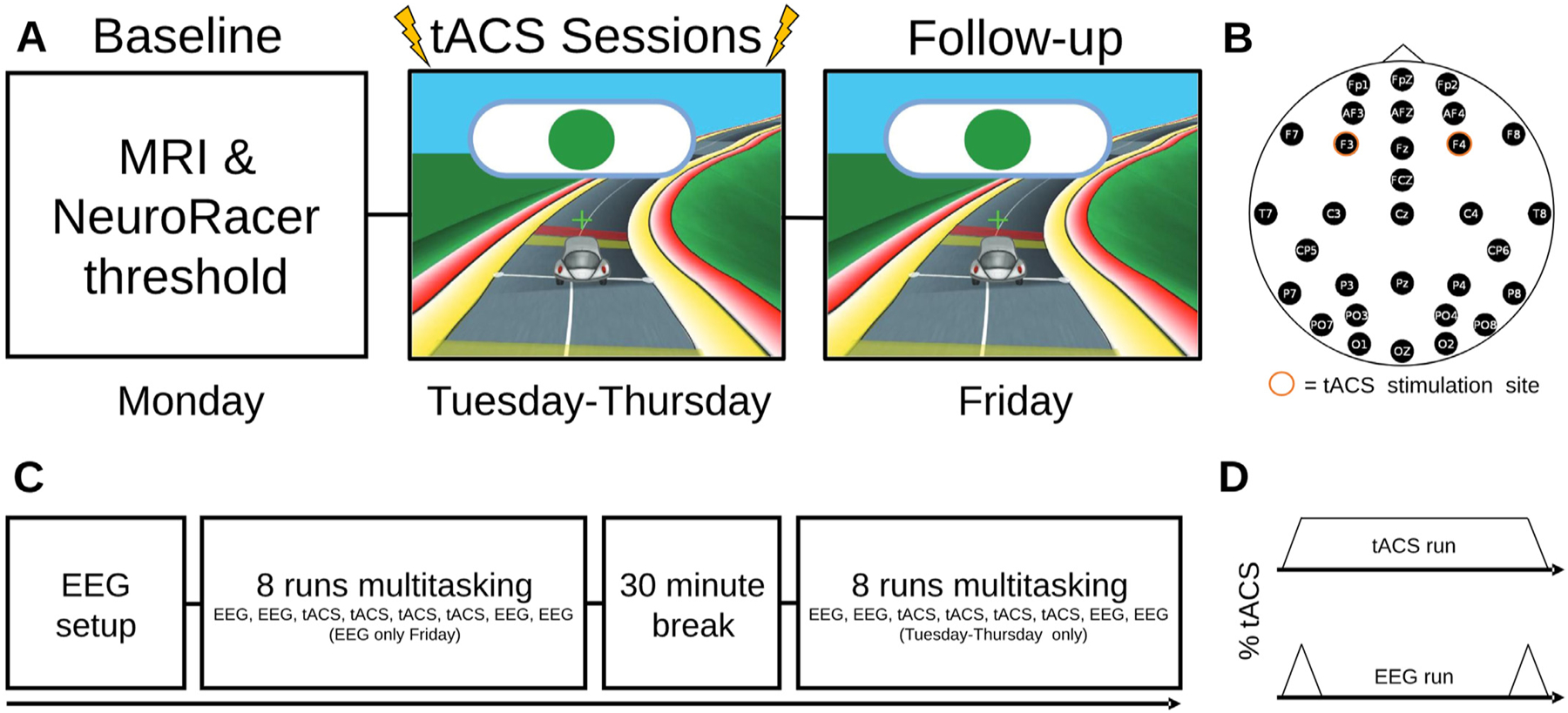
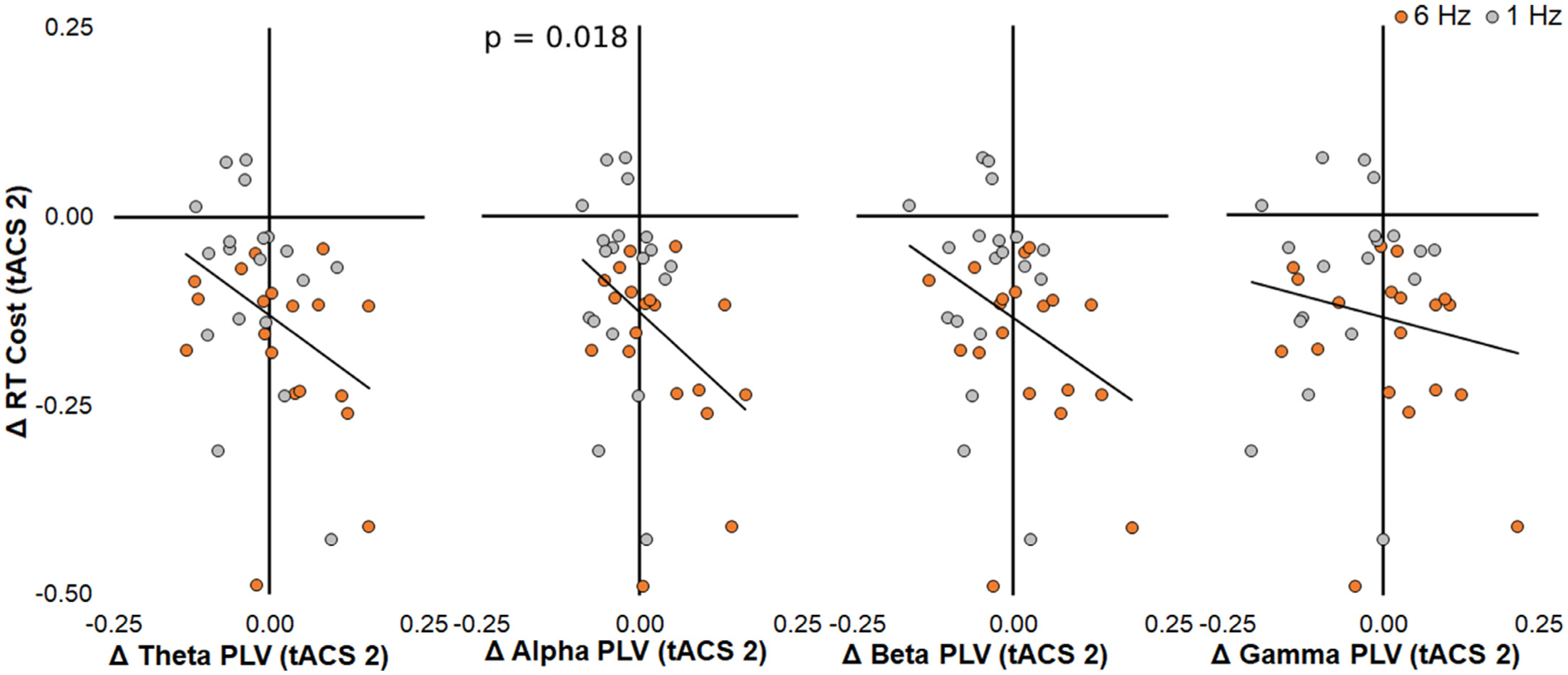
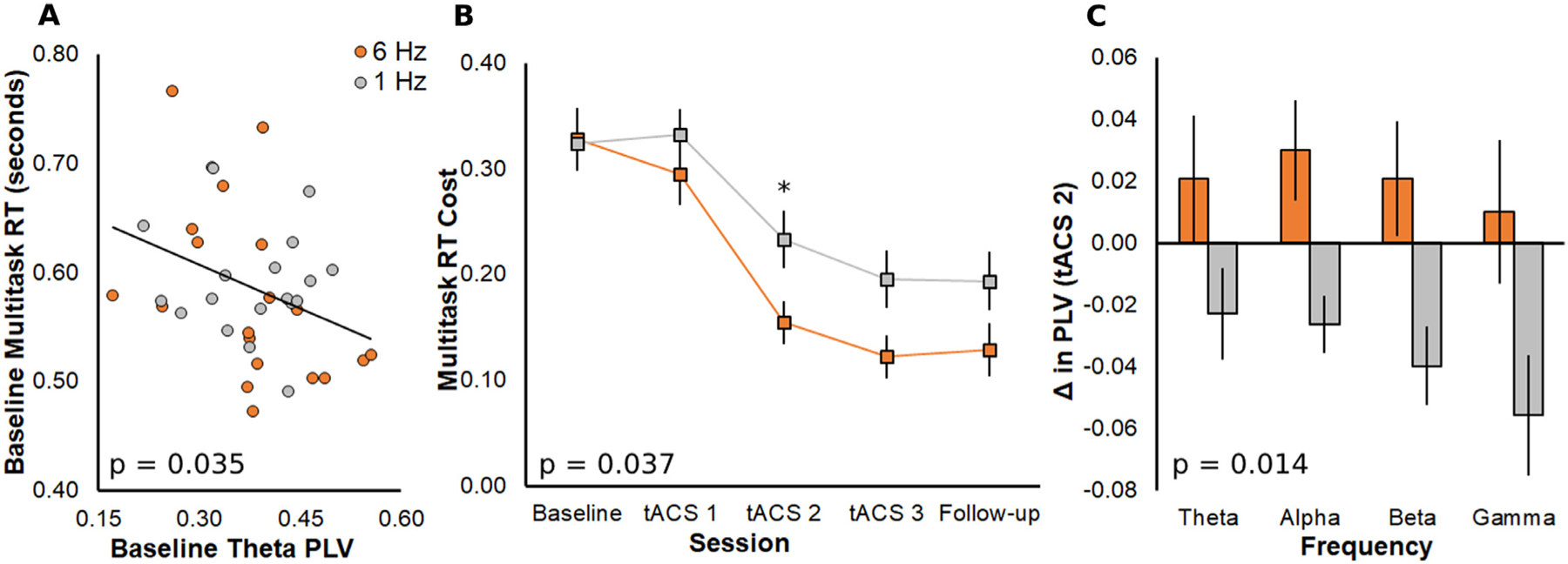
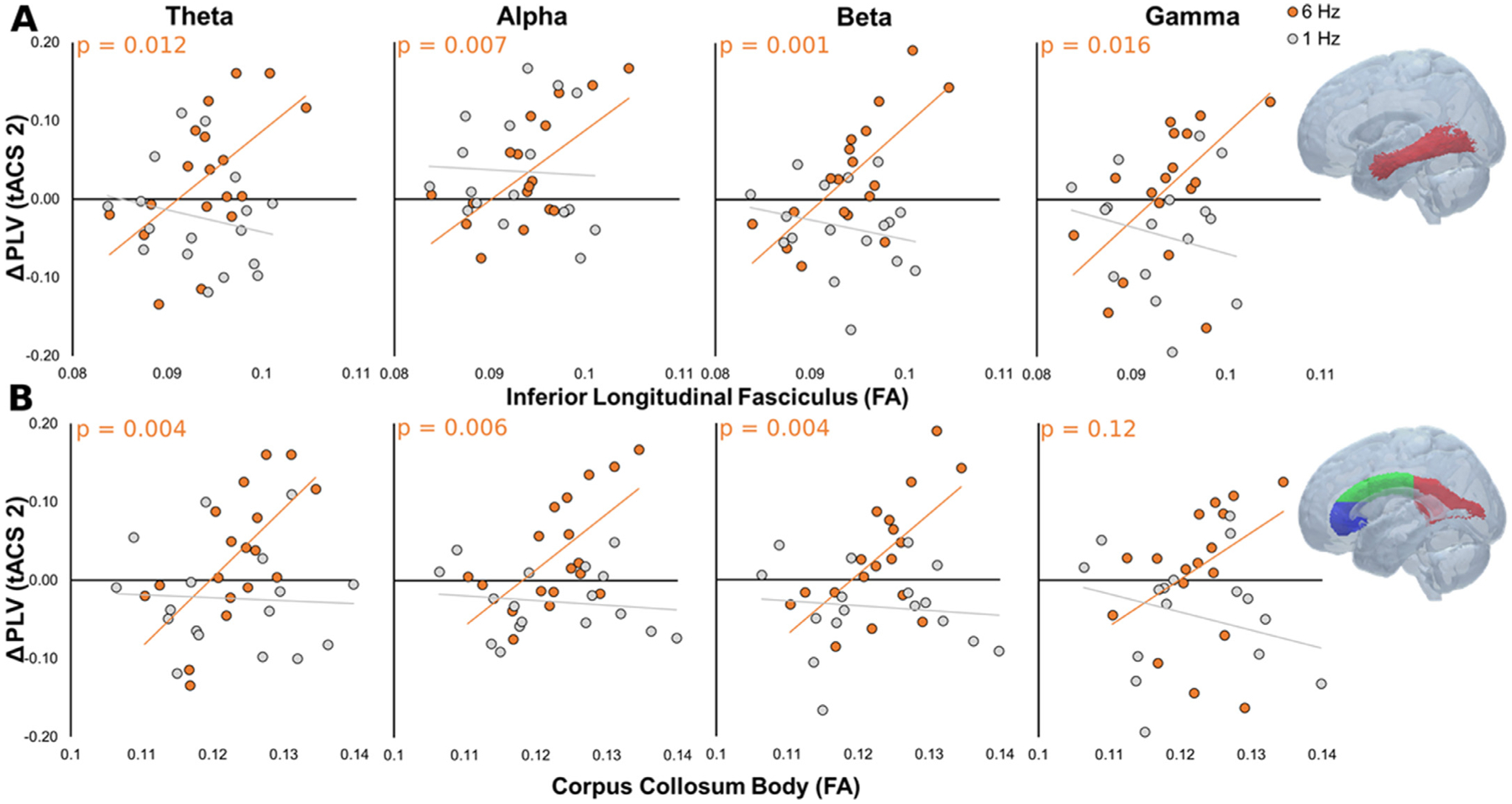
Age-related declines in cognitive control, an ability critical in most daily tasks, threaten individual independence. We previously showed in both older and younger adults that transcranial alternating current stimulation (tACS) can improve cognitive control, with effects observed across neural regions distant from the stimulated site and frequencies outside the stimulated range. Here, we assess network-level changes in neural activity that extend beyond the stimulated site and evaluate anatomical pathways that subserve these effects. We investigated the potential to rescue cognitive control in aging using prefrontal (F3-F4) theta (6 Hz) or control (1 Hz) tACS while older adults engaged in a cognitive control video game intervention on three consecutive days. Functional connectivity was assessed with EEG by measuring daily changes in frontal-posterior phase-locking values (PLV) from the tACS-free baseline. Structural connectivity was measured using MRI diffusion tractography data collected at baseline. Theta tACS improved multitasking performance, and individual gains reflected a dissociation in daily PLV changes, where theta tACS strengthened PLV and control tACS reduced PLV. Strengthened alpha-beta PLV in the theta tACS group correlated positively with inferior longitudinal fasciculus and corpus callosum body integrity, and further explained multitasking gains. These results demonstrate that theta tACS can improve cognitive control in aging by strengthening functional connectivity, particularly in higher frequency bands. However, the extent of functional connectivity gains is limited by the integrity of structural white matter tracts. Given that advanced age is associated with decreased white matter integrity, results suggest that the deployment of tACS as a therapeutic is best prior to advanced age.
年龄相关的认知控制能力下降,这种能力对大多数日常任务都至关重要,威胁着个体的独立性。我们之前在老年人和年轻人中都表明,经颅交流电刺激(tACS)可以改善认知控制,其效果在远离刺激部位的神经区域和刺激范围之外的频率中都可以观察到。在这里,我们评估了超出刺激部位的神经网络水平的变化,并评估了支持这些效果的解剖途径。我们通过在前额(F3-F4)θ(6 Hz)或对照(1 Hz)tACS 刺激的同时,让老年人连续三天参与认知控制视频游戏干预,来评估使用 tACS 挽救衰老过程中认知控制的潜力。通过测量 tACS 无基线的额后相位锁定值(PLV)的每日变化,使用 EEG 评估功能连通性。使用 MRI 扩散张量成像数据在基线时测量结构连通性。θ tACS 改善了多任务处理性能,个体增益反映了每日 PLV 变化的分离,其中θ tACS 增强了 PLV,而对照 tACS 降低了 PLV。θ tACS 组的α-β PLV 增强与下纵束和胼胝体体部完整性呈正相关,并且进一步解释了多任务增益。这些结果表明,θ tACS 可以通过增强功能连通性来改善衰老过程中的认知控制,特别是在更高的频带中。然而,功能连通性增强的程度受到结构白质束完整性的限制。鉴于老年人的白质完整性下降,结果表明,在高级年龄之前,tACS 的部署作为一种治疗方法是最佳的。