Kumar Rupal, Rizvi Moattar Raza, Saraswat Shubhra
Department of Nutrition & Dietetics, Faculty of Allied Health Sciences, Manav Rachna International Institute and Studies (MRIIRS), Faridabad, India.
Department of Physiotherapy, Dean, Faculty of Allied Health Sciences, Manav Rachna International Institute and Studies (MRIIRS), Faridabad, Haryana, India.
Int J Prev Med. 2022 Jun 24;13:95. doi: 10.4103/ijpvm.IJPVM_427_20. eCollection 2022.
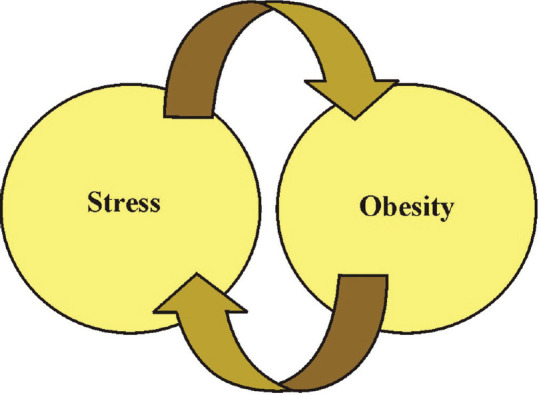
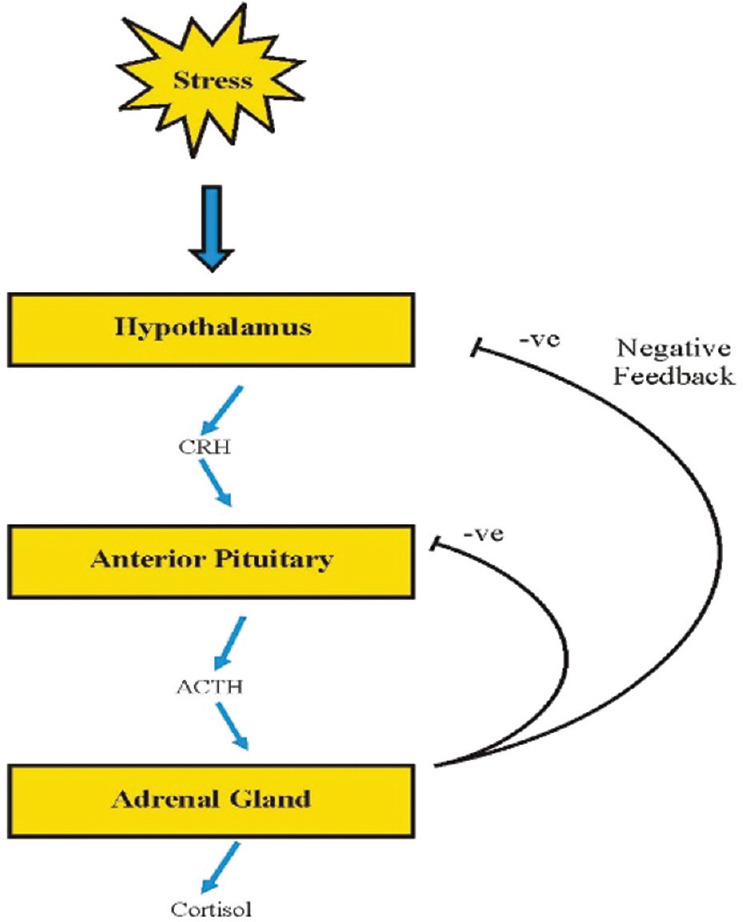
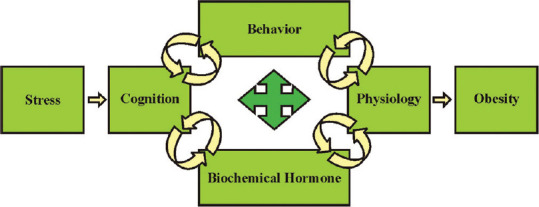
Two highly overriding problems that the society is facing today are stress and obesity. This narrative review article explains the vicious cycle of how stress leads to obesity and vice versa. Stress and obesity are interconnected to each other through different lines of cognition, behavior, and physiology. Stress can interfere with cognitive processes like self-regulation. Stress can also influence behavior by indulging in overeating of foods that are high in calories, fat, and sugar. Stress also invigorates the generation of biochemical hormones and peptides, for example, leptin, ghrelin, and neuropeptide Y. This article also extracts the contribution of weight stigma and social stress in producing obesity in an obesogenic process. Recent Studies describe that psychological distress and elevated cortisol secretion promote abdominal fat, a feature of the metabolic syndrome, improvements in mindfulness, chronic stress, and cortisol awakening response (CAR) were associated with reductions in abdominal fat. Mindfulness intervention for stress suggests that mindfulness training improves eating patterns and the CAR, which may reduce abdominal fat over time. Obesity has a multifaceted etiology. In this review, several factors of stress are identified that affect the development of obesity. This review also provides valuable insight into the relationship between obesity and stress.
当今社会面临的两个极为突出的问题是压力和肥胖。这篇叙述性综述文章解释了压力如何导致肥胖以及反之亦然的恶性循环。压力和肥胖通过认知、行为和生理等不同方面相互关联。压力会干扰诸如自我调节等认知过程。压力还会通过使人沉溺于高热量、高脂肪和高糖食物的暴饮暴食来影响行为。压力还会促进生化激素和肽的产生,例如瘦素、胃饥饿素和神经肽Y。本文还探讨了体重羞辱和社会压力在致肥过程中对肥胖产生的作用。近期研究表明,心理困扰和皮质醇分泌增加会促进腹部脂肪堆积,这是代谢综合征的一个特征,正念、慢性压力和皮质醇觉醒反应(CAR)的改善与腹部脂肪减少有关。针对压力的正念干预表明,正念训练可改善饮食模式和CAR,随着时间推移可能会减少腹部脂肪。肥胖有多种病因。在本综述中,确定了几个影响肥胖发展的压力因素。本综述还为肥胖与压力之间的关系提供了有价值的见解。