College of Life Sciences, Jiangxi Normal University, Nanchang, 330022, China.
Yichun Academy of Sciences, Yichun, 336000, China.
BMC Genomics. 2022 Aug 16;23(1):597. doi: 10.1186/s12864-022-08832-x.
Monochasma savatieri Franch. ex Maxim is a medicinally valuable herb. However, the collection and protection of the wild germplasm resources of M. savatieri are still insufficient, and their genetic diversity and population structure have been poorly studied.
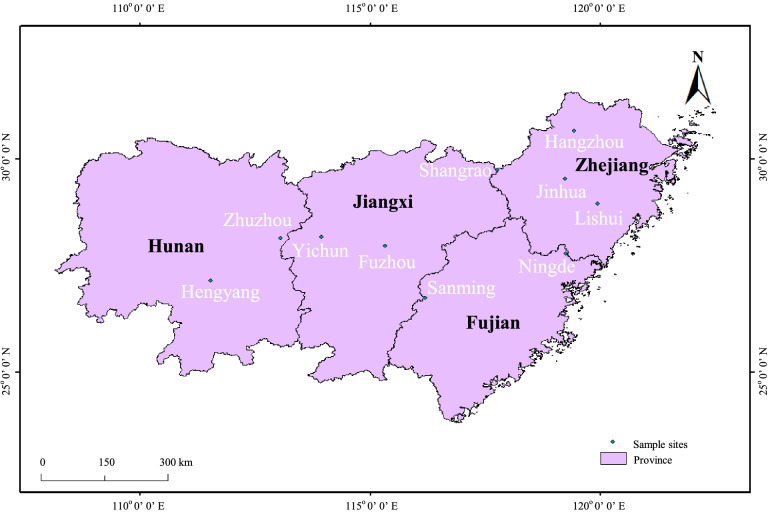
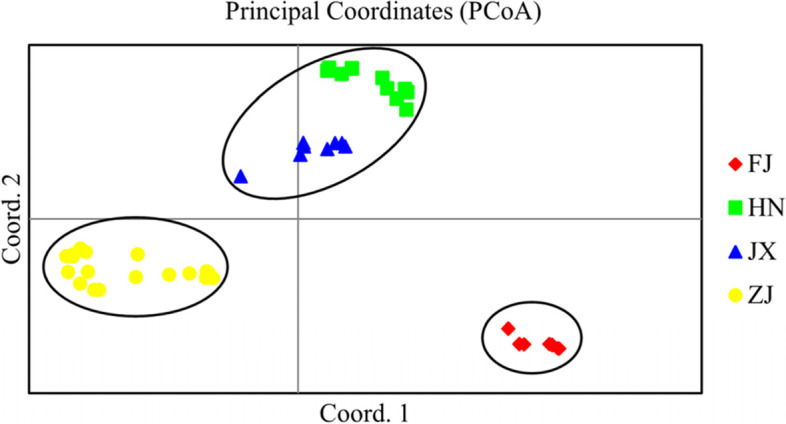
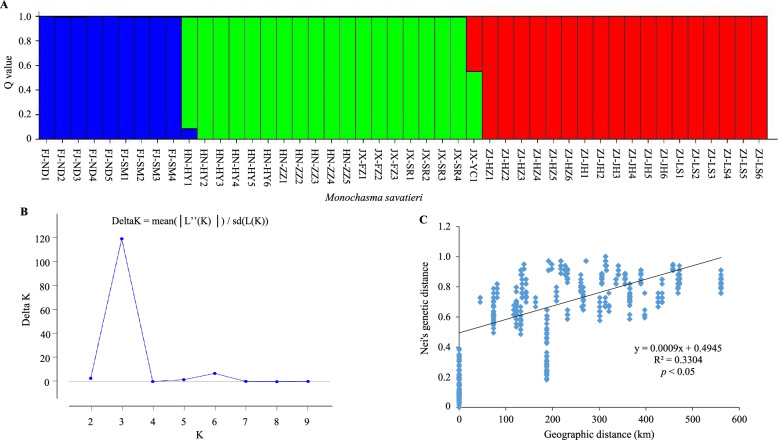
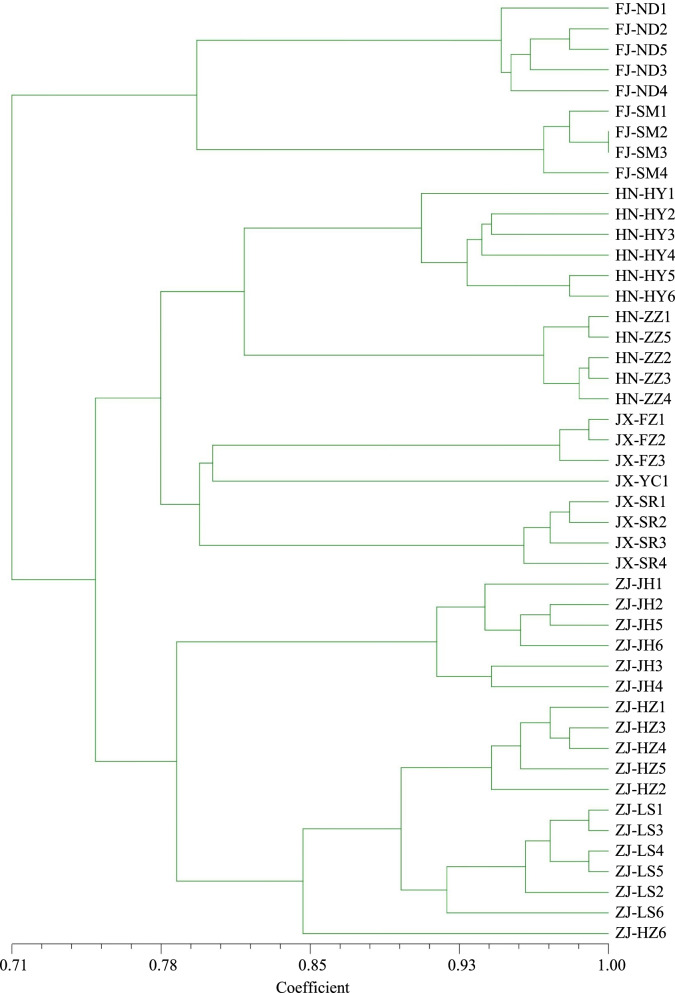
We collected and examined 46 M. savatieri individuals from Fujian, Hunan, Jiangxi, and Zhejiang provinces for genetic diversity and population structure, using 33 newly developed expressed sequence tag-simple sequence repeat (EST-SSR) markers. Applying these markers, we detected a total of 208 alleles, with an average of 6.303 alleles per locus. The polymorphic information content varied from 0.138 to 0.884 (average: 0.668), indicating a high level of polymorphism. At the population level, there was a low degree of genetic diversity among populations (I = 0.535, He = 0.342), with Zhejiang individuals showing the highest genetic diversity among the four populations (Fst = 0.497), which indicated little gene flow within the M. savatieri populations (Nm = 0.253). Mantel test analysis revealed a significant positive correlation between geographical and genetic distance among populations (R = 0.3304, p < 0.05), and structure and principal coordinate analyses supported classification of populations into three clusters, which was consistent with the findings of cluster analysis.
As a rare medicinal plants, the protection of M. savatieri does not look optimistic, and accordingly, protective efforts should be beefed up on the natural wild populations. This study provided novel tools and insights for designing effective collection and conservation strategies for M. savatieri.
三叶崖爬藤(Monochasma savatieri Franch. ex Maxim)是一种具有药用价值的草本植物。然而,三叶崖爬藤野生种质资源的收集和保护仍然不足,其遗传多样性和种群结构研究也相对较少。
我们从福建、湖南、江西和浙江四省收集并检测了 46 个三叶崖爬藤个体,应用 33 个新开发的表达序列标签简单重复序列(EST-SSR)标记进行遗传多样性和种群结构分析。共检测到 208 个等位基因,每个位点的平均等位基因数为 6.303。多态信息含量(PIC)的变化范围为 0.138 至 0.884(平均值:0.668),表明具有较高的多态性。在种群水平上,种群间遗传多样性较低(I = 0.535,He = 0.342),其中浙江种群的遗传多样性最高(Fst = 0.497),表明种群间的基因流较小(Nm = 0.253)。Mantel 检验分析表明,种群间地理和遗传距离呈显著正相关(R = 0.3304,p < 0.05),结构和主坐标分析支持将种群分为三个聚类,与聚类分析的结果一致。
作为一种稀有的药用植物,三叶崖爬藤的保护状况不容乐观,因此应加强对其野生种群的保护。本研究为三叶崖爬藤的有效收集和保护策略提供了新的工具和见解。