Fritsch Sebastian J, Blankenheim Andrea, Wahl Alina, Hetfeld Petra, Maassen Oliver, Deffge Saskia, Kunze Julian, Rossaint Rolf, Riedel Morris, Marx Gernot, Bickenbach Johannes
Department of Intensive Care Medicine, University Hospital RWTH Aachen, Germany.
SMITH Consortium of the German Medical Informatics Initiative, Germany.
Digit Health. 2022 Aug 8;8:20552076221116772. doi: 10.1177/20552076221116772. eCollection 2022 Jan-Dec.
The attitudes about the usage of artificial intelligence in healthcare are controversial. Unlike the perception of healthcare professionals, the attitudes of patients and their companions have been of less interest so far. In this study, we aimed to investigate the perception of artificial intelligence in healthcare among this highly relevant group along with the influence of digital affinity and sociodemographic factors.
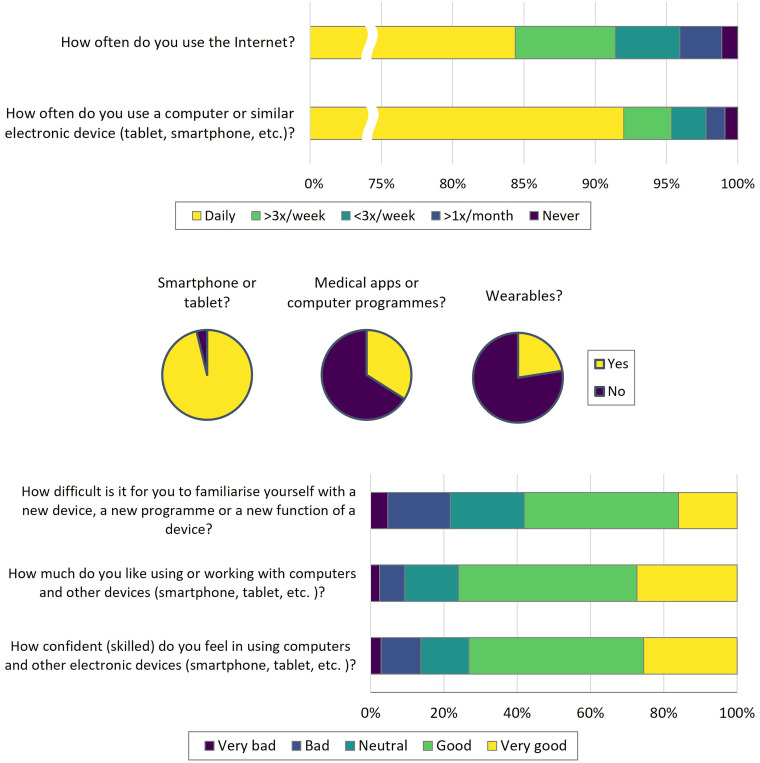
We conducted a cross-sectional study using a paper-based questionnaire with patients and their companions at a German tertiary referral hospital from December 2019 to February 2020. The questionnaire consisted of three sections examining (a) the respondents' technical affinity, (b) their perception of different aspects of artificial intelligence in healthcare and (c) sociodemographic characteristics.
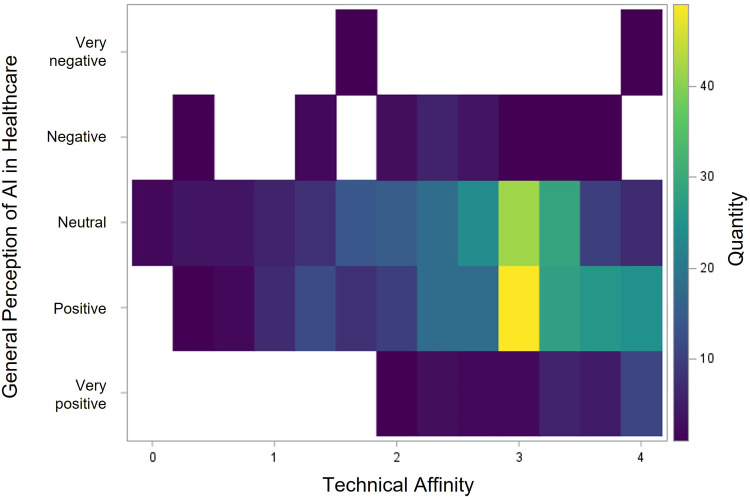
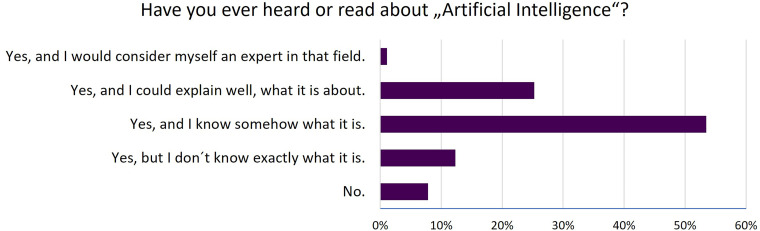
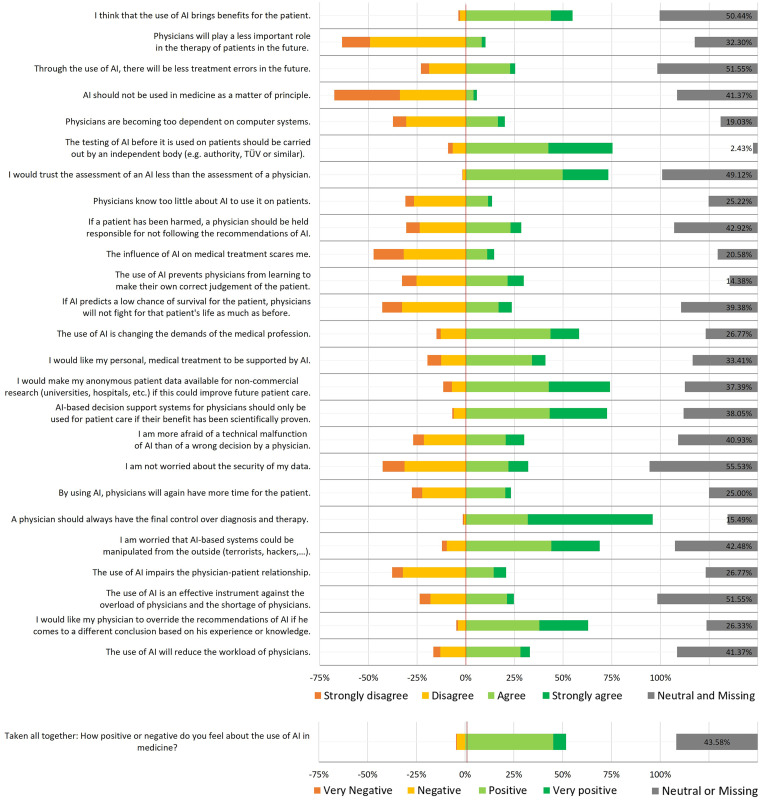
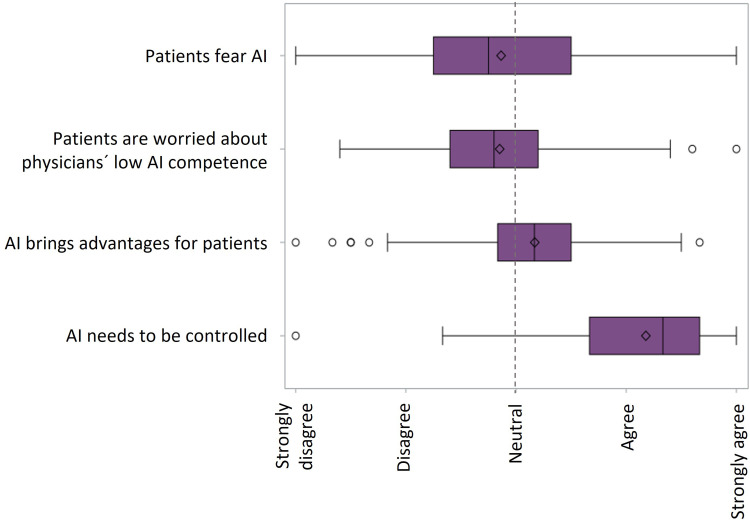
From a total of 452 participants, more than 90% already read or heard about artificial intelligence, but only 24% reported good or expert knowledge. Asked on their general perception, 53.18% of the respondents rated the use of artificial intelligence in medicine as positive or very positive, but only 4.77% negative or very negative. The respondents denied concerns about artificial intelligence, but strongly agreed that artificial intelligence must be controlled by a physician. Older patients, women, persons with lower education and technical affinity were more cautious on the healthcare-related artificial intelligence usage.
German patients and their companions are open towards the usage of artificial intelligence in healthcare. Although showing only a mediocre knowledge about artificial intelligence, a majority rated artificial intelligence in healthcare as positive. Particularly, patients insist that a physician supervises the artificial intelligence and keeps ultimate responsibility for diagnosis and therapy.
在医疗保健领域使用人工智能的态度存在争议。与医疗保健专业人员的看法不同,患者及其同伴的态度迄今为止较少受到关注。在本研究中,我们旨在调查这一高度相关群体对医疗保健领域人工智能的看法以及数字亲和力和社会人口统计学因素的影响。
我们于2019年12月至2020年2月在一家德国三级转诊医院对患者及其同伴进行了一项横断面研究,使用纸质问卷。问卷由三个部分组成,分别考察(a)受访者的技术亲和力,(b)他们对医疗保健领域人工智能不同方面的看法,以及(c)社会人口统计学特征。
在总共452名参与者中,超过90%的人已经阅读或听说过人工智能,但只有24%的人表示有良好或专业的知识。在被问及总体看法时,53.18%的受访者对医学中使用人工智能的评价为积极或非常积极,但只有4.77%的人评价为消极或非常消极。受访者否认对人工智能感到担忧,但强烈同意人工智能必须由医生控制。老年患者、女性、教育程度较低和技术亲和力较低的人在与医疗保健相关的人工智能使用方面更为谨慎。
德国患者及其同伴对医疗保健领域使用人工智能持开放态度。尽管对人工智能的了解仅处于中等水平,但大多数人对医疗保健领域的人工智能评价为积极。特别是,患者坚持认为医生应监督人工智能,并对诊断和治疗承担最终责任。