College of Nursing, University of Manitoba, Winnipeg, Manitoba, Canada
School of Nursing, University of British Columbia, Vancouver, British Columbia, Canada.
BMJ Open. 2022 Aug 19;12(8):e063507. doi: 10.1136/bmjopen-2022-063507.
To count and describe the elements that overlap (ie, present in two or more) and diverge between models and frameworks of patient engagement in health services research. Our specific research question was 'what are the elements that underlie models and frameworks of patient engagement in health services research?'
Scoping review.
On 6-7 July 2021, we searched six electronic databases (ie, CINAHL, Cochrane Database of Systematic Reviews, Joanna Briggs Institute Evidence Based Practice Database, MEDLINE, PsycINFO and Scopus) and Google Scholar for published literature, and ProQuest Dissertations & Theses, Conference Proceedings Citation Index, Google, and key agencies' websites for unpublished (ie, grey) literature, with no date restrictions. These searches were supplemented by snowball sampling.
We included published and unpublished literature that presented (a) models or frameworks (b) of patient engagement (c) in health services research. We excluded articles unavailable as full text or not written in English.
Two independent reviewers extracted data from included articles using an a priori developed standardised form. Data were synthesised using both quantitative (ie, counts) and qualitative (ie, mapping) analyses.
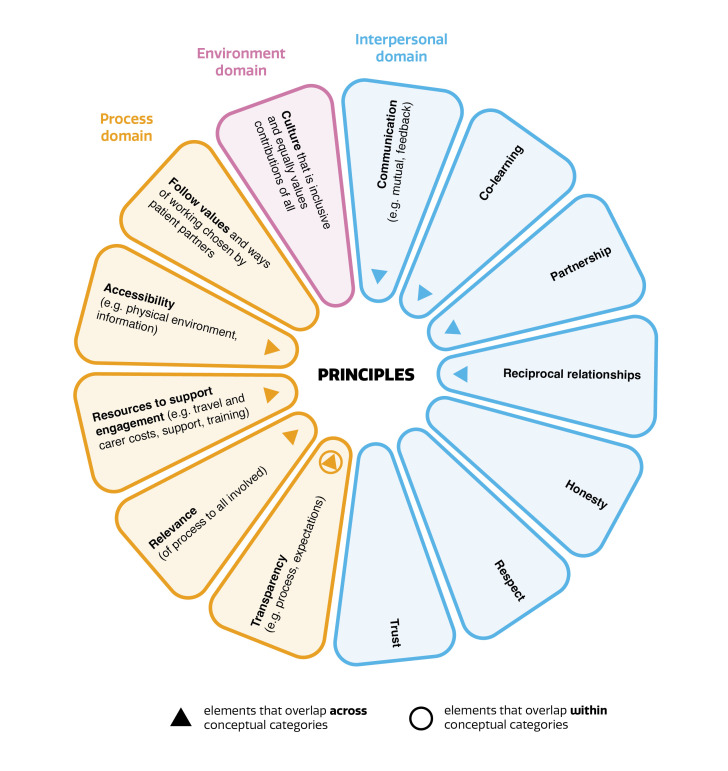
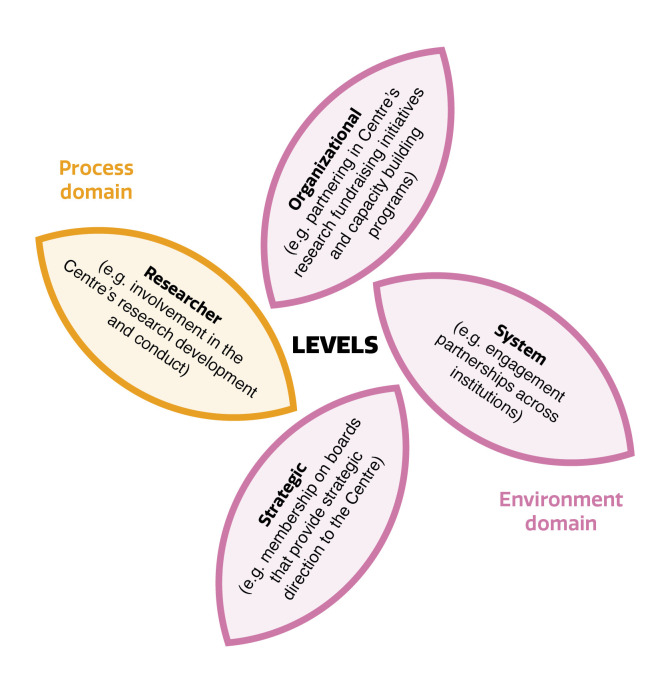
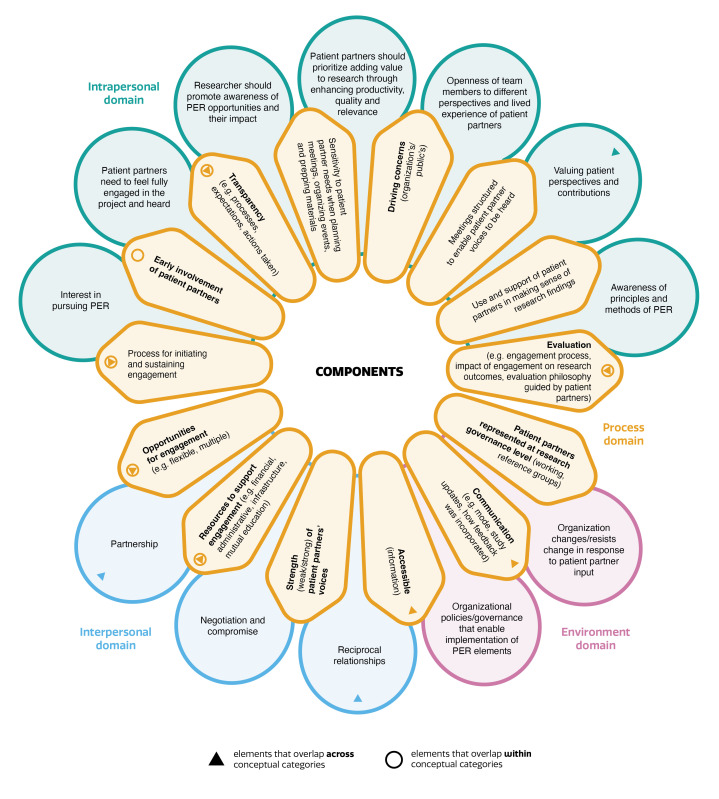
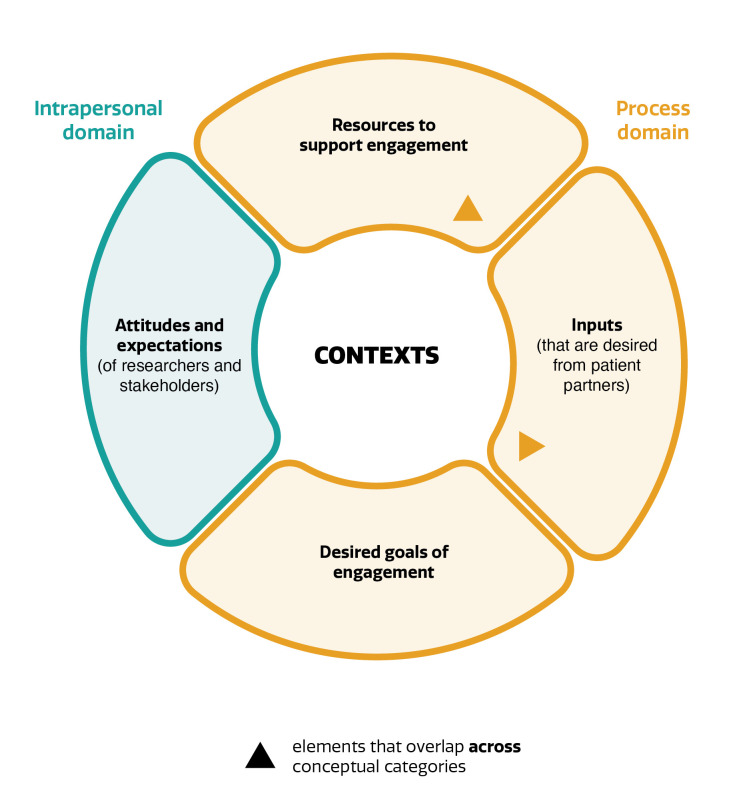
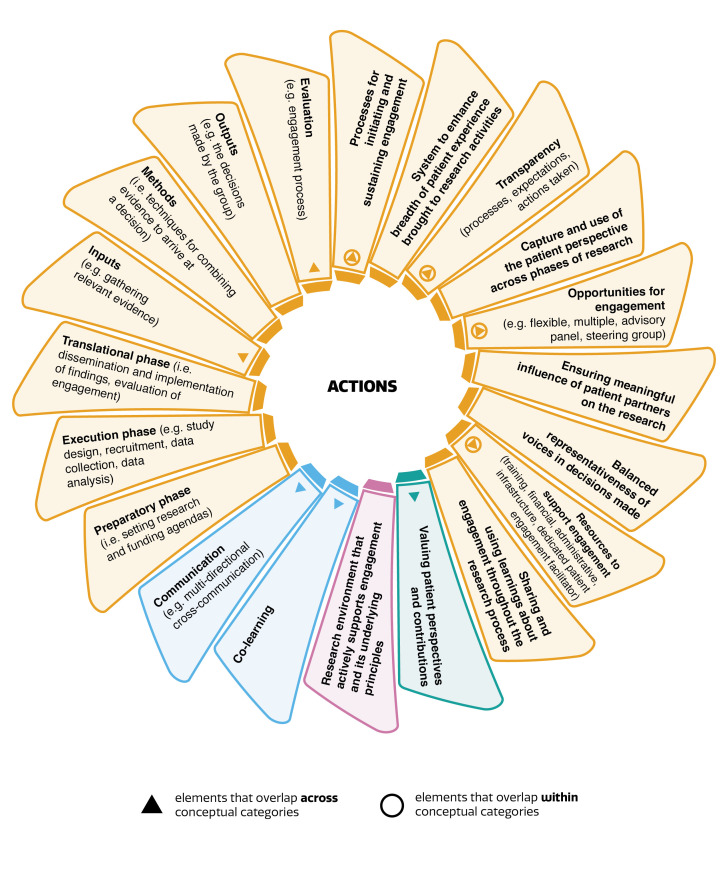
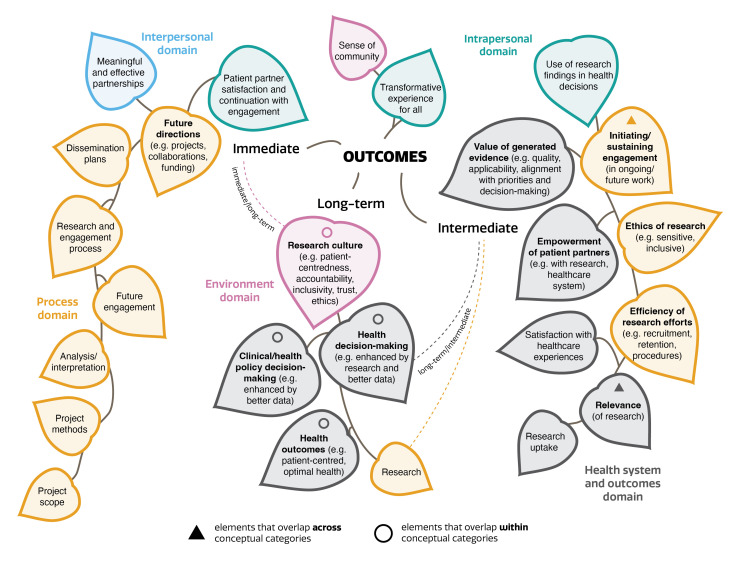
We identified a total of 8069 articles and ultimately included 14 models and frameworks in the review. These models and frameworks were comprised of 18 overlapping and 57 diverging elements, that were organised into six conceptual categories (ie, principles, foundational components, contexts, actions, levels and outcomes) and spanned intrapersonal, interpersonal, process, environmental, and health systems and outcomes domains.
There is little overlap between the elements that comprise existing models and frameworks of patient engagement in health services research. Those seeking to apply these models and frameworks should consider the 'fit' of each element, by conceptual category and domain, within the context of their study.
计算并描述在健康服务研究中患者参与的模型和框架之间重叠(即存在于两个或多个模型和框架中)和分歧的元素。我们的具体研究问题是“患者参与健康服务研究的模型和框架的基础元素是什么?”
范围综述。
2021 年 7 月 6 日至 7 日,我们在六个电子数据库(即 CINAHL、Cochrane 系统评价数据库、Joanna Briggs 循证实践数据库、MEDLINE、PsycINFO 和 Scopus)和 Google Scholar 中搜索了已发表的文献,并在 ProQuest Dissertations & Theses、会议论文引文索引、Google 和主要机构的网站上搜索了未发表(即灰色)文献,无日期限制。这些搜索通过滚雪球抽样进行补充。
我们纳入了已发表和未发表的文献,这些文献提出了(a)患者参与(b)健康服务研究的模型或框架。我们排除了无法作为全文获取或不是英文撰写的文章。
两名独立评审员使用预先制定的标准化表格从纳入的文章中提取数据。使用定量(即计数)和定性(即映射)分析综合数据。
我们共确定了 8069 篇文章,最终在综述中纳入了 14 个模型和框架。这些模型和框架由 18 个重叠元素和 57 个分歧元素组成,分为六个概念类别(即原则、基础组件、背景、行动、层次和结果),涵盖了个体内部、人际、过程、环境以及卫生系统和结果领域。
在健康服务研究中患者参与的现有模型和框架所包含的元素之间几乎没有重叠。那些希望应用这些模型和框架的人应该考虑每个元素的“适配性”,根据概念类别和领域,在其研究背景下进行考虑。