Hinsenkamp Adél, Fülöp Ágnes, Hricisák László, Pál Éva, Kun Kiara, Majer Aliz, Varga Viktória, Lacza Zsombor, Hornyák István
Institute of Translational Medicine, Semmelweis University, H-1094 Budapest, Hungary.
Orthosera Medical Zrt., H-1121 Budapest, Hungary.
J Funct Biomater. 2022 Aug 13;13(3):119. doi: 10.3390/jfb13030119.
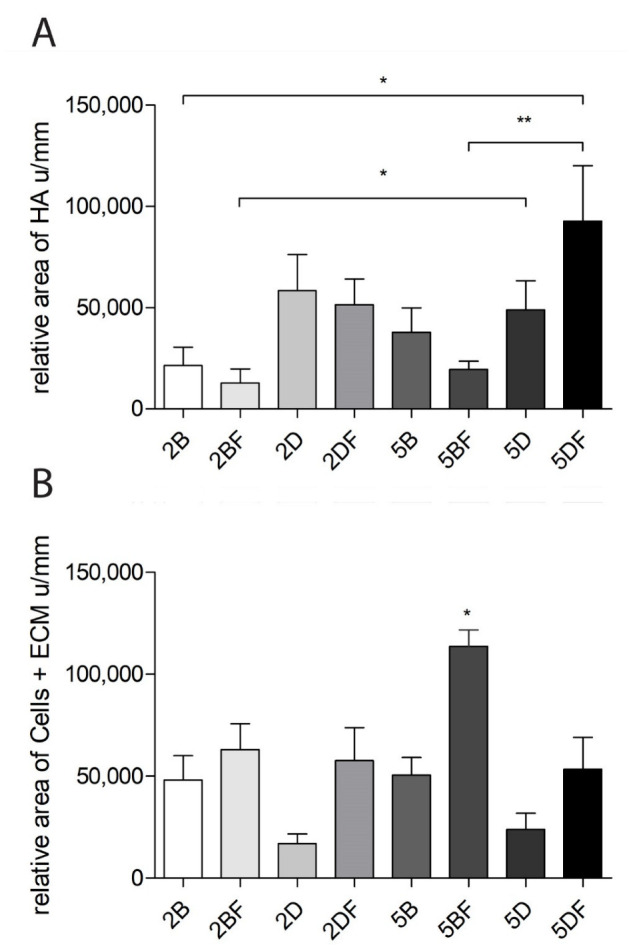
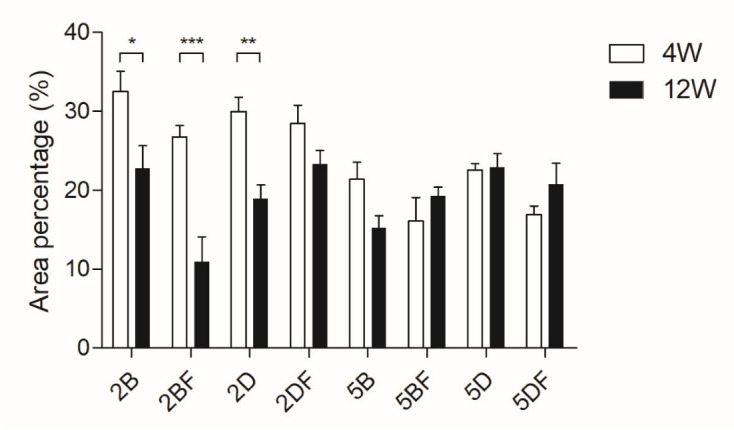
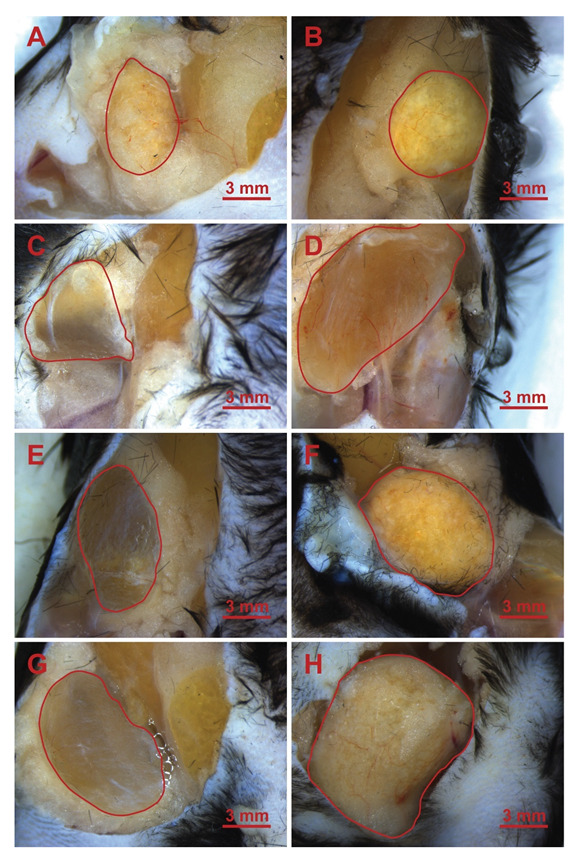
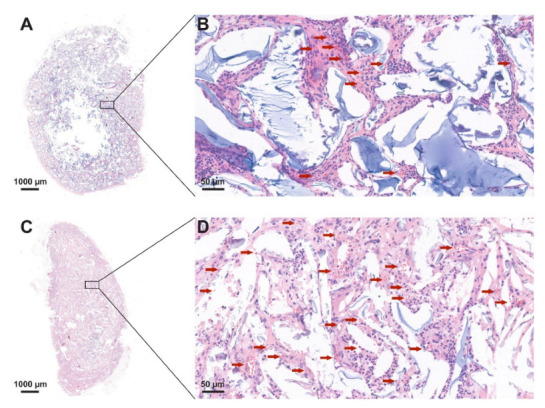
The present research aimed to characterize soft tissue implants that were prepared with the use of crosslinked hyaluronic acid (HA) using two different crosslinkers and multiple reagent concentrations, alone or in combination with fibrin. The effect of the implants was evaluated in an in vivo mouse model, after 4 weeks in one group and after 12 weeks in the other. The explants were compared using analytical methods, evaluating microscopic images, and a histology analysis. The kinetics of the degradation and remodeling of explants were found to be greatly dependent on the concentration and type of crosslinker; generally, divinyl sulfone (DVS) resists degradation more effectively compared to butanediol diglycidyl ether (BDDE). The presence of fibrin enhances the formation of blood vessels, and the infiltration of cells and extracellular matrix. In summary, if the aim is to create a soft tissue implant with easier degradation of the HA content, then the use of 2-5% BDDE is found to be optimal. For a longer degradation time, 5% DVS is the more suitable crosslinker. The use of fibrin was found to support the biological process of remodeling, while keeping the advances of HA in void filling, enabling the parallel degradation and remodeling processes.
本研究旨在对使用两种不同交联剂和多种试剂浓度制备的交联透明质酸(HA)软组织植入物进行表征,这些植入物单独使用或与纤维蛋白联合使用。在体内小鼠模型中评估植入物的效果,一组在4周后评估,另一组在12周后评估。使用分析方法、评估微观图像和组织学分析对植入物进行比较。发现植入物降解和重塑的动力学在很大程度上取决于交联剂的浓度和类型;一般来说,与丁二醇二缩水甘油醚(BDDE)相比,二乙烯基砜(DVS)更有效地抵抗降解。纤维蛋白的存在促进血管形成以及细胞和细胞外基质的浸润。总之,如果目标是创建一种HA含量更容易降解的软组织植入物,那么发现使用2-5%的BDDE是最佳的。对于更长的降解时间,5%的DVS是更合适的交联剂。发现使用纤维蛋白可支持重塑的生物学过程,同时保持HA在填充空隙方面的优势,使降解和重塑过程并行进行。