Department of Dermatology, Shenzhen Peoples Hospital, The Second Clinical Medica College, Jinan University, The First Affiliated Hospital, Southern University of Science and Technology, Shenzhen, China.
Dermatology Department of Xiangya Hospital, Central South University, Changsha, China.
Front Endocrinol (Lausanne). 2022 Aug 8;13:945020. doi: 10.3389/fendo.2022.945020. eCollection 2022.
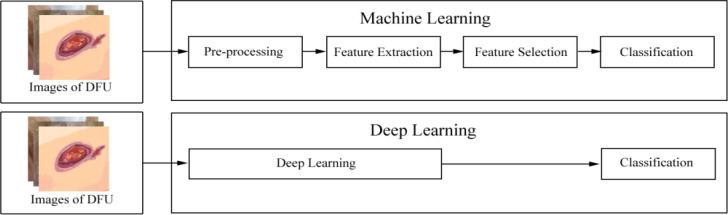
Diabetes mellitus (DM) is a chronic disease with hyperglycemia. If not treated in time, it may lead to lower limb amputation. At the initial stage, the detection of diabetes-related foot ulcer (DFU) is very difficult. Deep learning has demonstrated state-of-the-art performance in various fields and has been used to analyze images of DFUs.
This article reviewed current applications of deep learning to the early detection of DFU to avoid limb amputation or infection.
Relevant literature on deep learning models, including in the classification, object detection, and semantic segmentation for images of DFU, published during the past 10 years, were analyzed.
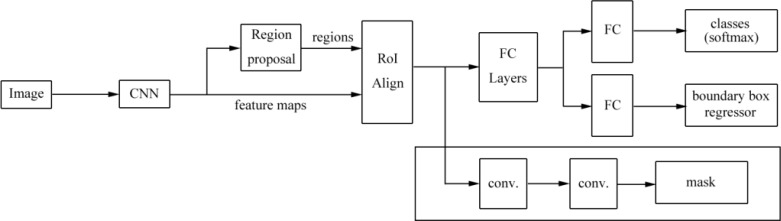
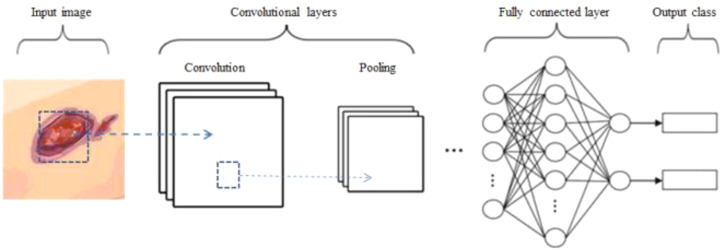
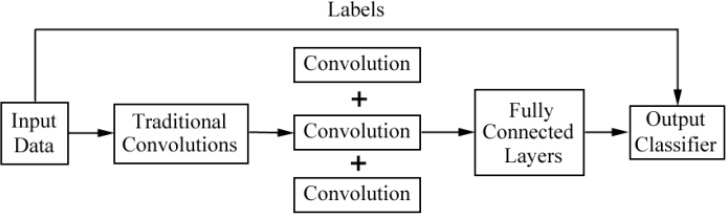
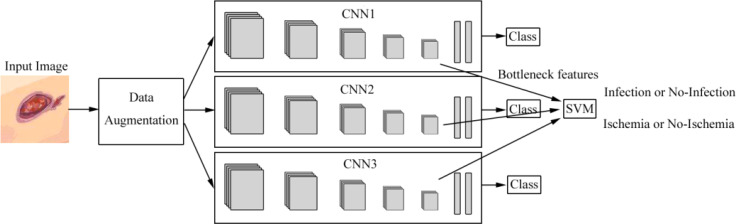
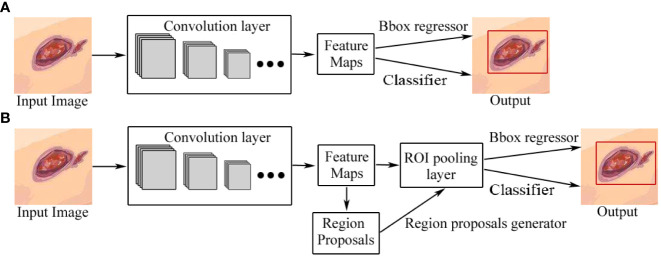
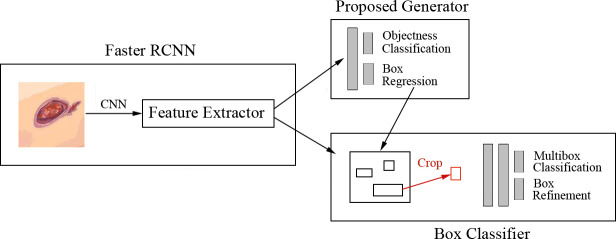
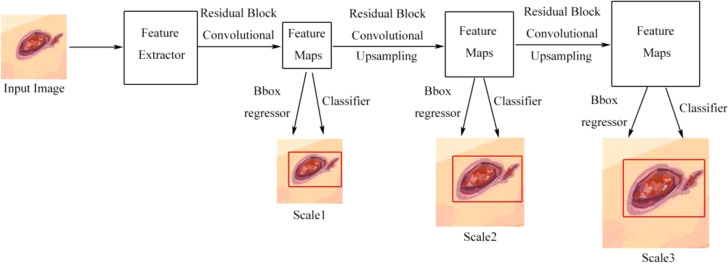
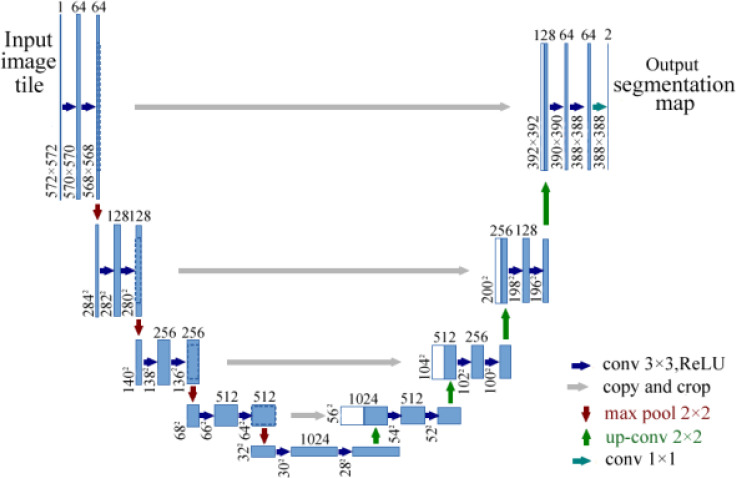
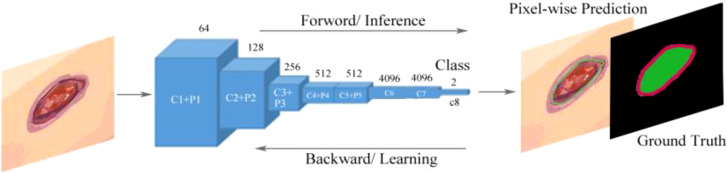
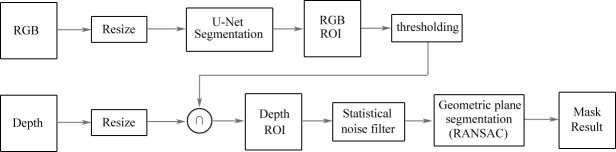
Currently, the primary uses of deep learning in early DFU detection are related to different algorithms. For classification tasks, improved classification models were all based on convolutional neural networks (CNNs). The model with parallel convolutional layers based on GoogLeNet and the ensemble model outperformed the other models in classification accuracy. For object detection tasks, the models were based on architectures such as faster R-CNN, You-Only-Look-Once (YOLO) v3, YOLO v5, or EfficientDet. The refinements on YOLO v3 models achieved an accuracy of 91.95% and the model with an adaptive faster R-CNN architecture achieved a mean average precision (mAP) of 91.4%, which outperformed the other models. For semantic segmentation tasks, the models were based on architectures such as fully convolutional networks (FCNs), U-Net, V-Net, or SegNet. The model with U-Net outperformed the other models with an accuracy of 94.96%. Taking segmentation tasks as an example, the models were based on architectures such as mask R-CNN. The model with mask R-CNN obtained a precision value of 0.8632 and a mAP of 0.5084.
Although current research is promising in the ability of deep learning to improve a patient's quality of life, further research is required to better understand the mechanisms of deep learning for DFUs.
糖尿病(DM)是一种以高血糖为特征的慢性疾病,如果不及时治疗,可能会导致下肢截肢。在早期,糖尿病相关足溃疡(DFU)的检测非常困难。深度学习在各个领域已经展现出了最先进的性能,并被用于分析 DFU 的图像。
本文综述了深度学习在早期 DFU 检测中的应用,以避免截肢或感染。
分析了过去 10 年发表的关于深度学习模型在 DFU 图像分类、目标检测和语义分割等方面的相关文献。
目前,深度学习在早期 DFU 检测中的主要应用与不同的算法有关。在分类任务中,改进的分类模型均基于卷积神经网络(CNNs)。基于 GoogLeNet 的并行卷积层模型和集成模型在分类准确率方面优于其他模型。在目标检测任务中,模型基于 faster R-CNN、You-Only-Look-Once (YOLO) v3、YOLO v5 或 EfficientDet 等架构。对 YOLO v3 模型的改进达到了 91.95%的准确率,自适应 faster R-CNN 架构的模型达到了 91.4%的平均准确率(mAP),优于其他模型。在语义分割任务中,模型基于 fully convolutional networks (FCNs)、U-Net、V-Net 或 SegNet 等架构。基于 U-Net 的模型优于其他模型,准确率为 94.96%。以分割任务为例,模型基于 mask R-CNN 等架构。基于 mask R-CNN 的模型的准确率为 0.8632,mAP 为 0.5084。
尽管深度学习在提高患者生活质量方面具有很大的潜力,但需要进一步的研究来更好地理解其对 DFU 的作用机制。