Sinnberg Tobias, Lichtensteiger Christa, Hill-Mündel Katharina, Leischner Christian, Niessner Heike, Busch Christian, Renner Olga, Wyss Nina, Flatz Lukas, Lauer Ulrich M, Hoelzle Ludwig E, Nohr Donatus, Burkard Markus, Marongiu Luigi, Venturelli Sascha
Department of Dermatology, University Hospital Tuebingen, 72076 Tuebingen, Germany.
Department of Dermatology, Venereology and Allergology, Charité-Universitätsmedizin Berlin, 10117 Berlin, Germany.
Antioxidants (Basel). 2022 Aug 15;11(8):1580. doi: 10.3390/antiox11081580.
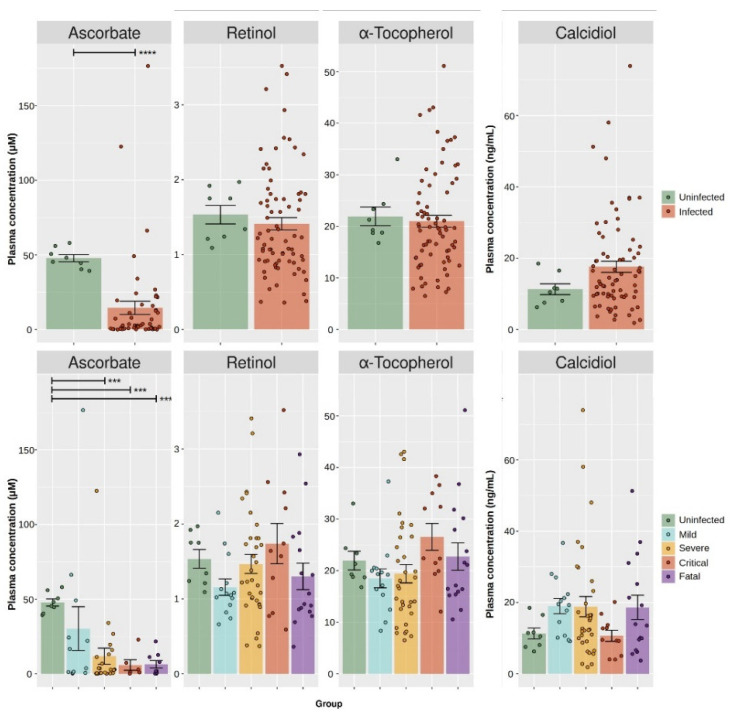
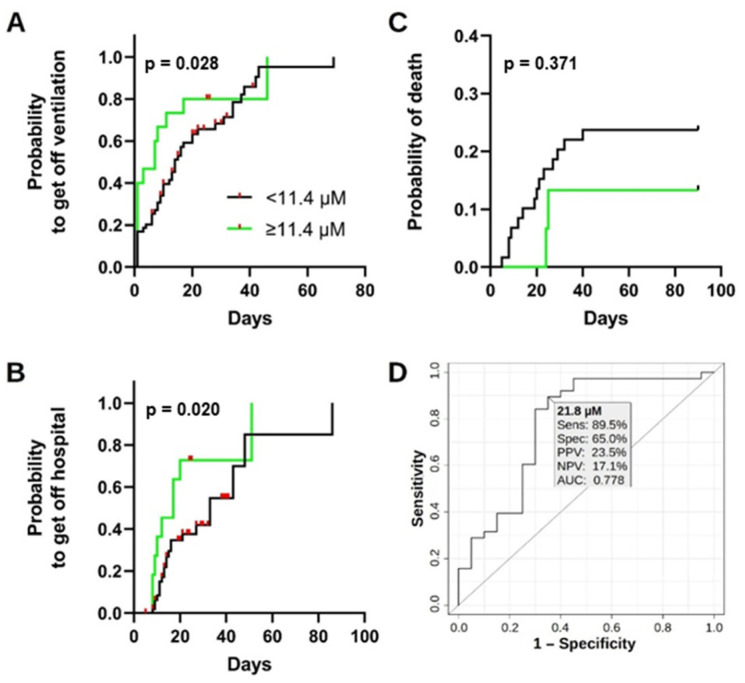
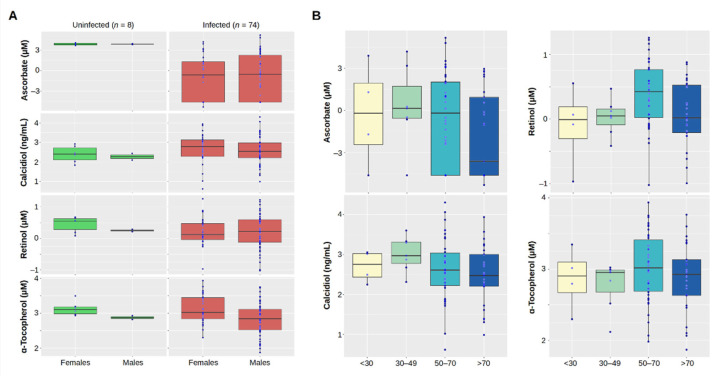
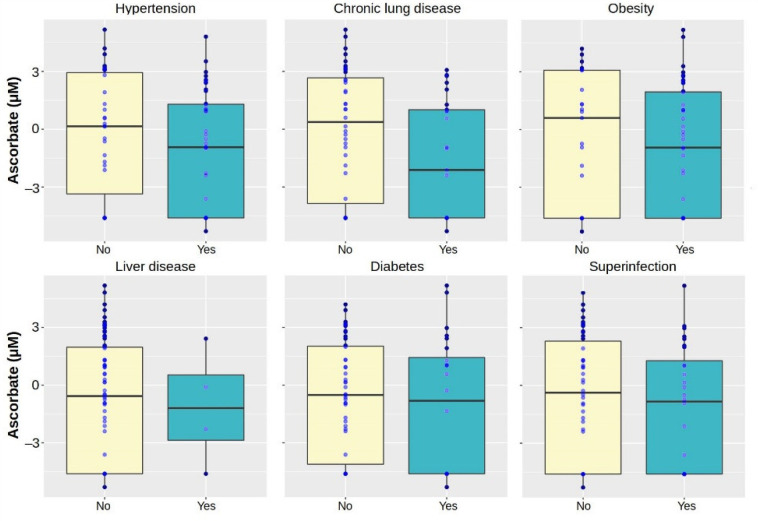
Coronavirus disease 2019 (COVID-19) is the most notable pandemic of the modern era. A relationship between ascorbate (vitamin C) and COVID-19 severity is well known, whereas the role of other vitamins is less understood. The present study compared the blood levels of four vitamins in a cohort of COVID-19 patients with different severities and uninfected individuals. Serum concentrations of ascorbate, calcidiol, retinol, and α-tocopherol were measured in a cohort of 74 COVID-19 patients and 8 uninfected volunteers. The blood levels were statistically compared and additional co-morbidity factors were considered. COVID-19 patients had significantly lower plasma ascorbate levels than the controls (p-value < 0.001), and further stratification revealed that the controls had higher levels than fatal, critical, and severe COVID-19 cases (p-values < 0.001). However, no such trend was observed for calcidiol, retinol, or α-tocopherol (p-value ≥ 0.093). Survival analysis showed that plasma ascorbate below 11.4 µM was associated with a lengthy hospitalization and a high risk of death. The results indicated that COVID-19 cases had depleted blood ascorbate associated with poor medical conditions, confirming the role of this vitamin in the outcome of COVID-19 infection.
2019冠状病毒病(COVID-19)是现代最显著的大流行病。抗坏血酸(维生素C)与COVID-19严重程度之间的关系已为人熟知,而其他维生素的作用则了解较少。本研究比较了不同严重程度的COVID-19患者队列和未感染个体中四种维生素的血液水平。在74名COVID-19患者和8名未感染志愿者的队列中测量了抗坏血酸、骨化二醇、视黄醇和α-生育酚的血清浓度。对血液水平进行了统计学比较,并考虑了其他合并症因素。COVID-19患者的血浆抗坏血酸水平显著低于对照组(p值<0.001),进一步分层显示对照组的水平高于致命、重症和重度COVID-19病例(p值<0.001)。然而,骨化二醇、视黄醇或α-生育酚未观察到这种趋势(p值≥0.093)。生存分析表明,血浆抗坏血酸低于11.4 µM与住院时间延长和高死亡风险相关。结果表明,COVID-19病例血液中的抗坏血酸减少与病情不佳有关,证实了这种维生素在COVID-19感染结果中的作用。