Tomanić Dragana, Božin Biljana, Kladar Nebojša, Stanojević Jovan, Čabarkapa Ivana, Stilinović Nebojša, Apić Jelena, Božić Dragana D, Kovačević Zorana
Department of Veterinary Medicine, Faculty of Agriculture, University of Novi Sad, Trg Dositeja Obradovica 8, 21000 Novi Sad, Serbia.
Center for Medical and Pharmaceutical Investigations and Quality Control, Department of Pharmacy, Faculty of Medicine, University of Novi Sad, Hajduk Veljkova 3, 21000 Novi Sad, Serbia.
Antibiotics (Basel). 2022 Aug 9;11(8):1077. doi: 10.3390/antibiotics11081077.
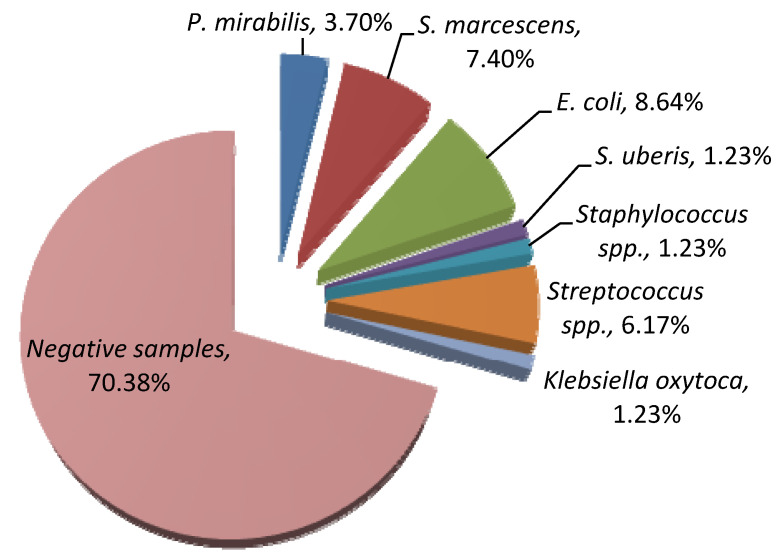
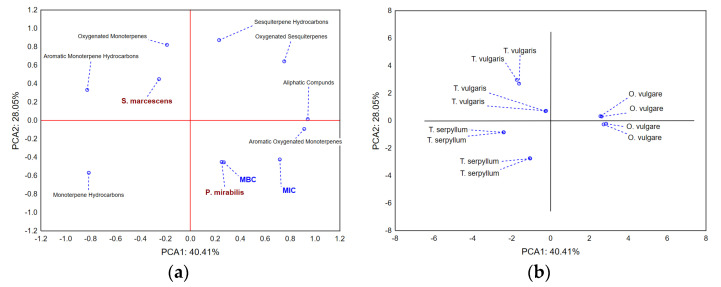
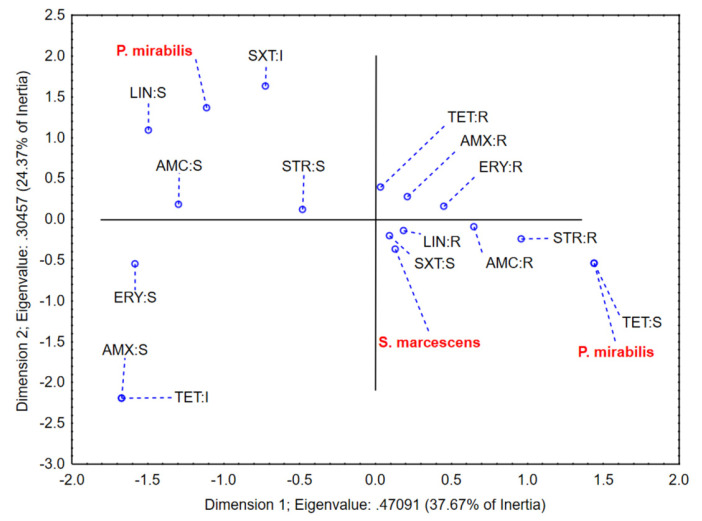
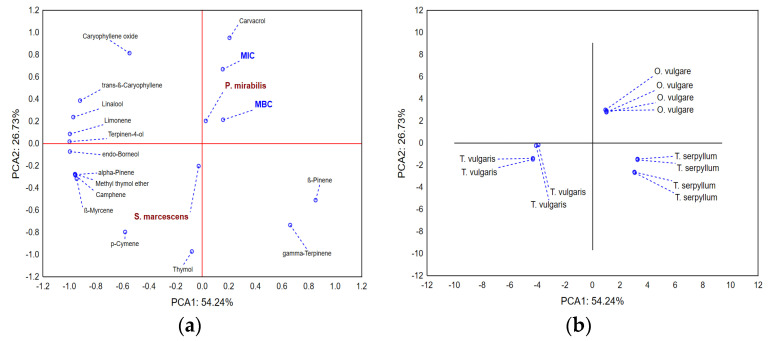
Mastitis is considered to be one of the most important diseases of dairy cows in terms of health, production, and economy. Being the most common cause of antibiotic consumption in dairy cows, treatment of this disease is one of the biggest challenges in the veterinary profession as an increasing number of pathogens develop resistance to antibiotics used in the treatment. Therefore, new alternative approaches for limiting the use of antibiotics in livestock are required. For this reason, our study aimed to investigate prevalence of environmental mastitis associated bacterial strains, as well as the sensitivity of isolated strains to different antibiotics. Additionally, the therapeutic potential of three essential oils (EOs) was tested against bovine spp. and spp. mastitis pathogens, based on their chemical composition, as well as antibacterial potential. The study was carried out on 81 milk samples collected from dairy cows with mastitis. In order to determine prevalence of and , microbiological isolation and identification were performed. Antimicrobial susceptibility testing was performed by disk diffusion method and the microdilution method was used to determine the antibacterial activity of selected EOs. In the oregano EO, a total of 23 compounds were detected, with carvacrol as a dominant component (78.94%). A total of 26 components were present in the EO of common thyme, where thymol was the most abundant compound (46.37%). Thymol also dominated (55.11%) the wild thyme EO. All tested EOs displayed antibacterial activity against all strains to different extents, while wild and common thyme EOs were the most effective. It could be concluded that the tested EOs represent promising therapeutic candidates for effective non-antibiotic treatment of mastitis.
就健康、生产和经济而言,乳腺炎被认为是奶牛最重要的疾病之一。作为奶牛抗生素使用的最常见原因,这种疾病的治疗是兽医行业面临的最大挑战之一,因为越来越多的病原体对治疗中使用的抗生素产生耐药性。因此,需要新的替代方法来限制家畜抗生素的使用。出于这个原因,我们的研究旨在调查与环境性乳腺炎相关的细菌菌株的流行情况,以及分离菌株对不同抗生素的敏感性。此外,根据三种精油(EOs)的化学成分和抗菌潜力,测试了它们对牛源 spp. 和 spp. 乳腺炎病原体的治疗潜力。该研究对从患乳腺炎的奶牛采集的81份牛奶样本进行。为了确定 和 的流行情况,进行了微生物分离和鉴定。采用纸片扩散法进行药敏试验,并用微量稀释法测定所选精油的抗菌活性。在牛至精油中,共检测到23种化合物,其中香芹酚为主要成分(78.94%)。百里香精油中共有26种成分,其中百里酚是含量最高的化合物(46.37%)。百里酚在野生百里香精油中也占主导地位(55.11%)。所有测试的精油对所有菌株都有不同程度的抗菌活性,而野生百里香和百里香精油最有效。可以得出结论,所测试的精油是乳腺炎有效非抗生素治疗的有前景的治疗候选物。