Chopard Romain, Behr Julien, Vidoni Charles, Ecarnot Fiona, Meneveau Nicolas
Department of Cardiology, University Hospital Besançon, 25000 Besancon, France.
EA3920, University of Burgundy Franche-Comté, 25000 Besancon, France.
J Clin Med. 2022 Aug 17;11(16):4807. doi: 10.3390/jcm11164807.
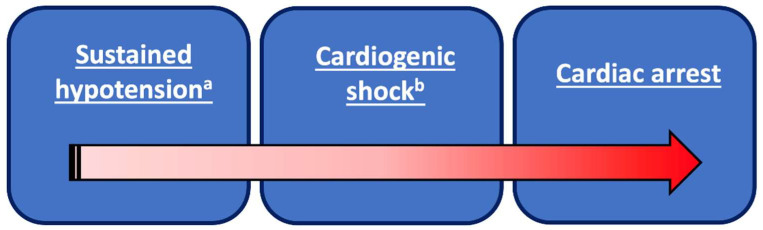
Hemodynamic instability and right ventricular (RV) dysfunction are the key determinants of short-term prognosis in patients with acute pulmonary embolism (PE). High-risk PE encompasses a wide spectrum of clinical situations from sustained hypotension to cardiac arrest. Early recognition and treatment tailored to each individual are crucial. Systemic fibrinolysis is the first-line pulmonary reperfusion therapy to rapidly reverse RV overload and hemodynamic collapse, at the cost of a significant rate of bleeding. Catheter-directed pharmacological and mechanical techniques ensure swift recovery of echocardiographic parameters and may possess a better safety profile than systemic thrombolysis. Further clinical studies are mandatory to clarify which pulmonary reperfusion strategy may improve early clinical outcomes and fill existing gaps in the evidence.
血流动力学不稳定和右心室(RV)功能障碍是急性肺栓塞(PE)患者短期预后的关键决定因素。高危PE涵盖了从持续性低血压到心脏骤停的广泛临床情况。早期识别并针对个体进行治疗至关重要。全身溶栓是一线肺再灌注治疗,可迅速逆转右心室负荷过重和血流动力学崩溃,但代价是有较高的出血发生率。导管导向的药物和机械技术可确保超声心动图参数迅速恢复,且安全性可能优于全身溶栓。必须进行进一步的临床研究,以明确哪种肺再灌注策略可改善早期临床结局并填补现有证据空白。