Beijing National Laboratory for Molecular Sciences, Key Laboratory of Molecular Nanostructure and Nanotechnology, Institute of Chemistry, Chinese Academy of Sciences, Beijing, 100190, China.
University of Chinese Academy of Sciences, Beijing, 100049, China.
Adv Sci (Weinh). 2022 Oct;9(29):e2201541. doi: 10.1002/advs.202201541. Epub 2022 Aug 28.
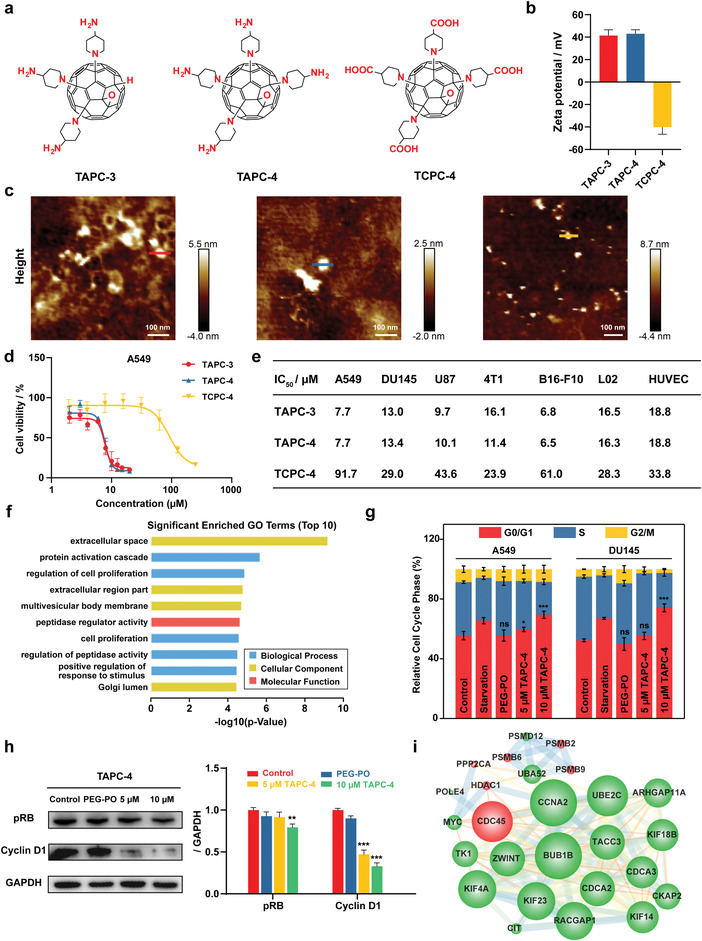
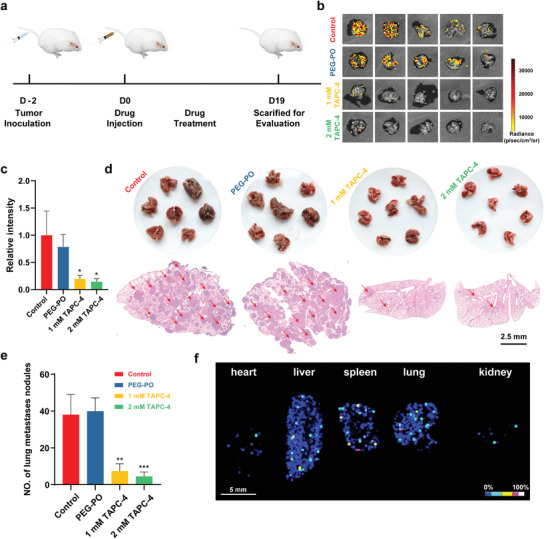
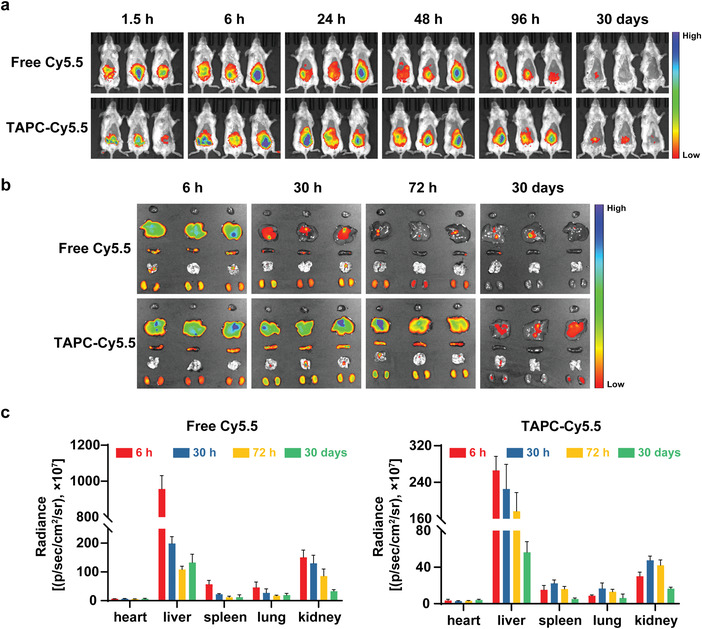
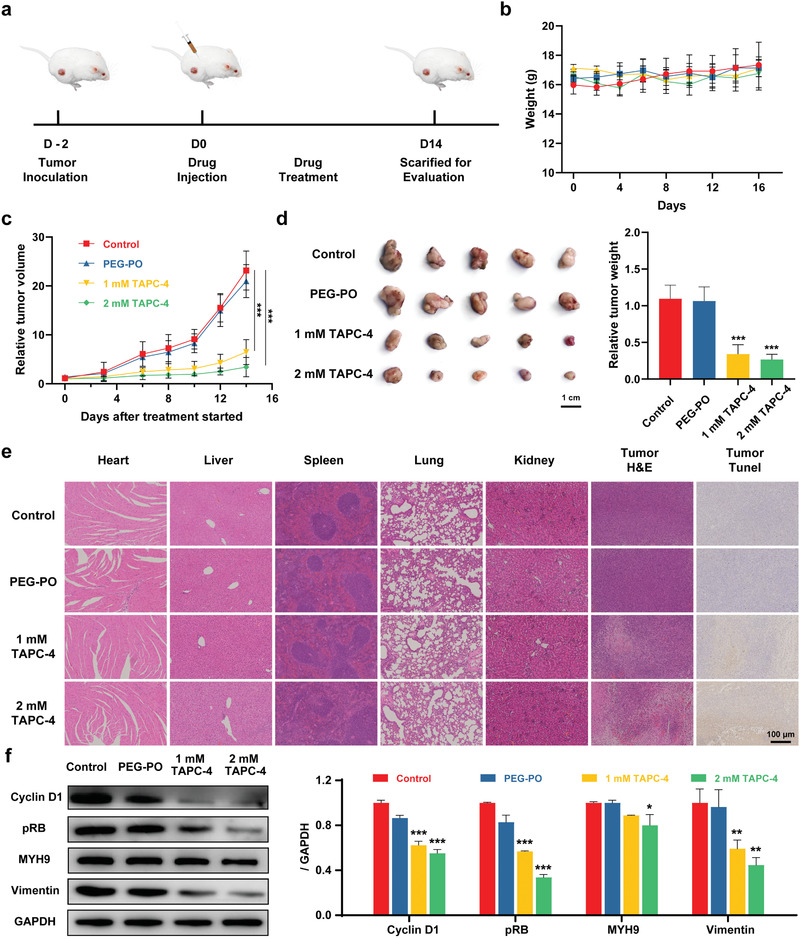
Malignant proliferation and metastasis are the hallmarks of cancer cells. Aminated [70]fullerene exhibits notable antineoplastic effects, promoting it a candidate for multi-targeted cancer drugs. It is an urgent need to reveal the structure-activity relationship for antineoplastic aminated fullerenes. Herein, three amphiphilic derivatives of [60]fullerene with clarified molecular structures are synthesized: TAPC-4, TAPC-3, and TCPC-4. TAPC-4 inhibits the proliferation of diverse tumor cells via G0/G1 cell cycle arrest, reverses the epithelial-mesenchymal transition, and abrogates the high mobility of tumor cells. TAPC-4 can be excreted from the organism and achieves an in vivo inhibition index of 75.5% in tumor proliferation and 87.5% in metastatic melanoma with a wide safety margin. Molecular dynamics simulations reveal that the amphiphilic molecular structure and the ending amino groups promote the targeting of TAPC-4 to heat shock protein Hsp90-beta, vimentin, and myosin heavy chain 9 (MYH9), probably resulting in the alteration of cyclin D1 translation, vimentin expression, and MYH9 location, respectively. This work initially emphasizes the dominant role of the amphiphilic structure and the terminal amino moieties in the antineoplastic effects of aminated fullerenes, providing fundamental support for their anti-tumor drug development.
恶性增殖和转移是癌细胞的特征。氨基化[70]富勒烯表现出显著的抗肿瘤作用,使其成为多靶点癌症药物的候选物。揭示抗肿瘤氨基富勒烯的结构-活性关系是当务之急。在此,合成了三种具有明确分子结构的[60] fullerene 两亲性衍生物:TAPC-4、TAPC-3 和 TCPC-4。TAPC-4 通过 G0/G1 细胞周期阻滞抑制多种肿瘤细胞的增殖,逆转上皮-间充质转化,并消除肿瘤细胞的高迁移性。TAPC-4 可以从生物体中排出,并在体内实现对肿瘤增殖的抑制指数为 75.5%,对转移性黑色素瘤的抑制指数为 87.5%,具有较大的安全边际。分子动力学模拟表明,两亲性分子结构和末端氨基基团促进 TAPC-4 靶向热休克蛋白 Hsp90-beta、波形蛋白和肌球蛋白重链 9(MYH9),可能导致细胞周期蛋白 D1 翻译、波形蛋白表达和 MYH9 位置的改变。这项工作最初强调了两亲性结构和末端氨基基团在氨基富勒烯抗肿瘤作用中的主导作用,为它们的抗肿瘤药物开发提供了基础支持。