Zhang Xiaowen, Tian Chuanjie, Cheng Jianbin, Mao Weipu, Li Menglan, Chen Ming
Department of Urology, Affiliated Zhongda Hospital of South-East University, Nanjing, Jiangsu 210009, P.R. China.
Department of Urology Surgery, Heqiao Hospital, Yixing, Jiangsu 214200, P.R. China.
Exp Ther Med. 2022 Jul 8;24(3):563. doi: 10.3892/etm.2022.11500. eCollection 2022 Sep.
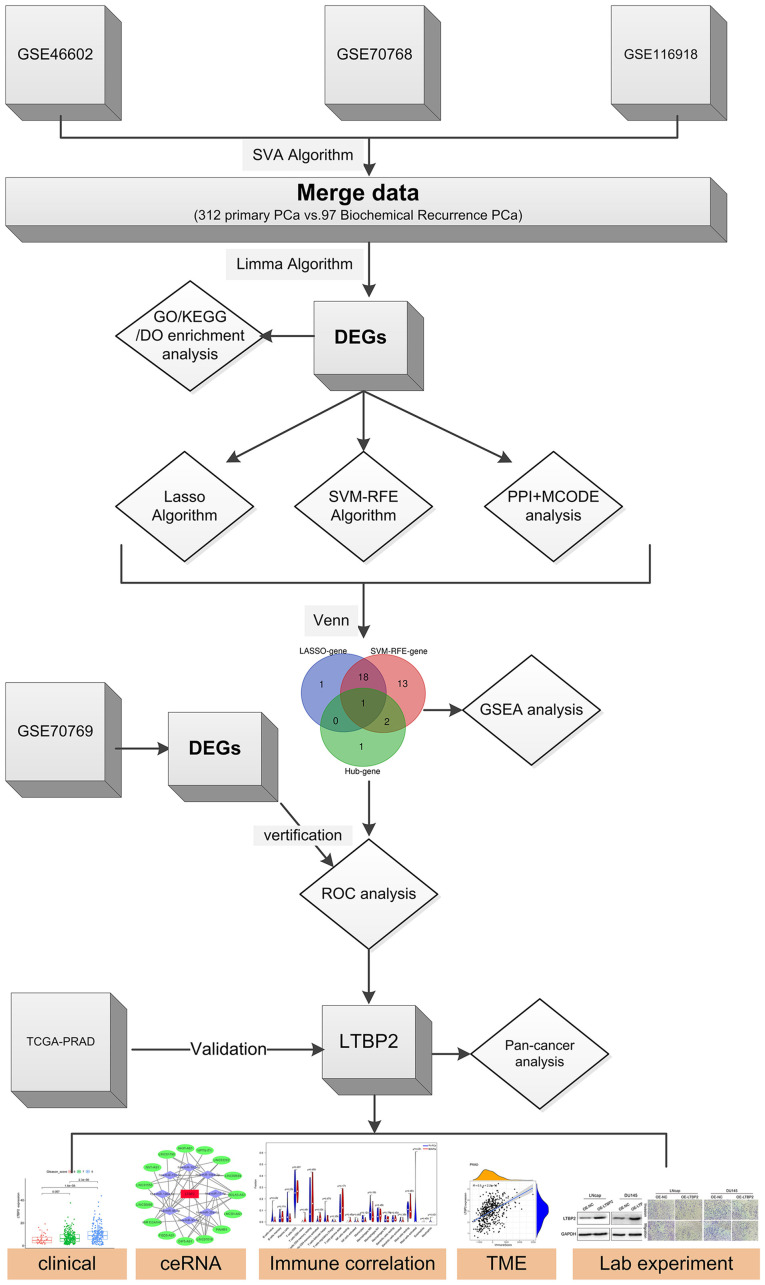
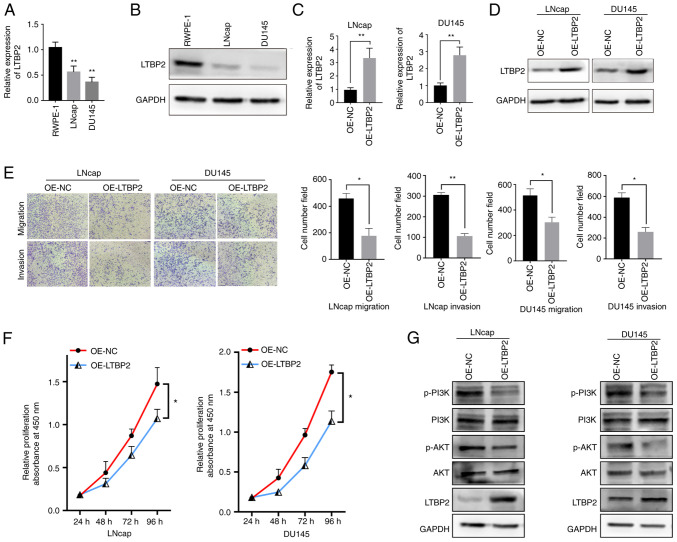
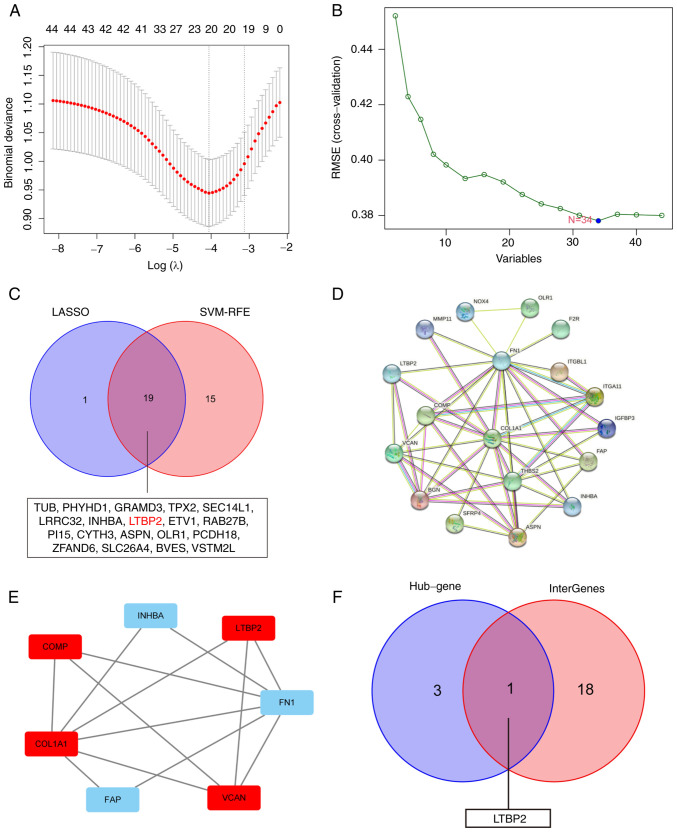
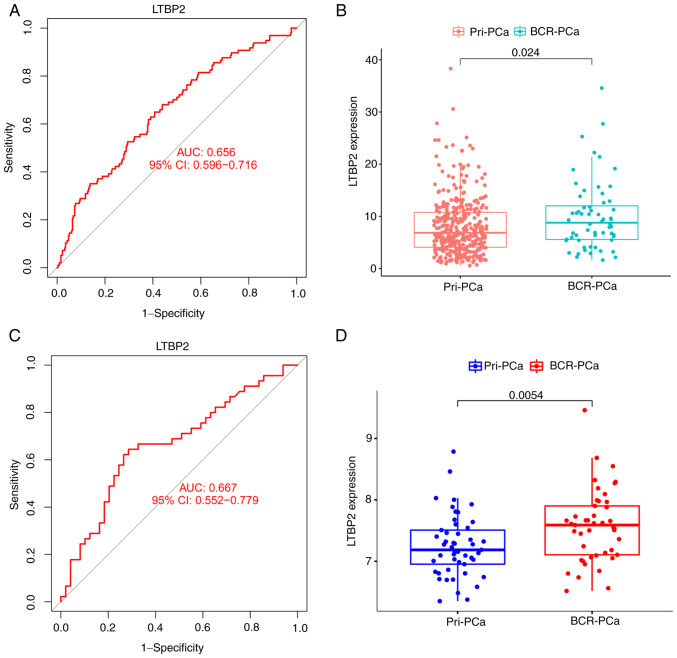
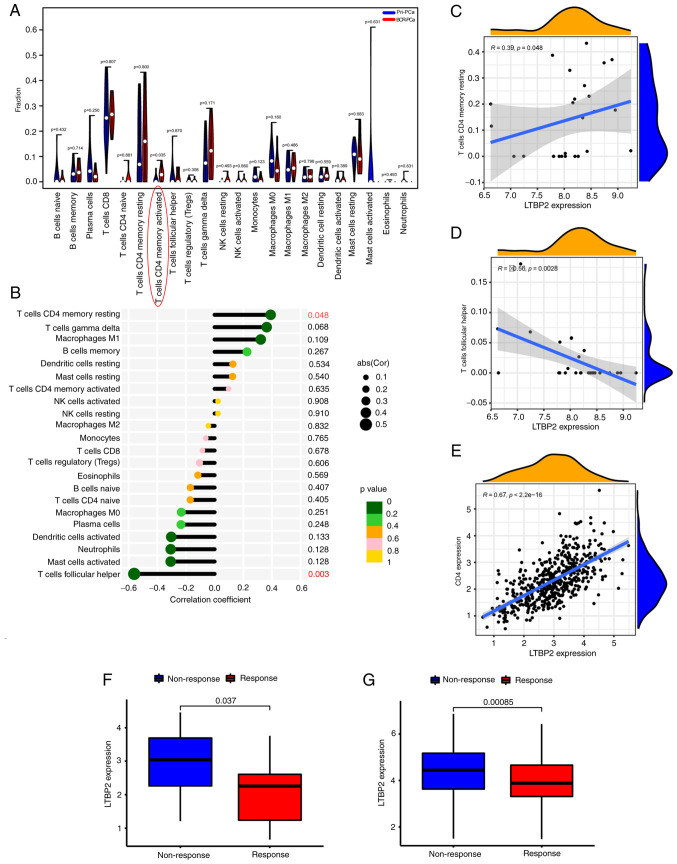
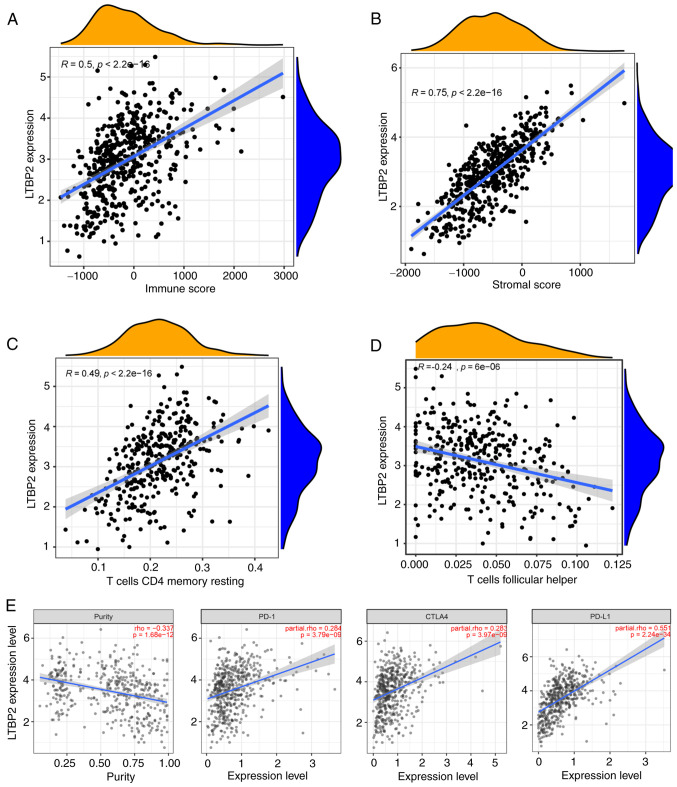
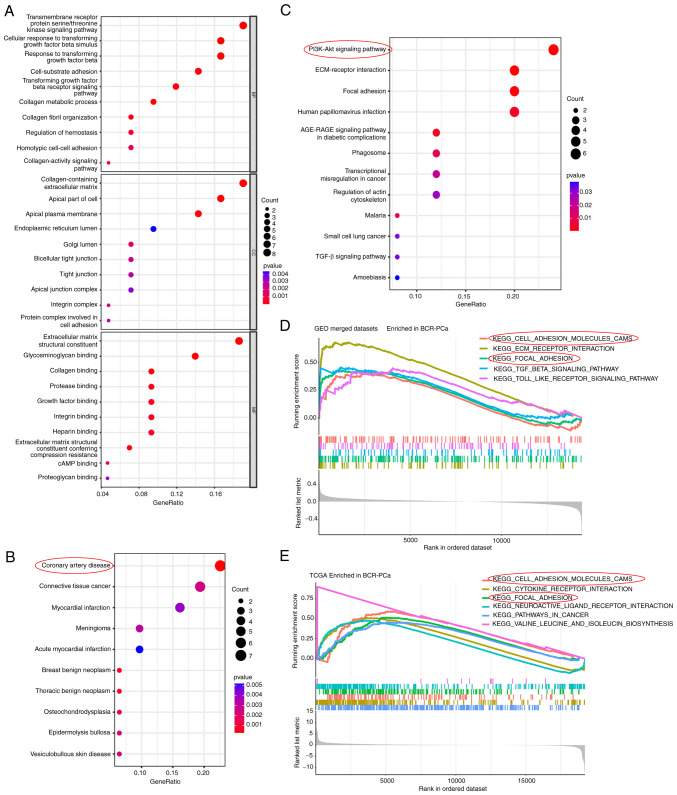
Biochemical recurrence (BCR) is a cause of concern in advanced prostate cancer (PCa). Thus, novel diagnostic biomarkers are required to improve clinical care. However, research on PCa immunotherapy is also scarce. Hence, the present study aimed to explore promising BCR-related diagnostic biomarkers, and their expression pattern, prognostic value, immune response effects, biological functions, and possible molecular mechanisms were evaluated. GEO datasets (GSE46602, GSE70768, and GSE116918) were downloaded and merged as the training cohort, and differential expression analysis was performed. Lasso regression and SVM-RFE algorithm, as well as PPI analysis and MCODE algorithm, were then applied to filter BCR-related biomarker genes. The CIBERSORT and estimation of stromal and immune cells in malignant tumor tissues using expression data (ESTIMATE) methods were used to calculate the fractions of tumor-infiltrating immune cells. GO/DO enrichment analyses were used to identify the biological functions. The expression of latent transforming growth factor β-binding protein 2 (LTBP2) was determined by RT-qPCR and western blotting. The role of LTBP2 in PCa was determined by CCK-8, Transwell, and the potential mechanism was investigated by KEGG and GSEA and confirmed by western blotting. In total, 44 BCR-related differentially expressed genes (DEGs) in the training cohort were screened. LTBP2 was found to be a diagnostic biomarker of BCR in PCa and was associated with CD4 T-cell infiltration and response to anti-PD-1/PD-L1 immunotherapy. Subsequently, using the ESTIMATE algorithm, it was identified that LTBP2 was associated with the tumor microenvironment and could be a predictor of the clinical benefit of immune checkpoint blockade. Finally, the expression and biological function of LTBP2 were evaluated via cellular experiments. The results showed that LTBP2 was downregulated in PCa cells and inhibited PCa proliferation and metastasis via the PI3K/AKT signaling pathway . In conclusion, LTBP2 was a promising diagnostic biomarker of BCR of PCa and had an important role in CD4 T-cell recruitment. Moreover, it was associated with immunotherapy in patients with PCa who developed BCR, and it inhibited PCa proliferation and metastasis via the PI3K/AKT signaling pathway .
生化复发(BCR)是晚期前列腺癌(PCa)令人担忧的一个问题。因此,需要新的诊断生物标志物来改善临床护理。然而,关于PCa免疫疗法的研究也很匮乏。因此,本研究旨在探索有前景的与BCR相关的诊断生物标志物,并评估其表达模式、预后价值、免疫反应效应、生物学功能及可能的分子机制。下载并合并GEO数据集(GSE46602、GSE70768和GSE116918)作为训练队列,并进行差异表达分析。随后应用套索回归和支持向量机递归特征消除(SVM-RFE)算法,以及蛋白质-蛋白质相互作用(PPI)分析和分子复合物检测(MCODE)算法来筛选与BCR相关的生物标志物基因。使用CIBERSORT和利用表达数据估计恶性肿瘤组织中的基质和免疫细胞(ESTIMATE)方法来计算肿瘤浸润免疫细胞的比例。基因本体论/疾病本体(GO/DO)富集分析用于确定生物学功能。通过逆转录定量聚合酶链反应(RT-qPCR)和蛋白质免疫印迹法检测潜在转化生长因子β结合蛋白2(LTBP2)的表达。通过细胞计数试剂盒-8(CCK-8)、Transwell实验确定LTBP2在PCa中的作用,并通过京都基因与基因组百科全书(KEGG)和基因集富集分析(GSEA)研究其潜在机制,并用蛋白质免疫印迹法进行验证。在训练队列中总共筛选出44个与BCR相关的差异表达基因(DEG)。发现LTBP2是PCa中BCR的诊断生物标志物,并且与CD4 T细胞浸润以及对抗程序性死亡蛋白1(PD-1)/程序性死亡配体1(PD-L1)免疫疗法的反应相关。随后,使用ESTIMATE算法确定LTBP2与肿瘤微环境相关,并且可能是免疫检查点阻断临床获益的预测指标。最后,通过细胞实验评估LTBP2的表达和生物学功能。结果显示,LTBP2在PCa细胞中表达下调,并通过磷脂酰肌醇-3激酶(PI3K)/蛋白激酶B(AKT)信号通路抑制PCa的增殖和转移。总之,LTBP2是PCa中BCR有前景的诊断生物标志物,在CD4 T细胞募集中起重要作用。此外,它与发生BCR的PCa患者的免疫疗法相关,并通过PI3K/AKT信号通路抑制PCa的增殖和转移。