Tian Bo, Yao Jia-Heng, Lin Xu, Lv Wan-Qiang, Jiang Lin-Dong, Wang Zhuo-Qi, Shen Jie, Xiao Hong-Mei, Xu Hanli, Xu Lu-Lu, Cheng Xiyu, Shen Hui, Qiu Chuan, Luo Zhe, Zhao Lan-Juan, Yan Qiong, Deng Hong-Wen, Zhang Li-Shu
School of Physical Science and Engineering, College of Life Sciences and Bioengineering, Beijing Jiaotong University, Beijing, China.
Department of Endocrinology and Metabolism, The Third Affiliated Hospital of Southern Medical University, Guangzhou, China.
Front Microbiol. 2022 Aug 16;13:957885. doi: 10.3389/fmicb.2022.957885. eCollection 2022.
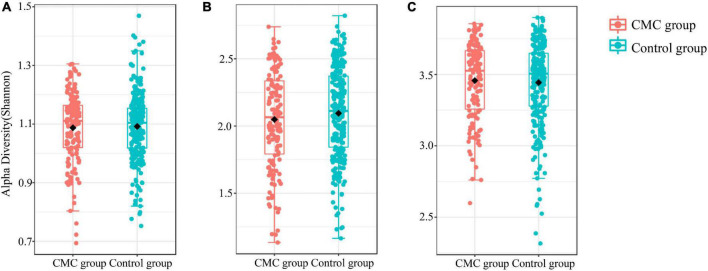
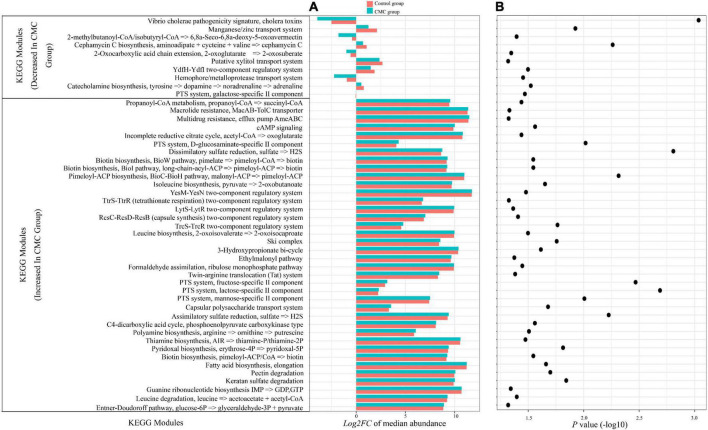
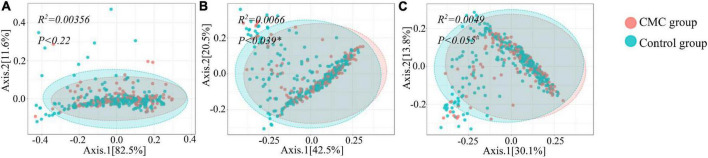
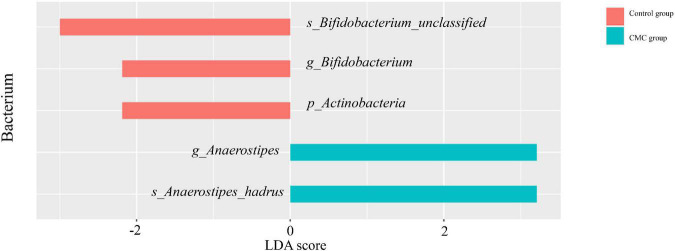
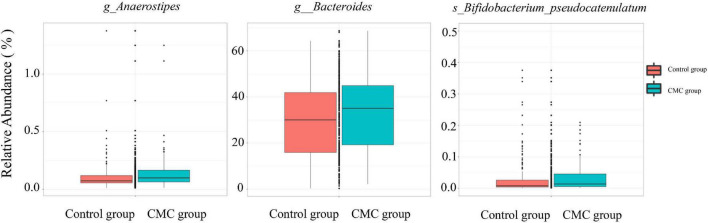
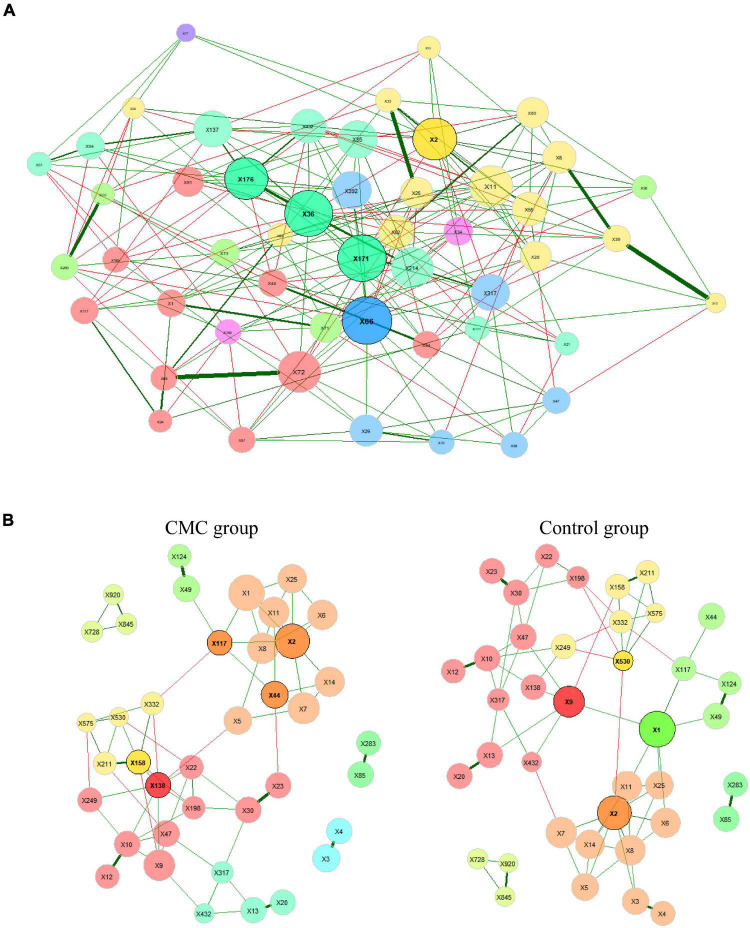
Cow milk consumption (CMC) and alterations of gut bacterial composition are proposed to be closely related to human health and disease. Our research aims to investigate the changes in human gut microbial composition in Chinese peri-/postmenopausal women with different CMC habits. A total of 517 subjects were recruited and questionnaires about their CMC status were collected; 394 subjects were included in the final analyses. Fecal samples were used for studying gut bacterial composition. All the subjects were divided into a control group () and a CMC group () according to their CMC status. Non-parametric tests and LEfSe at different taxonomic levels were used to reveal differentially abundant taxa and functional categories across different CMC groups. Relative abundance (RA) of one phylum (), three genera (, , and ), and 28 species diversified significantly across groups. Specifically, taxa (), (), (), and () were positively correlated with CMC levels, but () and () were negatively associated with CMC levels. KEGG module analysis revealed 48 gut microbiome functional modules significantly () associated with CMC, including pathogenicity signature, cholera toxins (), and cephamycin C biosynthesis module (), among others. In conclusion, CMC was associated with changes in gut microbiome patterns including beta diversity and richness of some gut microbiota. The alterations of certain bacteria including and in the CMC group should be important for human health. This study further supports the biological value of habitual cow milk consumption.
牛奶消费(CMC)与肠道细菌组成的改变被认为与人类健康和疾病密切相关。我们的研究旨在调查具有不同CMC习惯的中国围绝经期/绝经后女性肠道微生物组成的变化。共招募了517名受试者,并收集了关于她们CMC状况的问卷;最终分析纳入了394名受试者。粪便样本用于研究肠道细菌组成。所有受试者根据其CMC状况分为对照组()和CMC组()。使用不同分类水平的非参数检验和LEfSe来揭示不同CMC组中差异丰富的分类群和功能类别。一个门()、三个属(、和)以及28个物种的相对丰度(RA)在各组之间有显著差异。具体而言,分类群()、()、()和()与CMC水平呈正相关,但()和()与CMC水平呈负相关。KEGG模块分析显示48个肠道微生物组功能模块与CMC显著()相关,包括致病性特征、霍乱毒素()和头孢霉素C生物合成模块()等。总之,CMC与肠道微生物组模式的变化有关,包括一些肠道微生物群的β多样性和丰富度。CMC组中某些细菌(包括和)的改变对人类健康应该很重要。本研究进一步支持了习惯性饮用牛奶的生物学价值。