CETAQUA Water Technology Center, Cornellà de Llobregat, Catalonia, Spain.
Department of Physics, Universitat Politècnica de Catalunya (UPC-BarcelonaTech), Barcelona, Catalonia, Spain.
Sci Rep. 2022 Sep 5;12(1):15073. doi: 10.1038/s41598-022-18518-9.
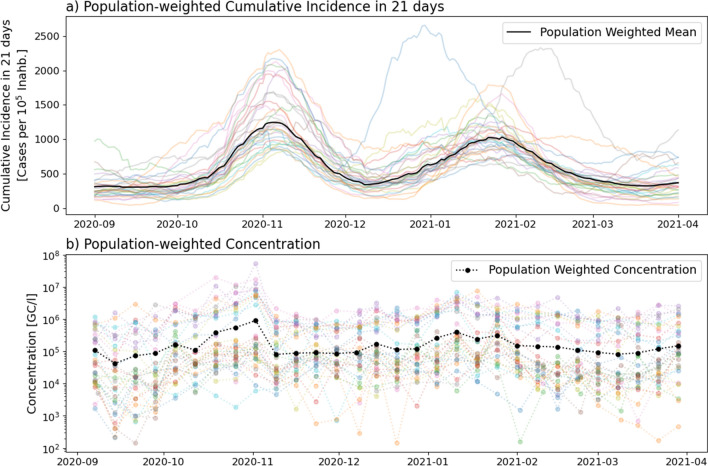
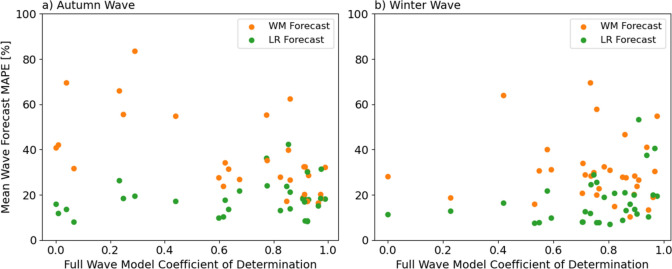
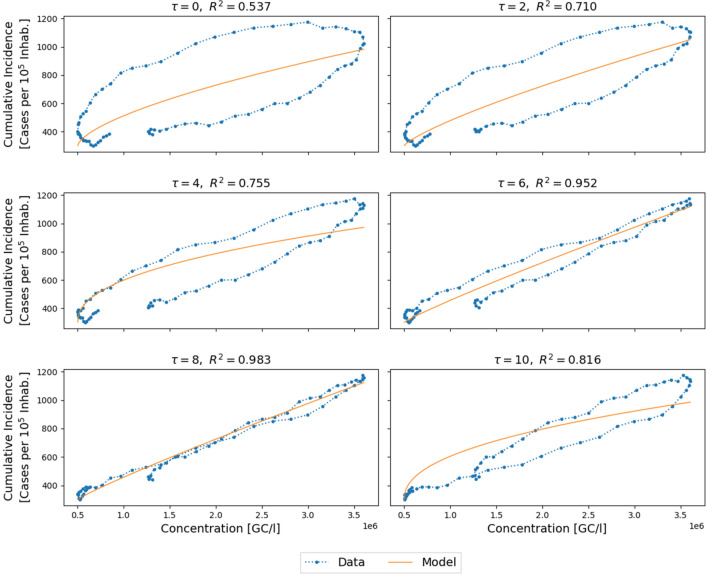
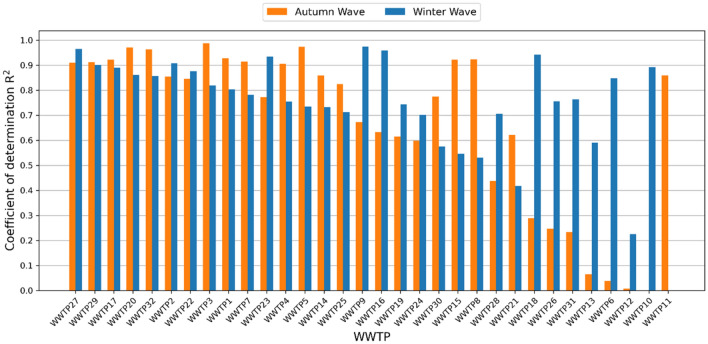
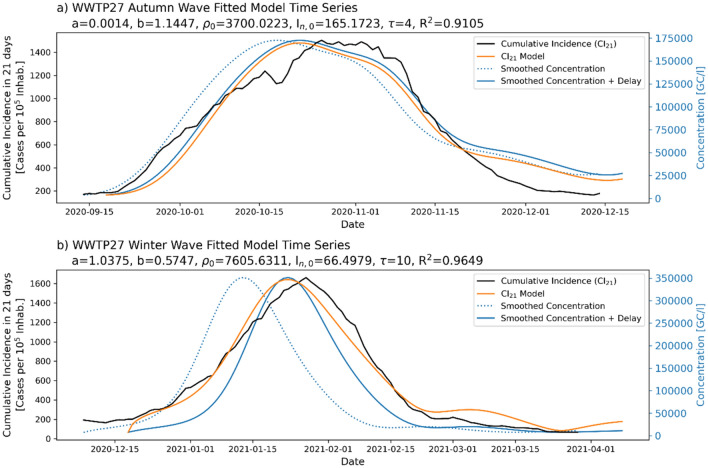
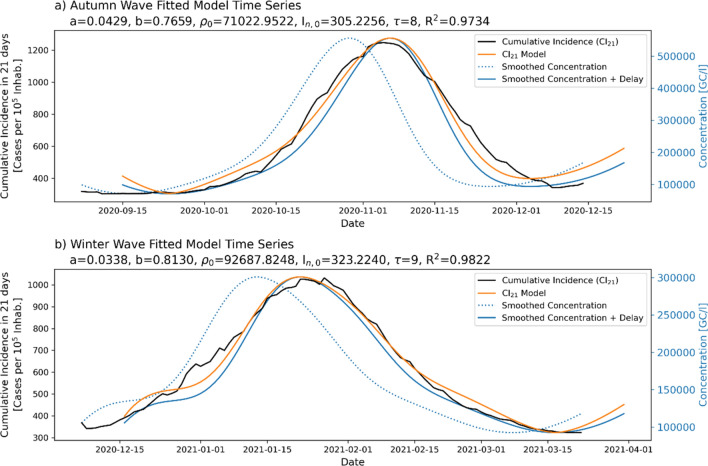
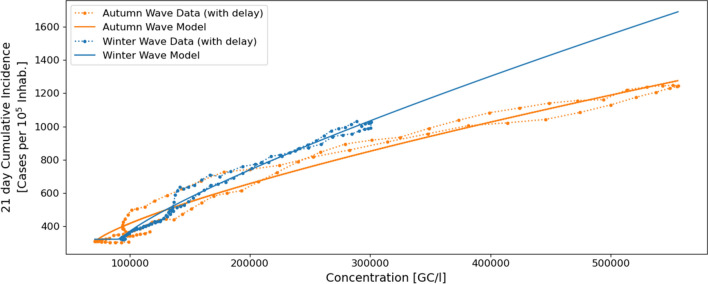
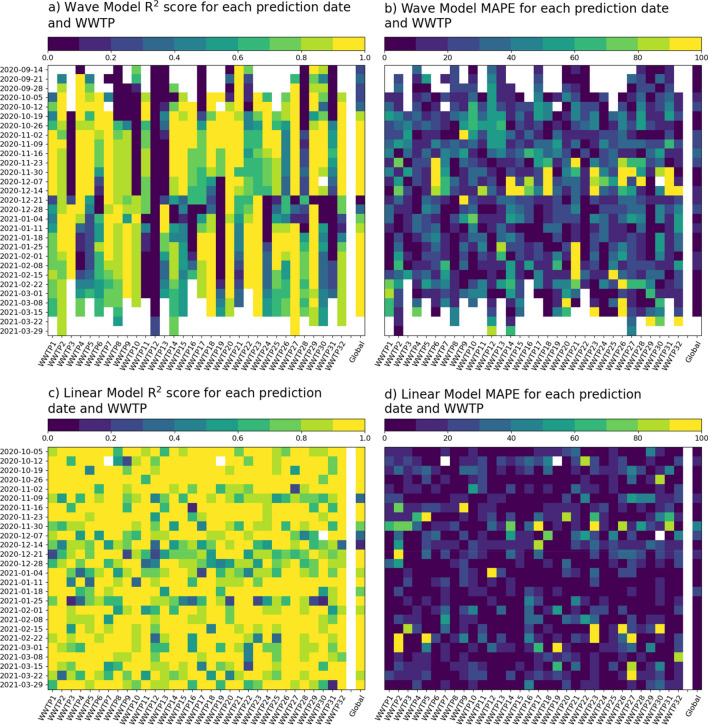
While wastewater-based epidemiology has proven a useful tool for epidemiological surveillance during the COVID-19 pandemic, few quantitative models comparing virus concentrations in wastewater samples and cumulative incidence have been established. In this work, a simple mathematical model relating virus concentration and cumulative incidence for full contagion waves was developed. The model was then used for short-term forecasting and compared to a local linear model. Both scenarios were tested using a dataset composed of samples from 32 wastewater treatment plants and severe acute respiratory syndrome coronavirus 2 (SARS-CoV-2) incidence data covering the corresponding geographical areas during a 7-month period, including two contagion waves. A population-averaged dataset was also developed to model and predict the incidence over the full geography. Overall, the mathematical model based on wastewater data showed a good correlation with cumulative cases and allowed us to anticipate SARS-CoV-2 incidence in one week, which is of special relevance in situations where the epidemiological monitoring system cannot be fully implemented.
尽管基于废水的流行病学已被证明是 COVID-19 大流行期间进行流行病学监测的有用工具,但很少有建立定量模型来比较废水中病毒浓度和累积发病率的研究。在这项工作中,开发了一个简单的数学模型,用于描述全传播波中病毒浓度和累积发病率的关系。然后,使用该模型进行短期预测,并与局部线性模型进行比较。这两种情况都使用了一个数据集进行测试,该数据集由 32 个污水处理厂的样本和严重急性呼吸综合征冠状病毒 2 (SARS-CoV-2) 在相应地理区域的发病率数据组成,涵盖了 7 个月的时间,包括两个传播波。还开发了一个人口平均数据集来对整个地理区域的发病率进行建模和预测。总体而言,基于废水数据的数学模型与累积病例具有良好的相关性,并允许我们在一周内预测 SARS-CoV-2 的发病率,这在无法完全实施流行病学监测系统的情况下具有特殊意义。