Marcinkowska Adrianna, Wolska Nina, Luzak Boguslawa, Cisiecki Slawomir, Marcinkowski Karol, Rozalski Marcin
Department of Haemostasis and Haemostatic Disorders, Chair of Biomedical Sciences, Medical University of Lodz, Mazowiecka 6/8, 92-215 Lodz, Poland.
Department of Ophthalmology, Karol Jonscher's Municipal Medical Center, 93-113 Lodz, Poland.
J Clin Med. 2022 Aug 30;11(17):5099. doi: 10.3390/jcm11175099.
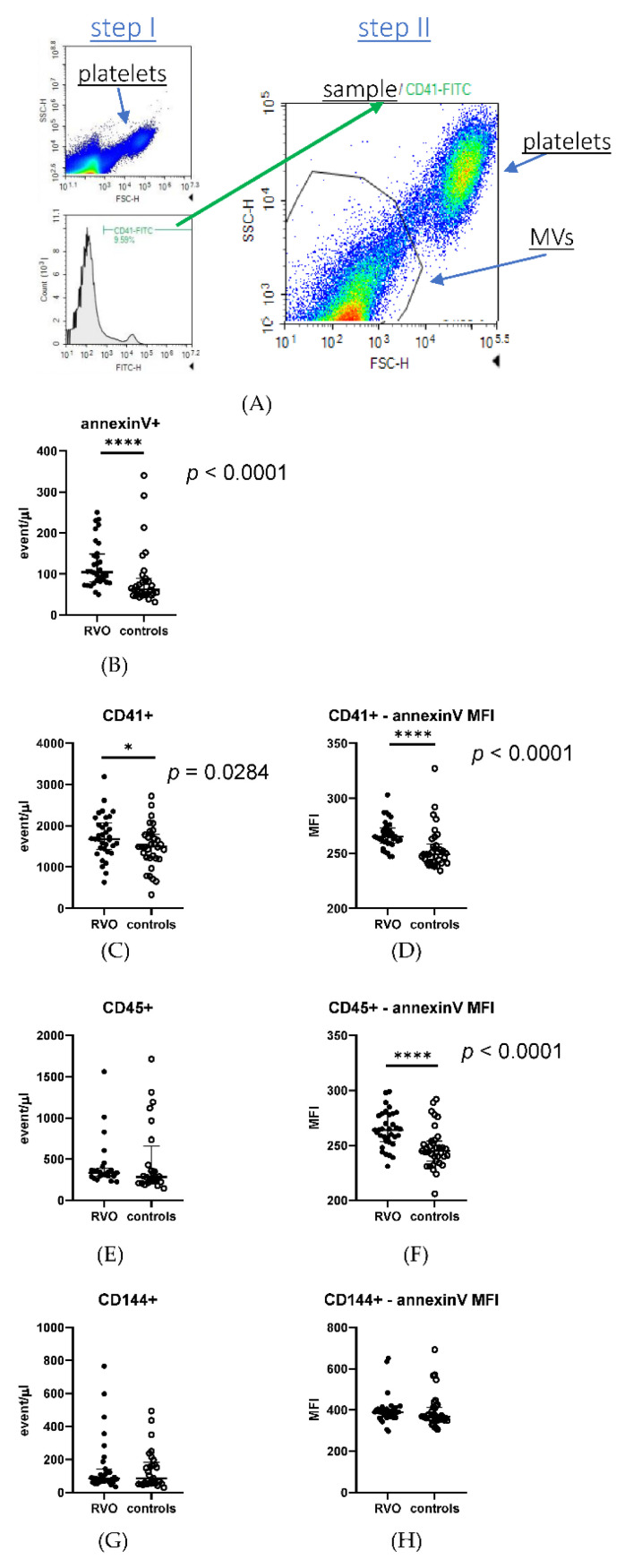
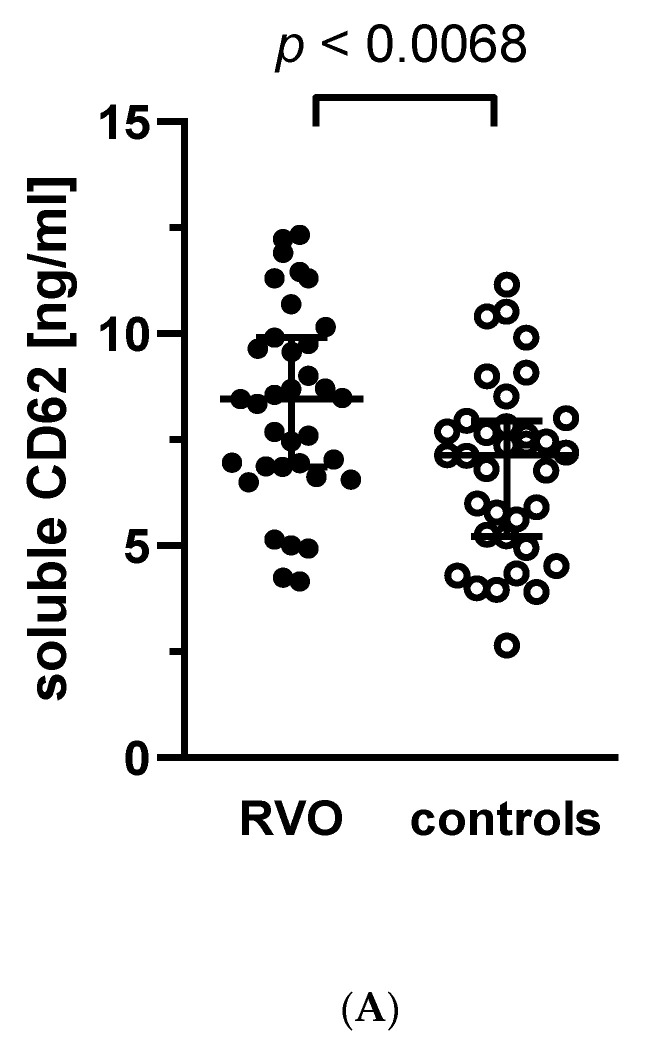
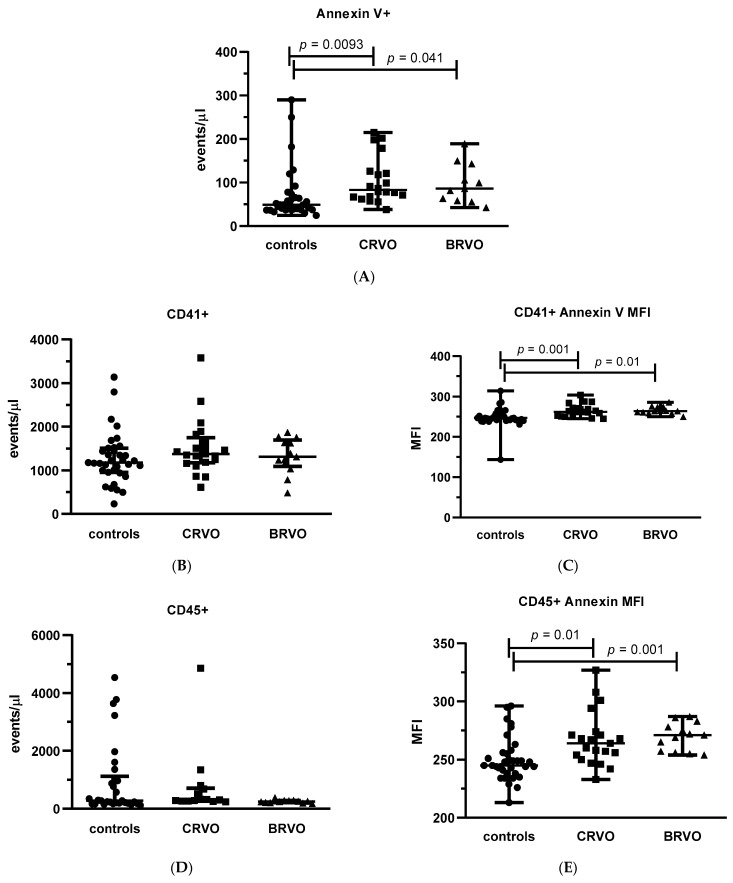
The etiopathogenesis of retinal vein occlusion (RVO) is multifactorial, and the contribution of platelets to RVO development has not been fully elucidated. We aimed to analyze platelet function in RVO patients (n = 35) and controls (n = 35). We found a higher (p < 0.05) level of soluble P-selectin in RVO group vs. controls. Additionally, in RVO patients, the concentration of platelet-derived microvesicles was higher (p < 0.05), and the difference between groups was deeper for the fraction of platelet-derived microvesicles with the procoagulant phenotype (p < 0.0001) and for overall procoagulant microvesicles level (p < 0.0001). The results were similar for the total RVO group and for both RVO types (central- and branched-retinal vein occlusion). We did not find differences in simple platelet parameters (platelet count, mean platelet volume, platelet distribution width, platecrit, reticulated platelets) and inflammatory markers (platelet-lymphocyte ratio, neutrophil-lymphocyte ratio). Similarly, no differences were found for platelet aggregation-stimulated byadenosine diphosphate; collagen; arachidonic acid; and in multiparametric flow cytometry evaluation of P-selectin, PAC-1, and fibrinogen binding for both unstimulated and adenosine diphosphate-, collagen-, and thrombin receptor activating peptide-stimulated platelets. Our results suggest that platelets can contribute to developing RVO by enhancing procoagulant activity through providing a procoagulation surface via platelet-derived microvesicles. The direct role of platelets’ hyperreactivity in developing RVO is less apparent, which is consistent with the complexity and multifactorial background of this disorder.
视网膜静脉阻塞(RVO)的发病机制是多因素的,血小板在RVO发生发展中的作用尚未完全阐明。我们旨在分析RVO患者(n = 35)和对照组(n = 35)的血小板功能。我们发现RVO组可溶性P-选择素水平高于对照组(p < 0.05)。此外,在RVO患者中,血小板衍生微泡的浓度更高(p < 0.05),并且具有促凝表型的血小板衍生微泡部分(p < 0.0001)和总体促凝微泡水平(p < 0.0001)在两组之间的差异更大。总RVO组以及两种RVO类型(视网膜中央静脉阻塞和视网膜分支静脉阻塞)的结果相似。我们未发现简单血小板参数(血小板计数、平均血小板体积、血小板分布宽度、血小板压积、网织血小板)和炎症标志物(血小板-淋巴细胞比率、中性粒细胞-淋巴细胞比率)存在差异。同样,在由二磷酸腺苷、胶原、花生四烯酸刺激的血小板聚集方面,以及在对未刺激和经二磷酸腺苷、胶原、凝血酶受体激活肽刺激的血小板进行P-选择素、PAC-1和纤维蛋白原结合的多参数流式细胞术评估中,均未发现差异。我们的结果表明,血小板可通过血小板衍生微泡提供促凝表面来增强促凝活性,从而促进RVO的发生发展。血小板高反应性在RVO发生中的直接作用不太明显,这与该疾病的复杂性和多因素背景一致。