• 文献检索
  • 文档翻译
  • 深度研究
  • 学术资讯
  • Suppr Zotero 插件Zotero 插件
  • 邀请有礼
  • 套餐&价格
  • 历史记录
应用&插件
Suppr Zotero 插件Zotero 插件浏览器插件Mac 客户端Windows 客户端微信小程序
定价
高级版会员购买积分包购买API积分包
服务
文献检索文档翻译深度研究API 文档MCP 服务
关于我们
关于 Suppr公司介绍联系我们用户协议隐私条款
关注我们

Suppr 超能文献

核心技术专利:CN118964589B侵权必究
粤ICP备2023148730 号-1Suppr @ 2026

文献检索

告别复杂PubMed语法,用中文像聊天一样搜索,搜遍4000万医学文献。AI智能推荐,让科研检索更轻松。

立即免费搜索

文件翻译

保留排版,准确专业,支持PDF/Word/PPT等文件格式,支持 12+语言互译。

免费翻译文档

深度研究

AI帮你快速写综述,25分钟生成高质量综述,智能提取关键信息,辅助科研写作。

立即免费体验

探究基于神经影像学的大脑年龄估计的时间模式作为阿尔茨海默病相关神经退行性变的生物标志物。

Investigating the temporal pattern of neuroimaging-based brain age estimation as a biomarker for Alzheimer's Disease related neurodegeneration.

机构信息

Department of Psychological and Brain Sciences, Drexel University, Philadelphia, PA 19104, USA.

Department of Psychological and Brain Sciences, Drexel University, Philadelphia, PA 19104, USA.

出版信息

Neuroimage. 2022 Nov;263:119621. doi: 10.1016/j.neuroimage.2022.119621. Epub 2022 Sep 9.

DOI:10.1016/j.neuroimage.2022.119621
PMID:36089183
原文链接:https://pmc.ncbi.nlm.nih.gov/articles/PMC9995621/
Abstract

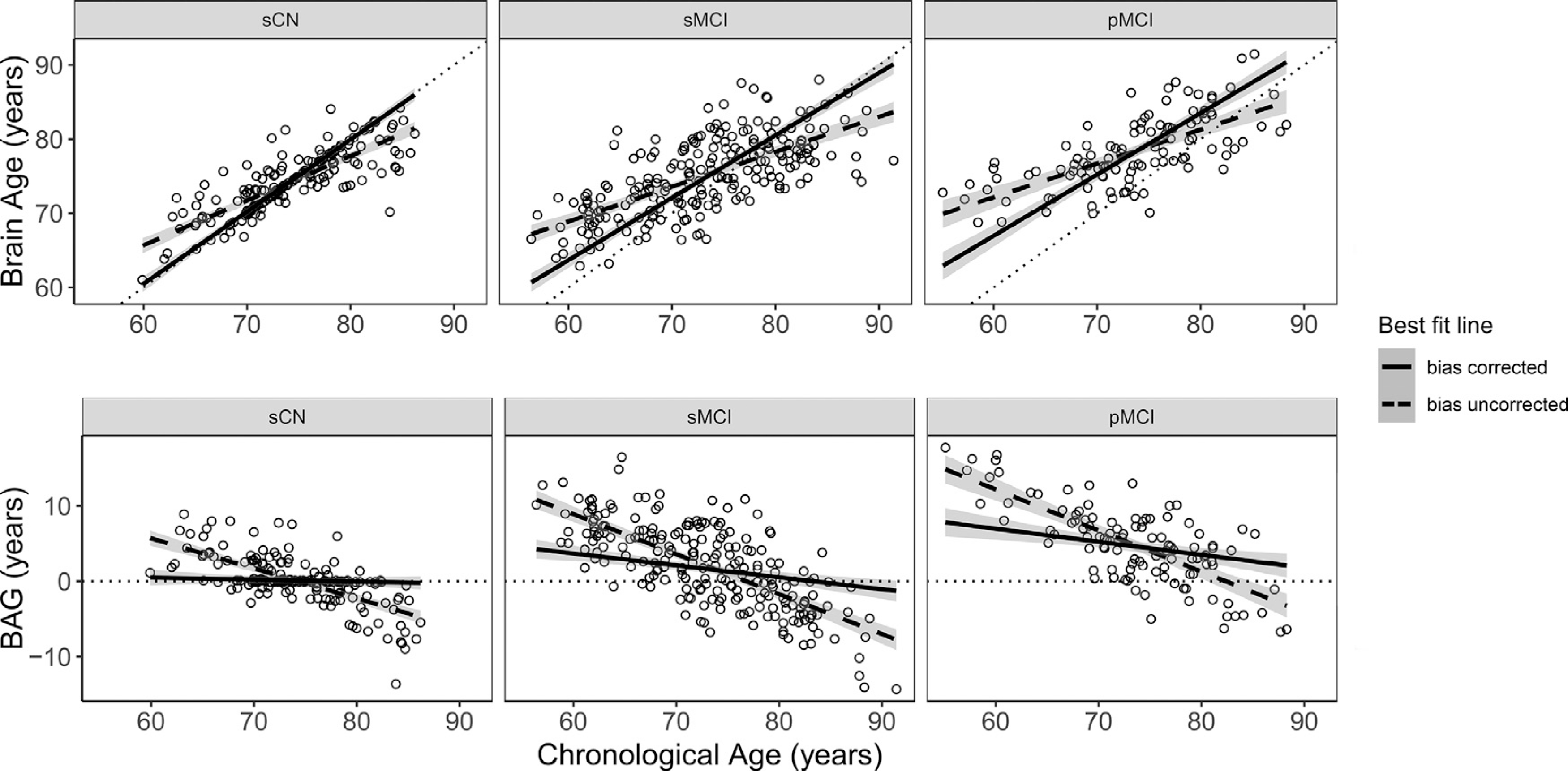
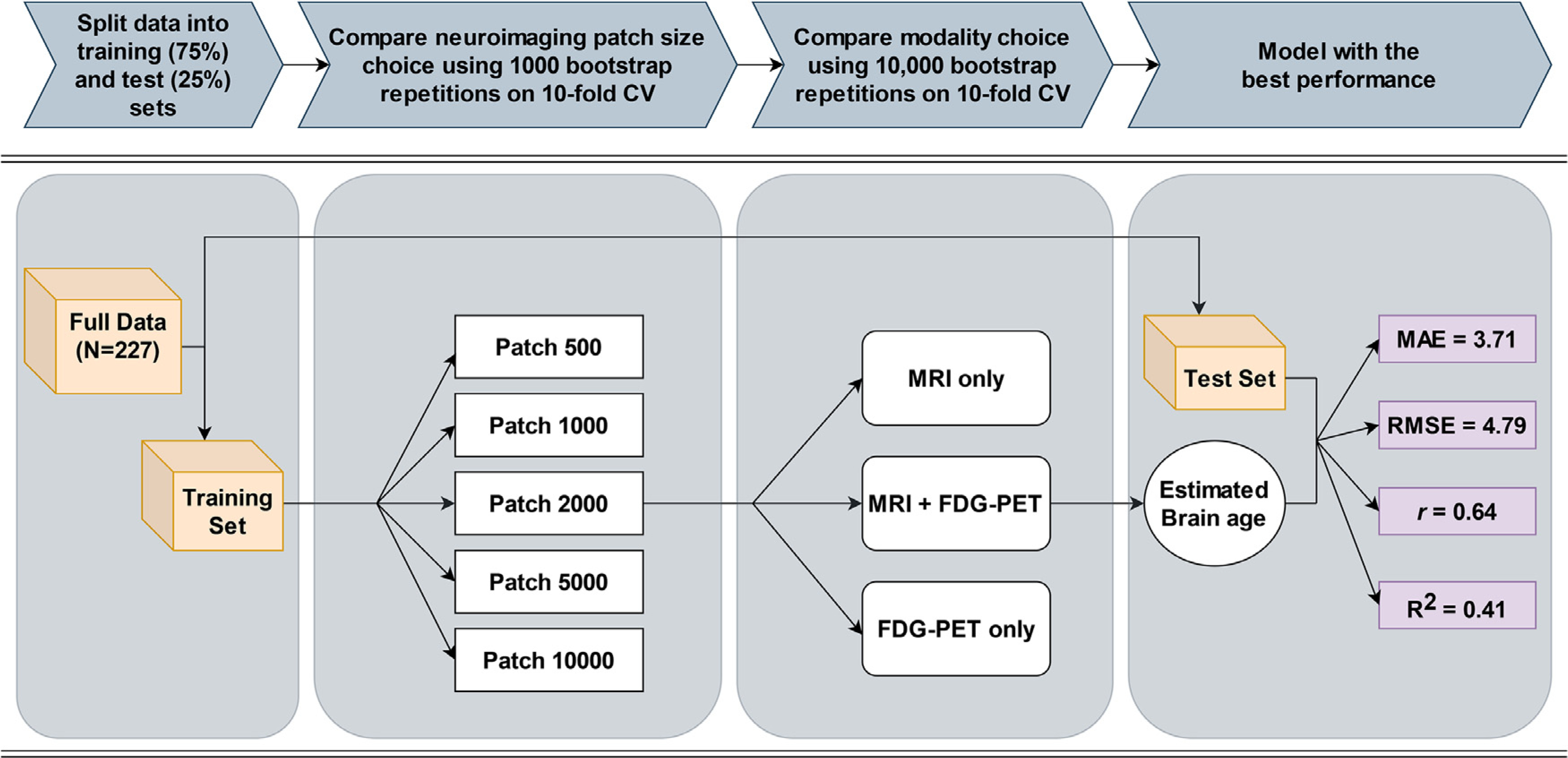
Neuroimaging-based brain-age estimation via machine learning has emerged as an important new approach for studying brain aging. The difference between one's estimated brain age and chronological age, the brain age gap (BAG), has been proposed as an Alzheimer's Disease (AD) biomarker. However, most past studies on the BAG have been cross-sectional. Quantifying longitudinal changes in an individual's BAG temporal pattern would likely improve prediction of AD progression and clinical outcome based on neurophysiological changes. To fill this gap, our study conducted predictive modeling using a large neuroimaging dataset with up to 8 years of follow-up to examine the temporal patterns of the BAG's trajectory and how it varies by subject-level characteristics (sex, APOEɛ4 carriership) and disease status. Specifically, we explored the pattern and rate of change in BAG over time in individuals who remain stable with normal cognition or mild cognitive impairment (MCI), as well as individuals who progress to clinical AD. Combining multimodal imaging data in a support vector regression model to estimate brain age yielded improved performance over single modality. Multilevel modeling results showed the BAG followed a linear increasing trajectory with a significantly faster rate in individuals with MCI who progressed to AD compared to cognitively normal or MCI individuals who did not progress. The dynamic changes in the BAG during AD progression were further moderated by sex and APOEɛ4 carriership. Our findings demonstrate the BAG as a potential biomarker for understanding individual specific temporal patterns related to AD progression.

摘要

基于神经影像学的机器学习脑龄估测作为一种研究大脑衰老的新方法已崭露头角。一个人的预估脑龄与实际年龄之间的差异,即脑龄差距(BAG),已被提出作为阿尔茨海默病(AD)的生物标志物。然而,过去大多数关于 BAG 的研究都是横断面的。对个体 BAG 时间模式的纵向变化进行量化,可能会根据神经生理变化改善 AD 进展和临床结局的预测。为了填补这一空白,我们使用具有长达 8 年随访的大型神经影像学数据集进行预测建模,以检查 BAG 轨迹的时间模式以及其如何因个体水平特征(性别、APOEɛ4 携带情况)和疾病状态而变化。具体来说,我们探索了在认知正常或轻度认知障碍(MCI)个体保持稳定以及进展为临床 AD 的个体中,BAG 随时间的变化模式和变化率。在支持向量回归模型中结合多模态成像数据来估计脑龄可以提高性能比单一模态。多层次模型结果表明,与认知正常或 MCI 个体无进展相比,进展为 AD 的 MCI 个体的 BAG 呈线性增加轨迹,且增加速度明显更快。AD 进展过程中 BAG 的动态变化进一步受到性别和 APOEɛ4 携带情况的调节。我们的研究结果表明,BAG 作为一种潜在的生物标志物,可以帮助理解与 AD 进展相关的个体特定时间模式。
https://cdn.ncbi.nlm.nih.gov/pmc/blobs/8985/9995621/734ba7339544/nihms-1848619-f0006.jpg
https://cdn.ncbi.nlm.nih.gov/pmc/blobs/8985/9995621/d1fd0322823e/nihms-1848619-f0001.jpg
https://cdn.ncbi.nlm.nih.gov/pmc/blobs/8985/9995621/7688c2aff71f/nihms-1848619-f0002.jpg
https://cdn.ncbi.nlm.nih.gov/pmc/blobs/8985/9995621/a79e710f3684/nihms-1848619-f0003.jpg
https://cdn.ncbi.nlm.nih.gov/pmc/blobs/8985/9995621/40dfb2eb9ec2/nihms-1848619-f0004.jpg
https://cdn.ncbi.nlm.nih.gov/pmc/blobs/8985/9995621/09880663b144/nihms-1848619-f0005.jpg
https://cdn.ncbi.nlm.nih.gov/pmc/blobs/8985/9995621/734ba7339544/nihms-1848619-f0006.jpg
https://cdn.ncbi.nlm.nih.gov/pmc/blobs/8985/9995621/d1fd0322823e/nihms-1848619-f0001.jpg
https://cdn.ncbi.nlm.nih.gov/pmc/blobs/8985/9995621/7688c2aff71f/nihms-1848619-f0002.jpg
https://cdn.ncbi.nlm.nih.gov/pmc/blobs/8985/9995621/a79e710f3684/nihms-1848619-f0003.jpg
https://cdn.ncbi.nlm.nih.gov/pmc/blobs/8985/9995621/40dfb2eb9ec2/nihms-1848619-f0004.jpg
https://cdn.ncbi.nlm.nih.gov/pmc/blobs/8985/9995621/09880663b144/nihms-1848619-f0005.jpg
https://cdn.ncbi.nlm.nih.gov/pmc/blobs/8985/9995621/734ba7339544/nihms-1848619-f0006.jpg

相似文献

1
Investigating the temporal pattern of neuroimaging-based brain age estimation as a biomarker for Alzheimer's Disease related neurodegeneration.探究基于神经影像学的大脑年龄估计的时间模式作为阿尔茨海默病相关神经退行性变的生物标志物。
Neuroimage. 2022 Nov;263:119621. doi: 10.1016/j.neuroimage.2022.119621. Epub 2022 Sep 9.
2
Multimodal brain age estimates relate to Alzheimer disease biomarkers and cognition in early stages: a cross-sectional observational study.多模态脑龄估计与阿尔茨海默病生物标志物和早期认知相关:一项横断面观察性研究。
Elife. 2023 Jan 6;12:e81869. doi: 10.7554/eLife.81869.
3
MRI or F-FDG PET for Brain Age Gap Estimation: Links to Cognition, Pathology, and Alzheimer Disease Progression.MRI 或 F-FDG PET 用于估计脑龄差距:与认知、病理学和阿尔茨海默病进展的关联。
J Nucl Med. 2024 Jan 2;65(1):147-155. doi: 10.2967/jnumed.123.265931.
4
Prediction of clinical and biomarker conformed Alzheimer's disease and mild cognitive impairment from multi-feature brain structural MRI using age-correction from a large independent lifespan sample.利用大样本独立寿命数据的年龄校正,从多模态脑结构 MRI 预测临床和生物标志物一致的阿尔茨海默病和轻度认知障碍。
Neuroimage Clin. 2020;28:102387. doi: 10.1016/j.nicl.2020.102387. Epub 2020 Aug 19.
5
Structural magnetic resonance imaging for the early diagnosis of dementia due to Alzheimer's disease in people with mild cognitive impairment.用于轻度认知障碍患者阿尔茨海默病所致痴呆早期诊断的结构磁共振成像
Cochrane Database Syst Rev. 2020 Mar 2;3(3):CD009628. doi: 10.1002/14651858.CD009628.pub2.
6
A parameter-efficient deep learning approach to predict conversion from mild cognitive impairment to Alzheimer's disease.一种参数高效的深度学习方法,用于预测轻度认知障碍向阿尔茨海默病的转化。
Neuroimage. 2019 Apr 1;189:276-287. doi: 10.1016/j.neuroimage.2019.01.031. Epub 2019 Jan 14.
7
A Novel Grading Biomarker for the Prediction of Conversion From Mild Cognitive Impairment to Alzheimer's Disease.一种用于预测轻度认知障碍向阿尔茨海默病转化的新型分级生物标志物。
IEEE Trans Biomed Eng. 2017 Jan;64(1):155-165. doi: 10.1109/TBME.2016.2549363. Epub 2016 Apr 1.
8
Random forest feature selection, fusion and ensemble strategy: Combining multiple morphological MRI measures to discriminate among healhy elderly, MCI, cMCI and alzheimer's disease patients: From the alzheimer's disease neuroimaging initiative (ADNI) database.随机森林特征选择、融合和集成策略:结合多种形态磁共振成像指标对健康老年人、MCI、cMCI 和阿尔茨海默病患者进行分类:来自阿尔茨海默病神经影像学倡议(ADNI)数据库。
J Neurosci Methods. 2018 May 15;302:14-23. doi: 10.1016/j.jneumeth.2017.12.010. Epub 2017 Dec 18.
9
Predicting the progression of mild cognitive impairment to Alzheimer's disease by longitudinal magnetic resonance imaging-based dictionary learning.基于纵向磁共振成像的字典学习预测轻度认知障碍向阿尔茨海默病的进展。
Clin Neurophysiol. 2020 Oct;131(10):2429-2439. doi: 10.1016/j.clinph.2020.07.016. Epub 2020 Aug 14.
10
Disease progression modelling of Alzheimer's disease using probabilistic principal components analysis.应用概率主成分分析对阿尔茨海默病的疾病进展进行建模。
Neuroimage. 2023 Sep;278:120279. doi: 10.1016/j.neuroimage.2023.120279. Epub 2023 Jul 15.

引用本文的文献

1
Longitudinal changes in the brain-age gap in mild cognitive impairment and their relationships with neuropsychological functions and Alzheimer's disease biomarkers.轻度认知障碍患者脑龄差距的纵向变化及其与神经心理功能和阿尔茨海默病生物标志物的关系。
Alzheimers Dement (Amst). 2025 Sep 15;17(3):e70180. doi: 10.1002/dad2.70180. eCollection 2025 Jul-Sep.
2
AI-powered integration of multimodal imaging in precision medicine for neuropsychiatric disorders.人工智能驱动的多模态成像在神经精神疾病精准医学中的整合
Cell Rep Med. 2025 May 20;6(5):102132. doi: 10.1016/j.xcrm.2025.102132.
3
Comparing the Artificial Intelligence Detection Models to Standard Diagnostic Methods and Alternative Models in Identifying Alzheimer's Disease in At-Risk or Early Symptomatic Individuals: A Scoping Review.

本文引用的文献

1
Deep learning-based brain age prediction in normal aging and dementia.基于深度学习的正常衰老和痴呆症的大脑年龄预测。
Nat Aging. 2022 May;2(5):412-424. doi: 10.1038/s43587-022-00219-7. Epub 2022 May 9.
2
Factors Influencing Change in Brain-Predicted Age Difference in a Cohort of Healthy Older Individuals.影响一组健康老年人脑预测年龄差异变化的因素。
J Alzheimers Dis Rep. 2022 Apr 4;6(1):163-176. doi: 10.3233/ADR-220011. eCollection 2022.
3
Network-wise concordance of multimodal neuroimaging features across the Alzheimer's disease continuum.
比较人工智能检测模型与标准诊断方法及替代模型在识别有风险或早期有症状个体的阿尔茨海默病中的应用:一项范围综述
Cureus. 2024 Dec 9;16(12):e75389. doi: 10.7759/cureus.75389. eCollection 2024 Dec.
4
Longitudinal accelerated brain age in mild cognitive impairment and Alzheimer's disease.轻度认知障碍和阿尔茨海默病中的纵向加速脑龄
Front Aging Neurosci. 2024 Oct 22;16:1433426. doi: 10.3389/fnagi.2024.1433426. eCollection 2024.
5
Tau Protein Accumulation Trajectory-Based Brain Age Prediction in the Alzheimer's Disease Continuum.基于tau蛋白积累轨迹的阿尔茨海默病连续体脑龄预测
Brain Sci. 2024 Jun 4;14(6):575. doi: 10.3390/brainsci14060575.
6
Brain age as a biomarker for pathological versus healthy ageing - a REMEMBER study.脑龄作为病理性与生理性衰老的生物标志物——REMEMBER 研究。
Alzheimers Res Ther. 2024 Jun 14;16(1):128. doi: 10.1186/s13195-024-01491-y.
7
The Alzheimer's Disease Neuroimaging Initiative in the era of Alzheimer's disease treatment: A review of ADNI studies from 2021 to 2022.阿尔茨海默病神经影像学倡议在阿尔茨海默病治疗时代:对 2021 年至 2022 年 ADNI 研究的回顾。
Alzheimers Dement. 2024 Jan;20(1):652-694. doi: 10.1002/alz.13449. Epub 2023 Sep 12.
8
Diagnostic accuracy of brain age prediction in a memory clinic population and comparison with clinically available volumetric measures.脑龄预测在记忆门诊人群中的诊断准确性,并与临床可用的容积测量方法进行比较。
Sci Rep. 2023 Sep 11;13(1):14957. doi: 10.1038/s41598-023-42354-0.
阿尔茨海默病连续体中多模态神经影像特征的全网络一致性。
Alzheimers Dement (Amst). 2022 Apr 26;14(1):e12304. doi: 10.1002/dad2.12304. eCollection 2022.
4
Multidimensional brain-age prediction reveals altered brain developmental trajectory in psychiatric disorders.多维脑龄预测揭示了精神障碍中大脑发育轨迹的改变。
Cereb Cortex. 2022 Nov 9;32(22):5036-5049. doi: 10.1093/cercor/bhab530.
5
Individual variations in 'brain age' relate to early-life factors more than to longitudinal brain change.个体“大脑年龄”的差异与生命早期因素的关系比与纵向大脑变化的关系更密切。
Elife. 2021 Nov 10;10:e69995. doi: 10.7554/eLife.69995.
6
Machine learning for brain age prediction: Introduction to methods and clinical applications.机器学习预测大脑年龄:方法介绍及临床应用。
EBioMedicine. 2021 Oct;72:103600. doi: 10.1016/j.ebiom.2021.103600. Epub 2021 Oct 4.
7
Advanced brain ageing in Parkinson's disease is related to disease duration and individual impairment.帕金森病中的脑高级老化与病程及个体损伤有关。
Brain Commun. 2021 Aug 23;3(3):fcab191. doi: 10.1093/braincomms/fcab191. eCollection 2021.
8
Uncertainty estimation and explainability in deep learning-based age estimation of the human brain: Results from the German National Cohort MRI study.基于深度学习的人类大脑年龄估计中的不确定性估计与可解释性:来自德国国家队列MRI研究的结果
Comput Med Imaging Graph. 2021 Sep;92:101967. doi: 10.1016/j.compmedimag.2021.101967. Epub 2021 Aug 6.
9
Pitfalls in brain age analyses.脑龄分析中的陷阱。
Hum Brain Mapp. 2021 Sep;42(13):4092-4101. doi: 10.1002/hbm.25533. Epub 2021 Jun 30.
10
Segmented Linear Mixed Model Analysis Reveals Association of the APOEɛ4 Allele with Faster Rate of Alzheimer's Disease Dementia Progression.分段线性混合效应模型分析揭示 APOEɛ4 等位基因与阿尔茨海默病痴呆进展速度的关联。
J Alzheimers Dis. 2021;82(3):921-937. doi: 10.3233/JAD-210434.