Anālayo Bhikkhu, Medvedev Oleg N, Singh Nirbhay N, Dhaussy Marie R
Numata Center for Buddhist Studies, University of Hamburg, Alsterterrasse 1, 20354 Hamburg, Germany.
University of Waikato, Te Whare Wananga o Waikato, Gate 1, Knighton Road, Hamilton, 3240 New Zealand.
Mindfulness (N Y). 2022;13(12):3043-3057. doi: 10.1007/s12671-022-01967-8. Epub 2022 Sep 5.
Early Buddhist thought clearly recognizes the need for learning how to face one's own mortality, for which purpose mindfulness practice has a central role to play. Fear of death has also been studied in cognitive psychology, leading to what is known as the terror management theory. Actual research evidence in psychology has already shown that mindfulness practice may reduce fear and anxiety in general. However, there is a lack of research examining the specific effects of brief mindfulness practices on the fear of death and dying. In this study we tested the hypothesis that brief mindfulness practices used daily over a period of 6 weeks will result in a reduction of the fear of death and dying when compared to brief contemplative practices used as an active control condition.
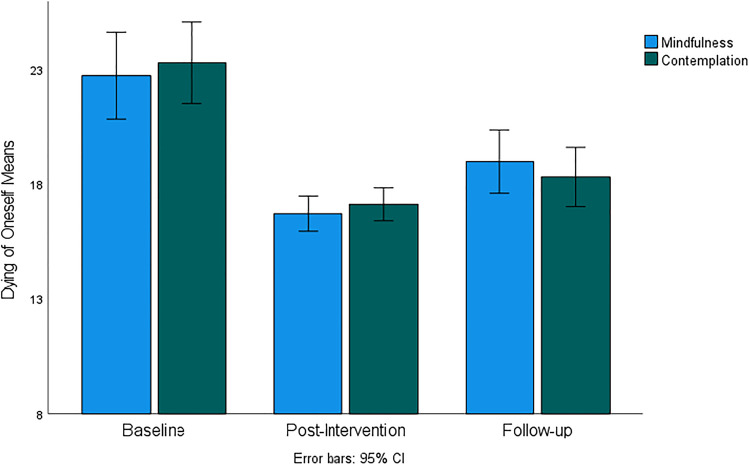
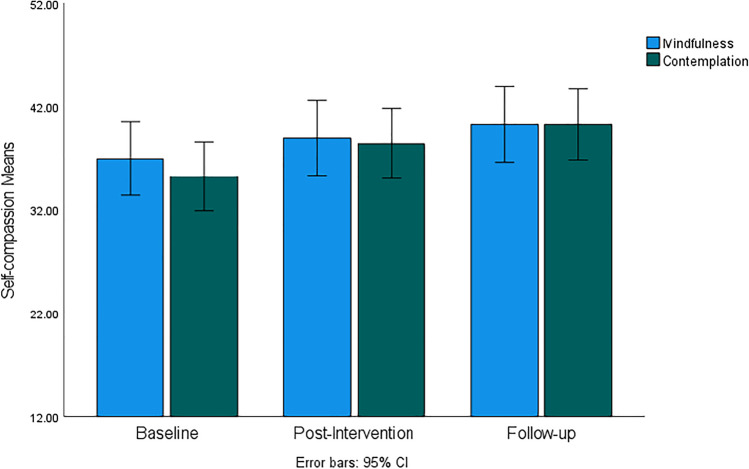
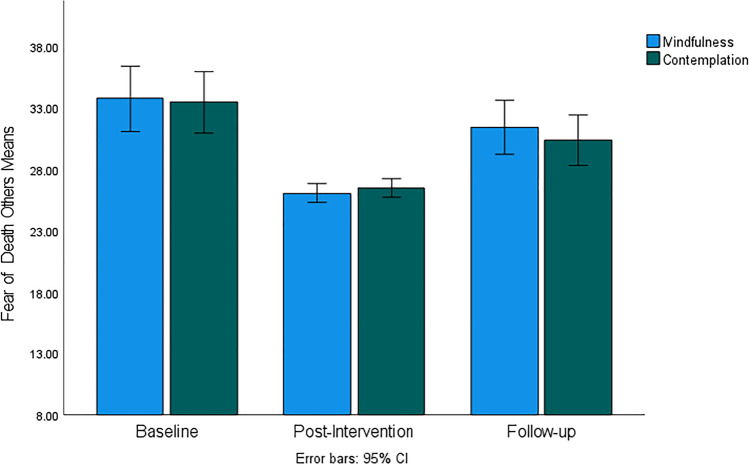
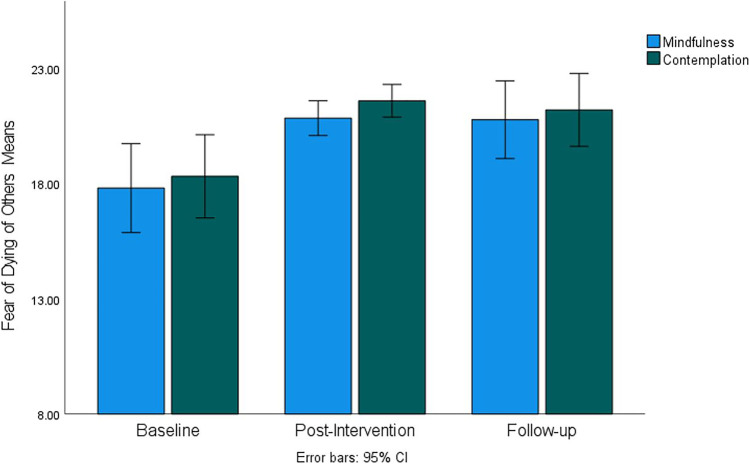
Participants ( = 89) were randomly assigned to the mindfulness ( = 44) and the contemplation ( = 45) conditions and completed validated scales measuring four distinct fears related to either the process of dying or the final event of death (dying of oneself, death of oneself, dying of others, and death of others), mindfulness, and self-compassion at baseline, post-intervention (at 6 weeks) and follow up (1‒3 weeks after the end of the 6-week intervention). ANOVA was used to investigate the effects of both interventions on outcome variables over time and between groups.
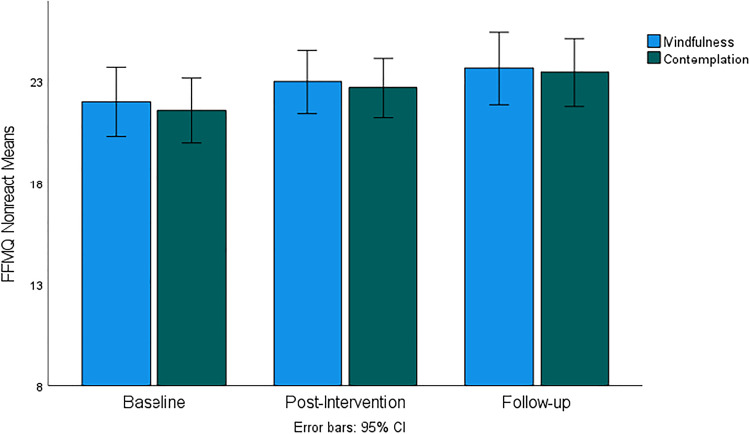
Both mindfulness and contemplative practices were equally effective in reducing fear related to dying of oneself and death of others while increasing fear of dying of others, mindfulness, and self-compassion. No significant intervention effects were found for fear related to death of oneself only.
These results suggest that fears related to dying of oneself and death of others can be reduced using both mindfulness and contemplative practices that may simultaneously increase mindfulness and self-compassion.
The online version contains supplementary material available at 10.1007/s12671-022-01967-8.
早期佛教思想明确认识到学习如何面对自身死亡的必要性,为此正念练习起着核心作用。认知心理学也对死亡恐惧进行了研究,由此产生了所谓的恐惧管理理论。心理学的实际研究证据已经表明,正念练习总体上可能会减轻恐惧和焦虑。然而,缺乏关于简短正念练习对死亡恐惧具体影响的研究。在本研究中,我们检验了这样一个假设:与用作积极对照条件的简短沉思练习相比,在6周时间内每天进行简短正念练习将减少对死亡和临终的恐惧。
参与者(n = 89)被随机分配到正念组(n = 44)和沉思组(n = 45),并在基线、干预后(6周时)和随访(6周干预结束后1 - 3周)完成经过验证的量表,测量与死亡过程或最终死亡事件相关的四种不同恐惧(自身濒死、自身死亡、他人濒死和他人死亡)、正念和自我同情。使用方差分析来研究两种干预措施随时间以及在组间对结果变量的影响。
正念练习和沉思练习在减少与自身濒死和他人死亡相关的恐惧方面同样有效,同时增加了对他人濒死的恐惧、正念和自我同情。仅发现与自身死亡相关的恐惧没有显著的干预效果。
这些结果表明,使用正念练习和沉思练习都可以减少与自身濒死和他人死亡相关的恐惧,同时可能会增加正念和自我同情。
在线版本包含可在10.1007/s12671-022-01967-8获取的补充材料。