Department of Plant Pathology, Entomology, and Microbiology, Iowa State University, 2213 Pammel Drive, Ames, IA, 50011-1101, USA.
Department of Plant Pathology, University of Wisconsin-Madison, Madison, WI, 53706, USA.
Virol J. 2022 Sep 13;19(1):149. doi: 10.1186/s12985-022-01872-5.
Viruses negatively impact soybean production by causing diseases that affect yield and seed quality. Newly emerging or re-emerging viruses can also threaten soybean production because current control measures may not be effective against them. Furthermore, detection and characterization of new plant viruses requires major efforts when no sequence or antibody-based resources are available.
In this study, soybean fields were scouted for virus-like disease symptoms during the 2016-2019 growing seasons. Total RNA was extracted from symptomatic soybean parts, cDNA libraries were prepared, and RNA sequencing was performed using high-throughput sequencing (HTS). A custom bioinformatic workflow was used to identify and assemble known and unknown virus genomes.
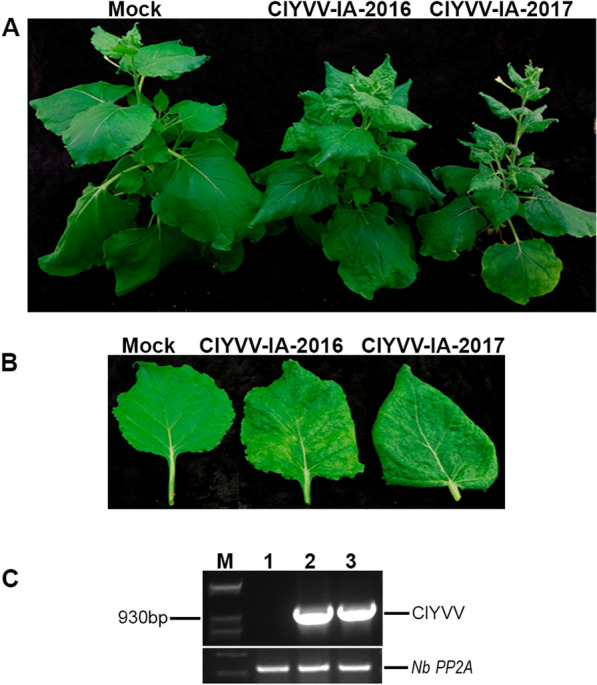
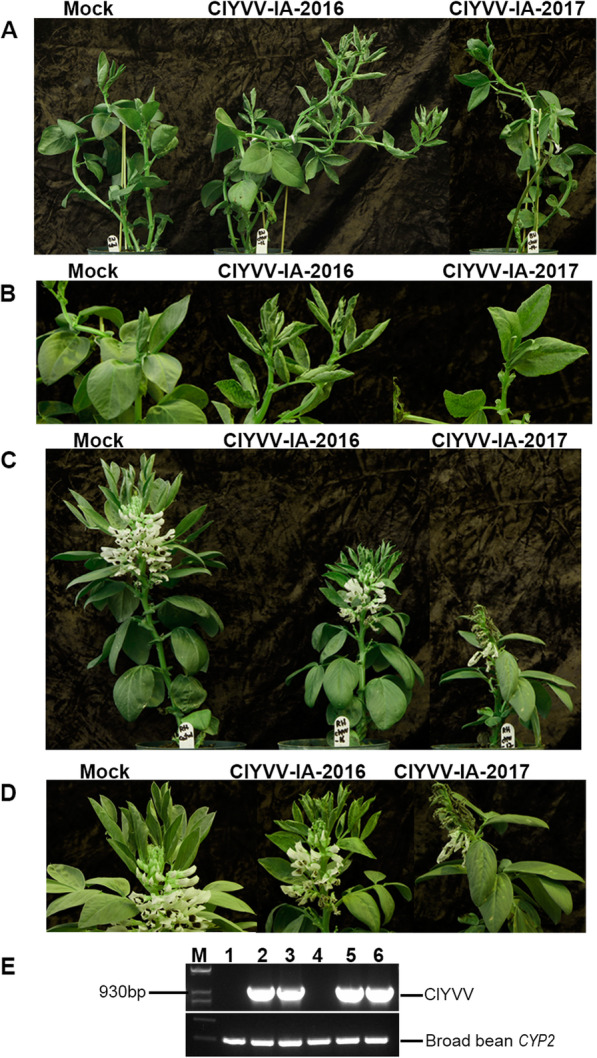
Several viruses were identified in single or mixed infections. Full- or nearly full-length genomes were generated for tobacco streak virus (TSV), alfalfa mosaic virus (AMV), tobacco ringspot virus (TRSV), soybean dwarf virus (SbDV), bean pod mottle virus (BPMV), soybean vein necrosis virus (SVNV), clover yellow vein virus (ClYVV), and a novel virus named soybean ilarvirus 1 (SIlV1). Two distinct ClYVV isolates were recovered, and their biological properties were investigated in Nicotiana benthamiana, broad bean, and soybean. In addition to infections by individual viruses, we also found that mixed viral infections in various combinations were quite common.
Taken together, the results of this study showed that HTS-based technology is a valuable diagnostic tool for the identification of several viruses in field-grown soybean and can provide rapid information about expected viruses as well as viruses that were previously not detected in soybean.
病毒通过导致影响产量和种子质量的疾病对大豆生产造成负面影响。新出现或重新出现的病毒也可能威胁到大豆生产,因为目前的控制措施可能对它们无效。此外,当没有序列或基于抗体的资源可用时,新植物病毒的检测和特征描述需要付出巨大努力。
在这项研究中,在 2016-2019 年的生长季节中,对大豆田进行了病毒样疾病症状的巡查。从有症状的大豆部位提取总 RNA,制备 cDNA 文库,并使用高通量测序 (HTS) 进行 RNA 测序。使用定制的生物信息学工作流程来鉴定和组装已知和未知的病毒基因组。
在单一或混合感染中鉴定出几种病毒。烟草条纹病毒 (TSV)、苜蓿花叶病毒 (AMV)、烟草环斑病毒 (TRSV)、大豆矮化病毒 (SbDV)、豆荚斑驳病毒 (BPMV)、大豆叶脉坏死病毒 (SVNV)、三叶草黄叶脉病毒 (ClYVV) 和一种名为大豆 ilarvirus 1 (SIlV1) 的新型病毒的全长或近全长基因组被生成。回收了两种不同的 ClYVV 分离株,并在 Nicotiana benthamiana、蚕豆和大豆中研究了它们的生物学特性。除了单独的病毒感染外,我们还发现各种组合的混合病毒感染非常常见。
总之,这项研究的结果表明,基于 HTS 的技术是鉴定田间生长大豆中几种病毒的有价值的诊断工具,它可以快速提供有关预期病毒以及以前未在大豆中检测到的病毒的信息。