Biomedical Institute for Convergence at SKKU (BICS), Sungkyunkwan University, Suwon 16419; Single Cell Network Research Center, Sungkyunkwan University School of Medicine, Suwon 16149; Medical Innovation Technology Inc. (MEDINNO Inc.), Seoul 08517, Korea.
Single Cell Network Research Center, Sungkyunkwan University School of Medicine, Suwon 16149; Department of Anatomy and Cell Biology, Sungkyunkwan University School of Medicine, Suwon 16149, Korea.
BMB Rep. 2022 Oct;55(10):512-517. doi: 10.5483/BMBRep.2022.55.10.097.
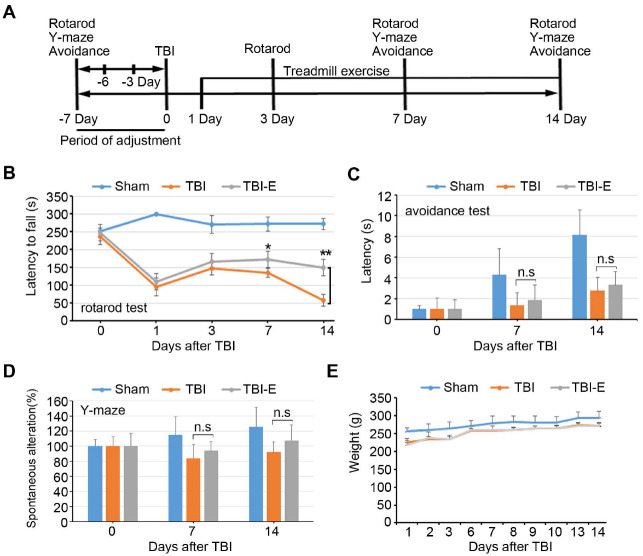
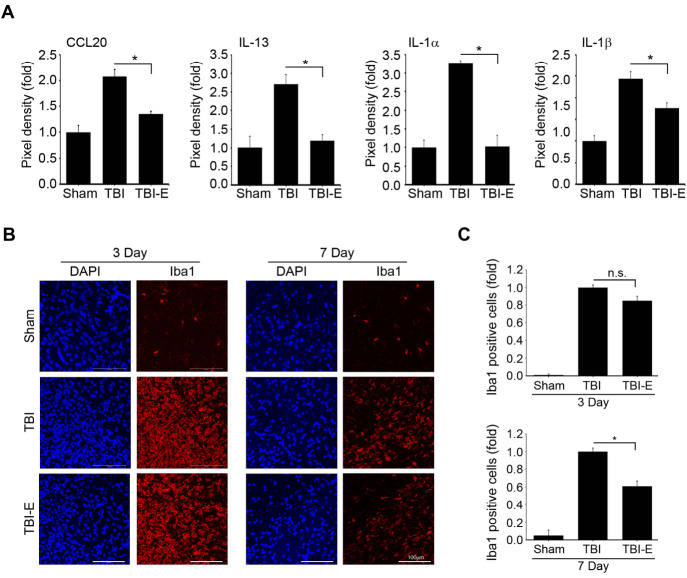
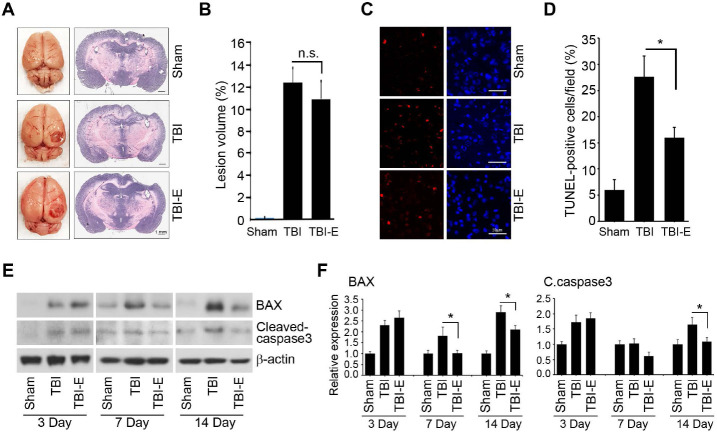
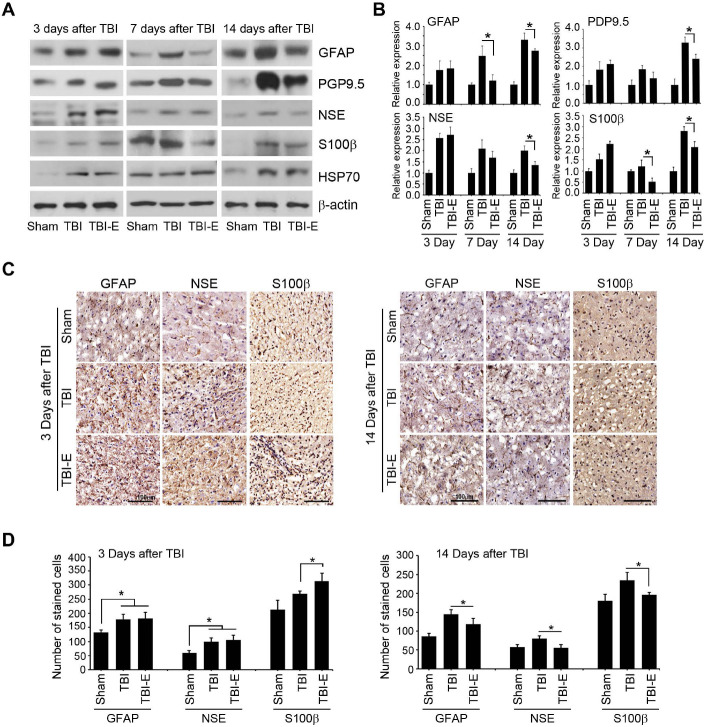
Traumatic brain injury (TBI) is brain damage which is caused by the impact of external mechanical forces. TBI can lead to the temporary or permanent impairment of physical and cognitive abilities, resulting in abnormal behavior. We recently observed that a single session of early exercise in animals with TBI improved their behavioral performance in the absence of other cognitive abnormalities. In the present study, we investigated the therapeutic effects of continuous exercise during the early stages of TBI in rats. We found that continuous low-intensity exercise in early-stage improves the locomotion recovery in the TBI of animal models; however, it does not significantly enhance short-term memory capabilities. Moreover, continuous early exercise not only reduces the protein expression of cerebral damage-related markers, such as Glial Fibrillary Acid Protein (GFAP), Neuron-Specific Enolase (NSE), S100β, Protein Gene Products 9.5 (PGP9.5), and Heat Shock Protein 70 (HSP70), but it also decreases the expression of apoptosis-related protein BAX and cleaved caspase 3. Furthermore, exercise training in animals with TBI decreases the microglia activation and the expression of inflammatory cytokines in the serum, such as CCL20, IL-13, IL-1α, and IL-1β. These findings thus demonstrate that early exercise therapy for TBI may be an effective strategy in improving physiological function, and that serum protein levels are useful biomarkers for the predicition of the effectiveness of early exercise therapy.[BMB Reports 2022; 55(10): 506-511].
创伤性脑损伤(TBI)是由外部机械力冲击引起的脑损伤。TBI 可导致身体和认知能力的暂时或永久性损害,导致异常行为。我们最近观察到,TBI 动物单次早期运动可改善其行为表现,而无其他认知异常。在本研究中,我们调查了 TBI 早期连续运动对大鼠的治疗效果。我们发现,早期低强度连续运动可改善动物模型 TBI 的运动恢复;然而,它并不能显著增强短期记忆能力。此外,早期连续运动不仅降低了与脑损伤相关标志物的蛋白表达,如神经胶质纤维酸性蛋白(GFAP)、神经元特异性烯醇化酶(NSE)、S100β、蛋白基因产物 9.5(PGP9.5)和热休克蛋白 70(HSP70),还降低了凋亡相关蛋白 BAX 和 cleaved caspase 3 的表达。此外,TBI 动物的运动训练可降低血清中小胶质细胞激活和炎症细胞因子的表达,如 CCL20、IL-13、IL-1α 和 IL-1β。这些发现表明,TBI 的早期运动疗法可能是改善生理功能的有效策略,而血清蛋白水平是预测早期运动疗法效果的有用生物标志物。[BMB 报告 2022;55(10): 506-511]。