IFOM-inStem Joint Research Laboratory, Center for Inflammation and Tissue Homeostasis, Institute for Stem Cell Science and Regenerative Medicine, Bangalore, India.
National Centre for Biological Sciences, Bangalore, India.
PLoS Biol. 2022 Sep 16;20(9):e3001777. doi: 10.1371/journal.pbio.3001777. eCollection 2022 Sep.
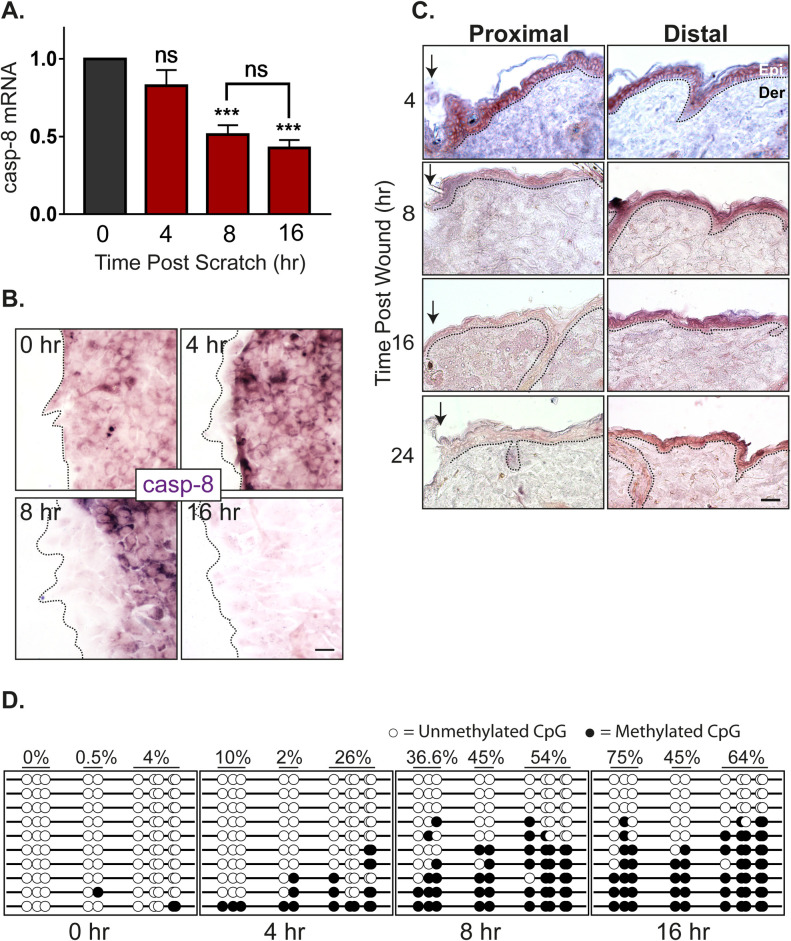
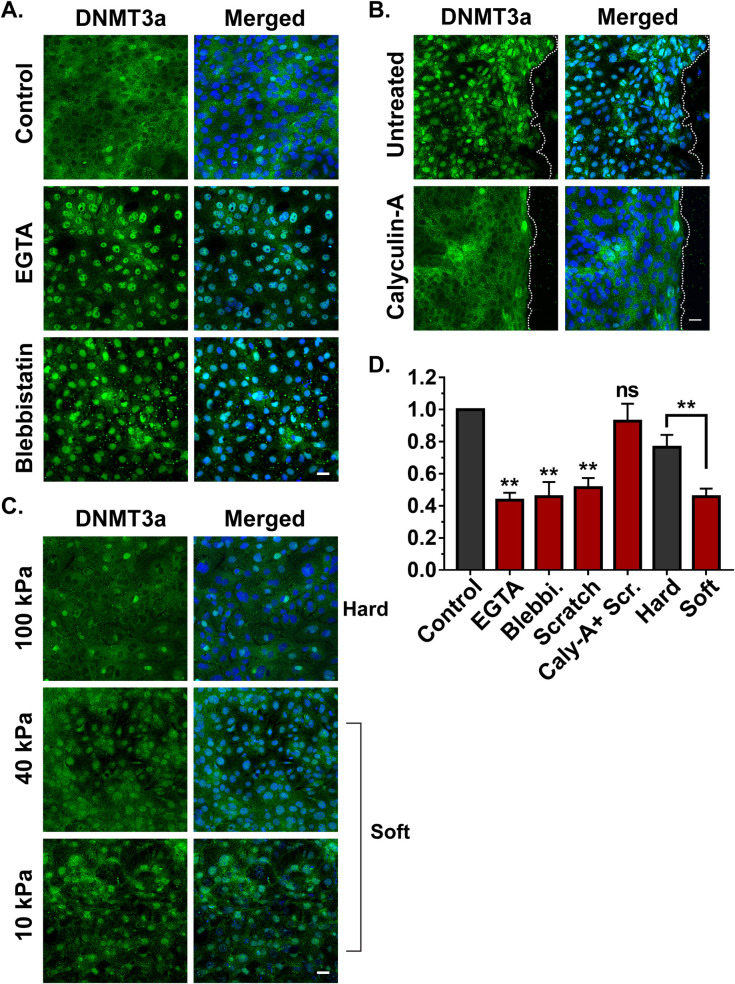
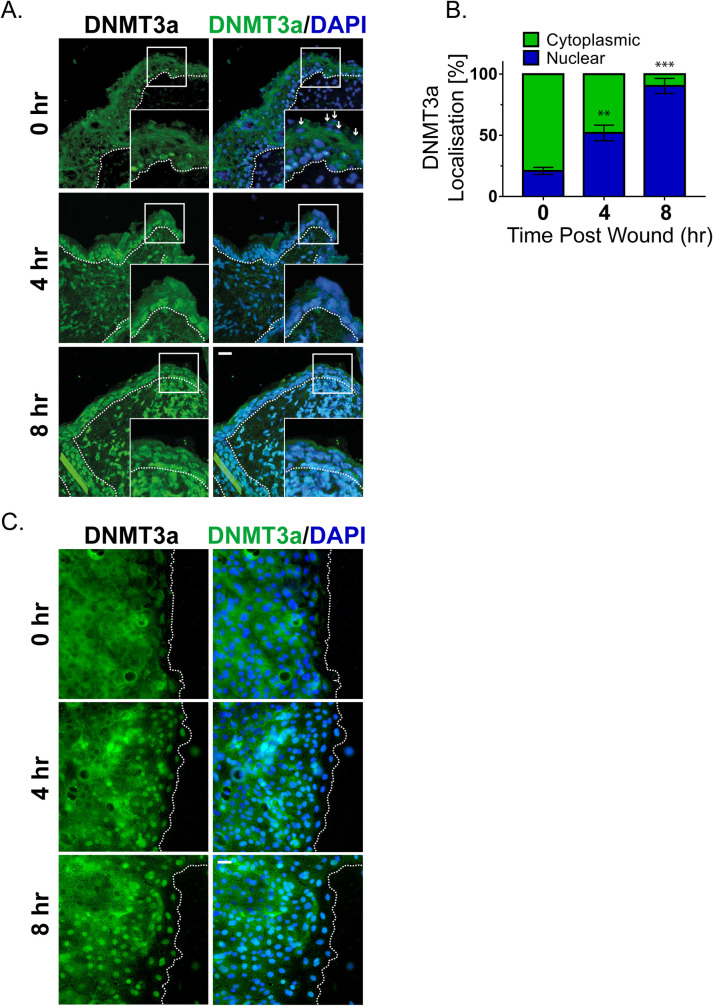
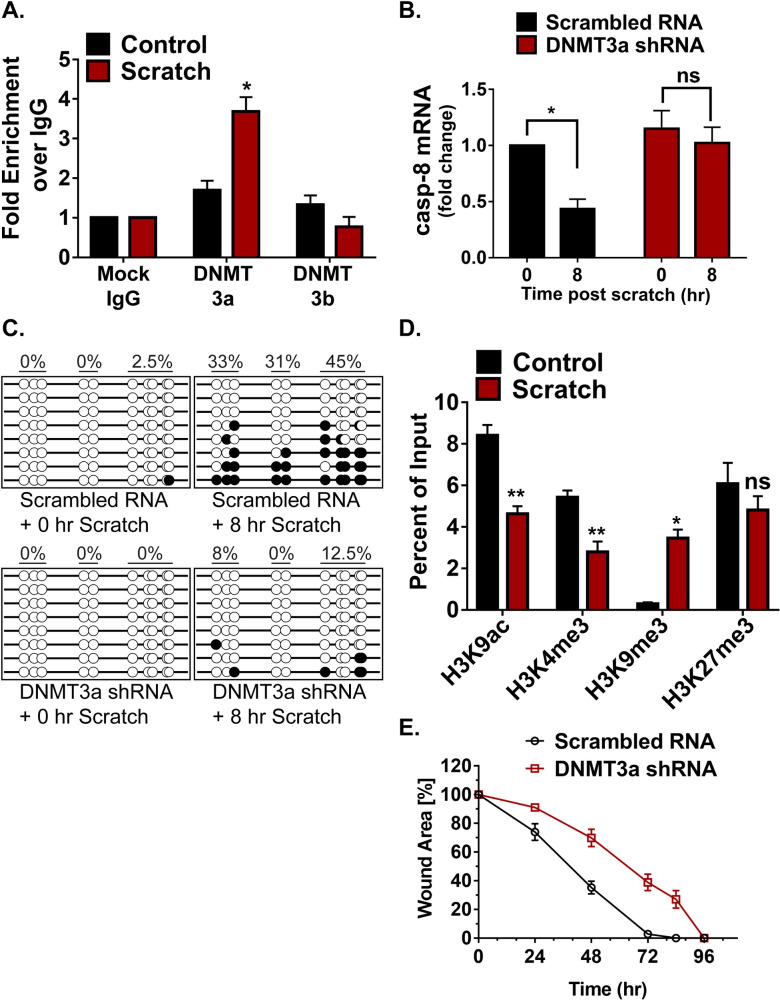
Wound healing in the skin is a complex physiological process that is a product of a cell state transition from homeostasis to repair. Mechanical cues are increasingly being recognized as important regulators of cellular reprogramming, but the mechanism by which it is translated to changes in gene expression and ultimately cellular behavior remains largely a mystery. To probe the molecular underpinnings of this phenomenon further, we used the down-regulation of caspase-8 as a biomarker of a cell entering the wound healing program. We found that the wound-induced release of tension within the epidermis leads to the alteration of gene expression via the nuclear translocation of the DNA methyltransferase 3A (DNMT3a). This enzyme then methylates promoters of genes that are known to be down-regulated in response to wound stimuli as well as potentially novel players in the repair program. Overall, these findings illuminate the convergence of mechanical and epigenetic signaling modules that are important regulators of the transcriptome landscape required to initiate the tissue repair process in the differentiated layers of the epidermis.
皮肤的伤口愈合是一个复杂的生理过程,是细胞从稳态到修复的状态转变的产物。机械线索越来越被认为是细胞重编程的重要调节因子,但它如何转化为基因表达的变化,最终影响细胞行为,在很大程度上仍是一个谜。为了进一步探究这一现象的分子基础,我们使用 caspase-8 的下调作为细胞进入伤口愈合程序的生物标志物。我们发现,表皮内张力的伤口诱导释放导致通过 DNA 甲基转移酶 3A(DNMT3a)的核易位改变基因表达。该酶随后甲基化已知对伤口刺激有反应而下调的基因的启动子,以及修复程序中的潜在新参与者。总的来说,这些发现阐明了机械和表观遗传信号模块的收敛,这些模块是启动表皮分化层组织修复过程所需转录组景观的重要调节因子。