Hao Yun, Romano Joseph D, Moore Jason H
Genomics and Computational Biology (GCB) Graduate Program, University of Pennsylvania, Philadelphia, PA, USA.
Institute for Biomedical Informatics, University of Pennsylvania, Philadelphia, PA, USA.
Patterns (N Y). 2022 Aug 24;3(9):100565. doi: 10.1016/j.patter.2022.100565. eCollection 2022 Sep 9.
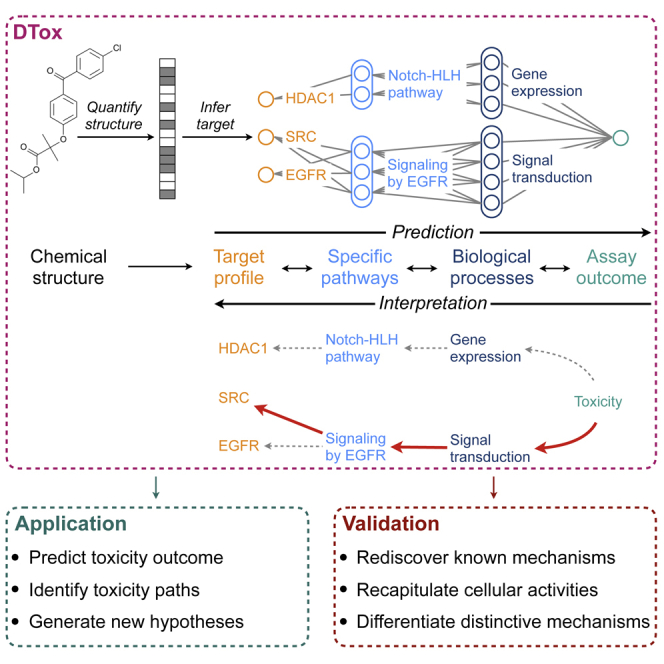
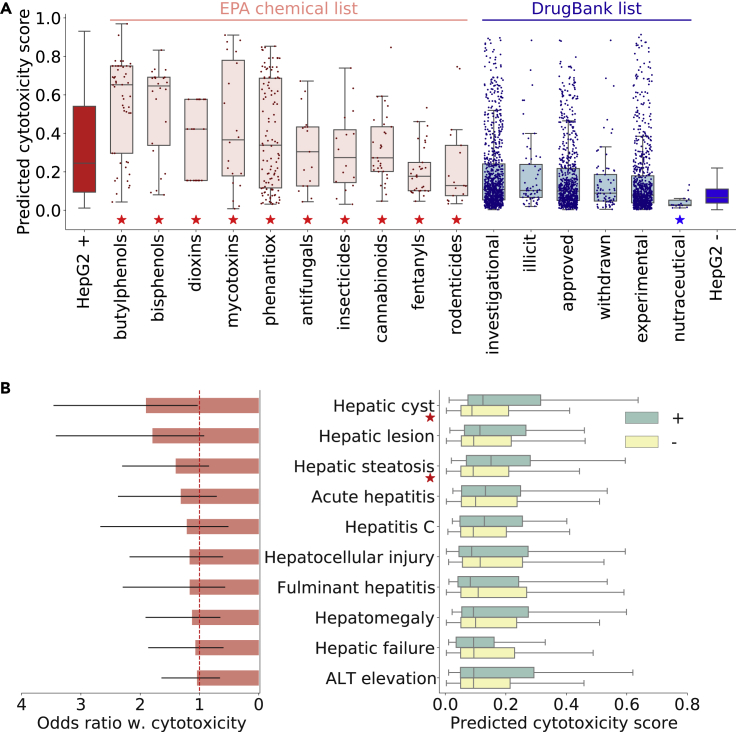
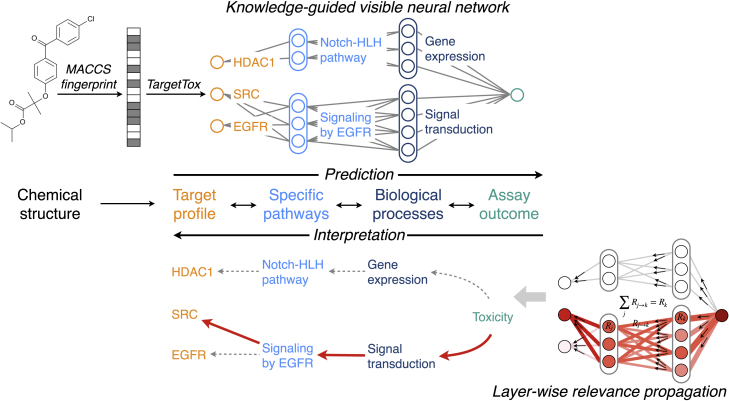
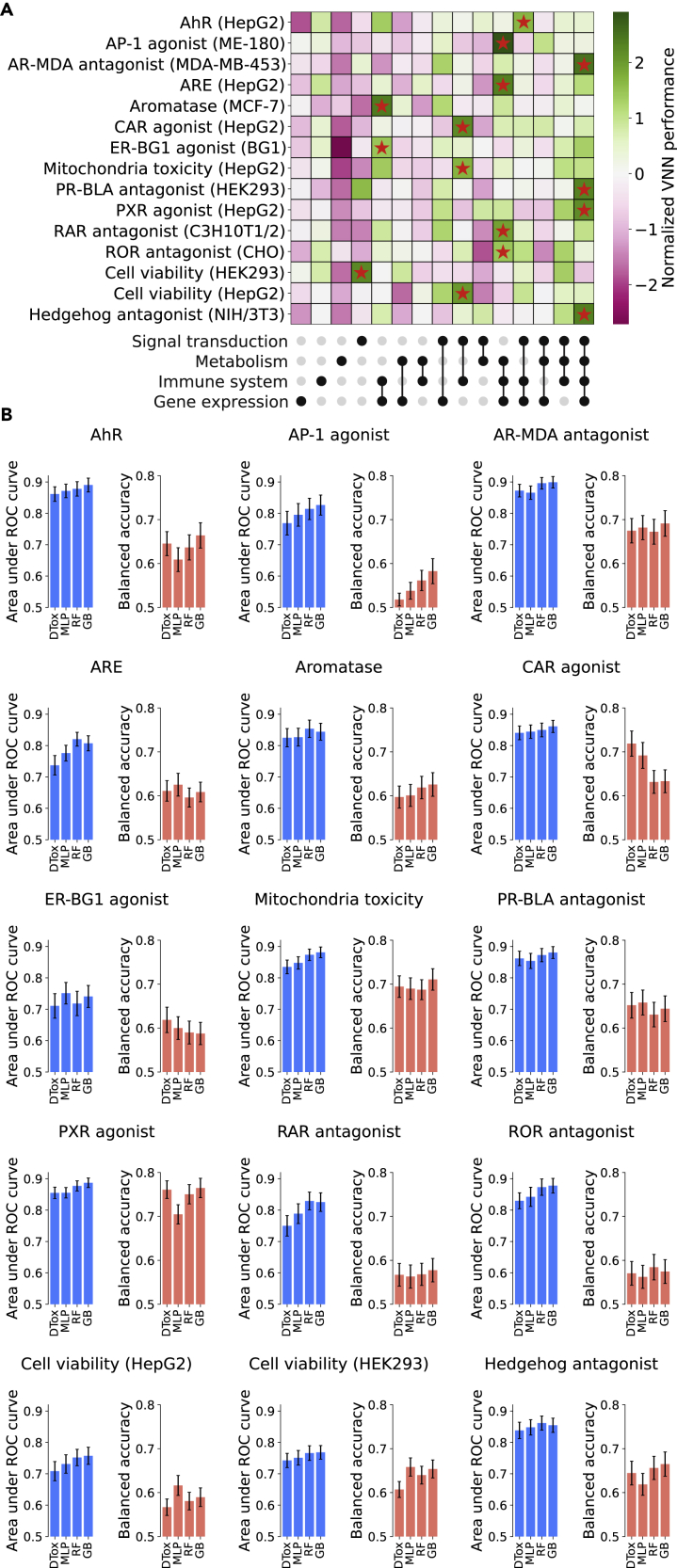
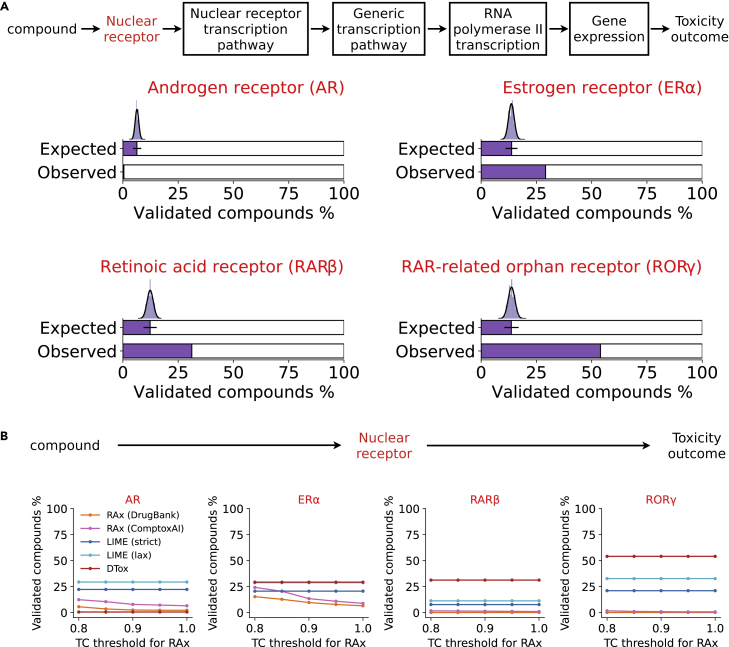
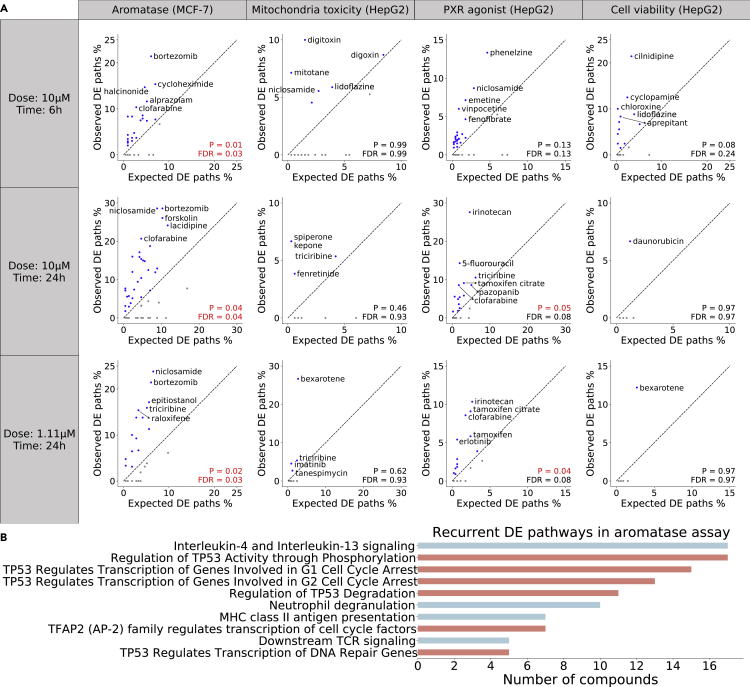
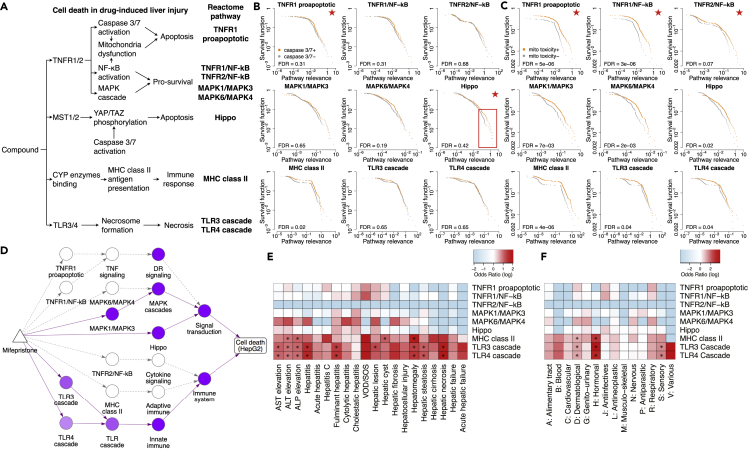
In drug development, a major reason for attrition is the lack of understanding of cellular mechanisms governing drug toxicity. The black-box nature of conventional classification models has limited their utility in identifying toxicity pathways. Here we developed DTox (deep learning for toxicology), an interpretation framework for knowledge-guided neural networks, which can predict compound response to toxicity assays and infer toxicity pathways of individual compounds. We demonstrate that DTox can achieve the same level of predictive performance as conventional models with a significant improvement in interpretability. Using DTox, we were able to rediscover mechanisms of transcription activation by three nuclear receptors, recapitulate cellular activities induced by aromatase inhibitors and pregnane X receptor (PXR) agonists, and differentiate distinctive mechanisms leading to HepG2 cytotoxicity. Virtual screening by DTox revealed that compounds with predicted cytotoxicity are at higher risk for clinical hepatic phenotypes. In summary, DTox provides a framework for deciphering cellular mechanisms of toxicity .
在药物研发中,药物研发失败的一个主要原因是对控制药物毒性的细胞机制缺乏了解。传统分类模型的黑箱性质限制了它们在识别毒性途径方面的效用。在此,我们开发了DTox(毒理学深度学习),这是一种用于知识引导神经网络的解释框架,它可以预测化合物对毒性试验的反应,并推断单个化合物的毒性途径。我们证明,DTox可以实现与传统模型相同水平的预测性能,同时在可解释性方面有显著提高。使用DTox,我们能够重新发现三种核受体的转录激活机制,概括芳香酶抑制剂和孕烷X受体(PXR)激动剂诱导的细胞活动,并区分导致HepG2细胞毒性的不同机制。DTox的虚拟筛选显示,具有预测细胞毒性的化合物出现临床肝脏表型的风险更高。总之,DTox为解读细胞毒性机制提供了一个框架。