Huang Shuman, Hon Karen, Bennett Catherine, Hu Hua, Menberu Martha, Wormald Peter-John, Zhao Yulin, Vreugde Sarah, Liu Sha
Department of Surgery-Otolaryngology Head and Neck Surgery, Basil Hetzel Institute for Translational Health Research, Central Adelaide Local Health Network, Woodville South, SA, Australia.
Adelaide Medical School, The University of Adelaide, Adelaide, SA, Australia.
Front Microbiol. 2022 Sep 14;13:984741. doi: 10.3389/fmicb.2022.984741. eCollection 2022.
() is a common nasal colonizer, whereas () is typically regarded a pathogenic organism in patients with chronic rhinosinusitis (CRS). This study aims to evaluate the interaction of the two bacteria .
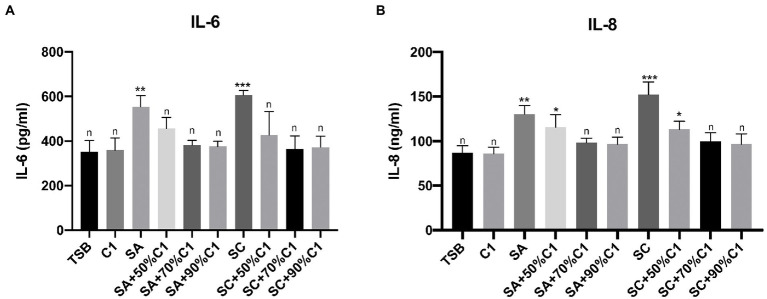
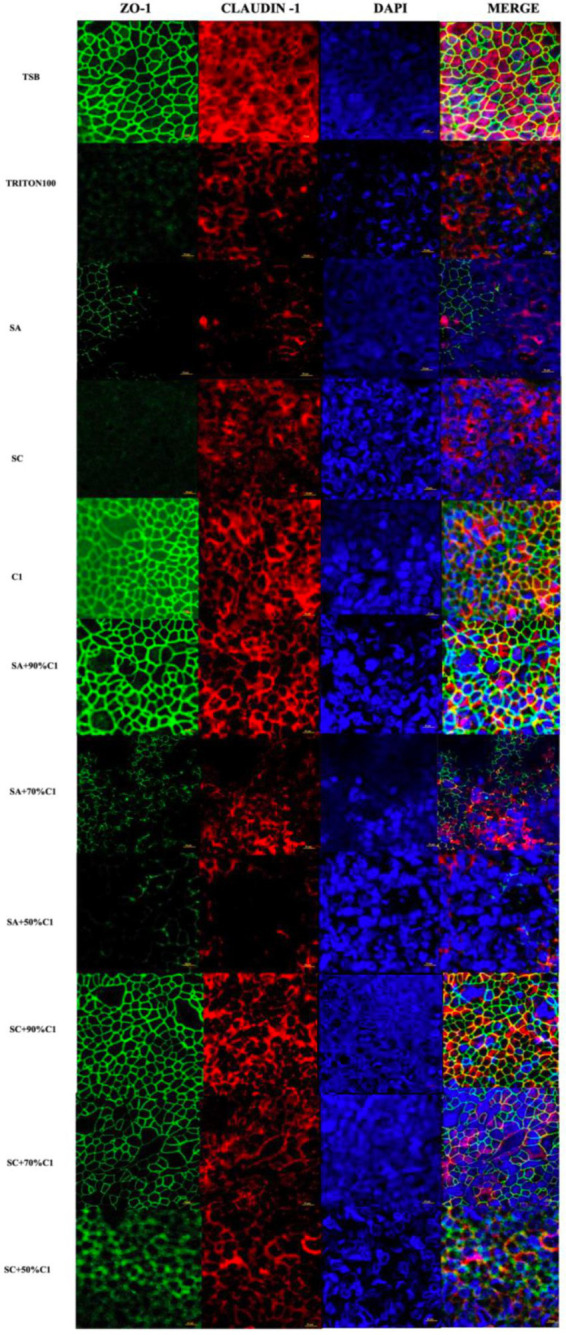
Clinical isolates of and from sinonasal swabs, as well as primary human nasal epithelial cells (HNECs) cultured from cellular brushings of both healthy and CRS patients were used for this study. The cell-free culture supernatants of all isolates grown alone and in co-cultures were tested for their effects on transepithelial electrical resistance (TER), FITC-Dextran permeability, lactate dehydrogenase (LDH), and IL-6 and IL-8 secretion of HNECs. Confocal scanning laser microscopy and immunofluorescence were also used to visualize the apical junctional complexes. cell-free culture supernatants were also tested for antimicrobial activity and growth on planktonic and biofilm growth.
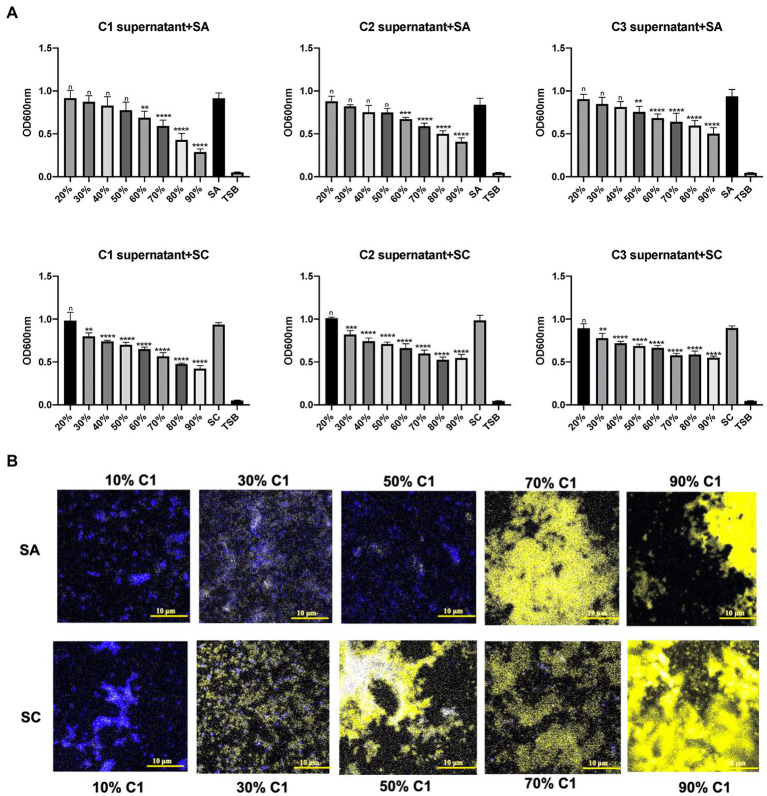
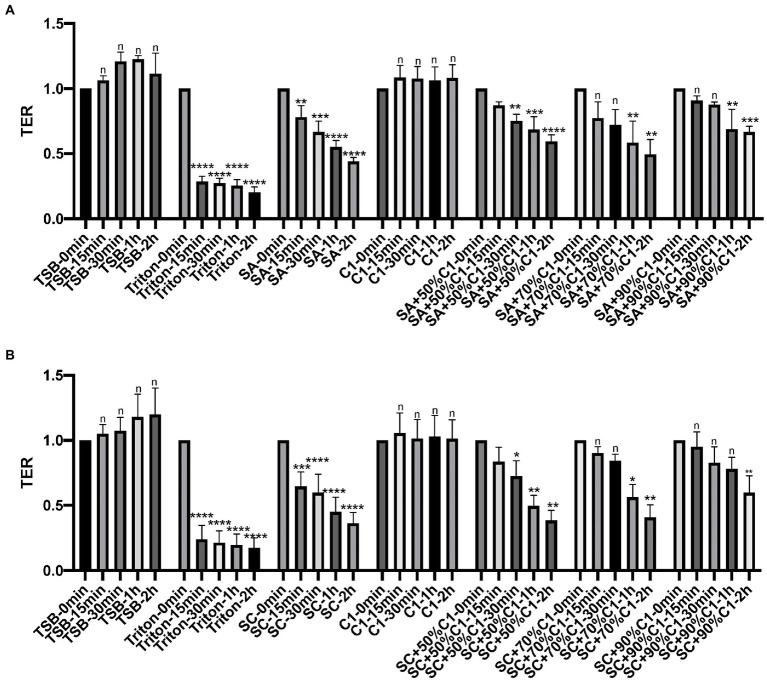
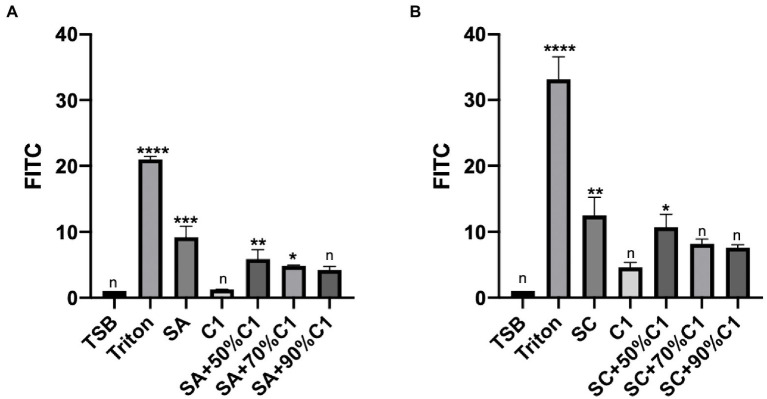
The cell-free culture supernatants of 3\ strains (at 60% for reference strain and 30% concentration for clinical strains) inhibited the growth of both the planktonic reference and clinical strains significantly. The cell-free culture supernatants caused no change in the TER or FITC-Dextran permeability of the HNEC-ALI cultures, while the cell-free culture supernatants of strains had a detrimental effect. Cell-free culture supernatants of co-cultured with both the clinical and reference strains of delayed the -dependent mucosal barrier damage in a dose-dependent manner.
cell-free culture supernatants appear to inhibit the growth of the planktonic bacteria, and may reduce the mucosal barrier damage caused by .
()是一种常见的鼻腔定植菌,而()通常被认为是慢性鼻窦炎(CRS)患者的致病微生物。本研究旨在评估这两种细菌的相互作用。
本研究使用了来自鼻窦拭子的()和()临床分离株,以及从健康和CRS患者的细胞刷培养的原代人鼻上皮细胞(HNECs)。测试了所有单独培养和共培养的分离株的无细胞培养上清液对跨上皮电阻(TER)、异硫氰酸荧光素-葡聚糖通透性、乳酸脱氢酶(LDH)以及HNECs的白细胞介素-6和白细胞介素-8分泌的影响。共聚焦扫描激光显微镜和免疫荧光也用于观察顶端连接复合体。还测试了()无细胞培养上清液对浮游菌和生物膜生长的抗菌活性和生长情况。
3株()菌株的无细胞培养上清液(参考菌株浓度为60%,临床菌株浓度为30%)显著抑制了浮游()参考菌株和临床菌株的生长。()无细胞培养上清液对HNEC-ALI培养物的TER或异硫氰酸荧光素-葡聚糖通透性没有影响,而()菌株的无细胞培养上清液有不利影响。与()临床菌株和参考菌株共培养的()无细胞培养上清液以剂量依赖的方式延迟了()依赖性黏膜屏障损伤。
()无细胞培养上清液似乎能抑制()浮游细菌的生长,并可能减少由()引起的黏膜屏障损伤。