Southern Queensland Rural Health (SQRH), Faculty of Health and Behavioural Sciences, The University of Queensland, Toowoomba, Queensland, Australia
University Department of Rural Health, Faculty of Dentistry, Medicine and Health Sciences, The University of Melbourne, Melbourne, Victoria, Australia.
BMJ Open. 2022 Oct 3;12(10):e064646. doi: 10.1136/bmjopen-2022-064646.
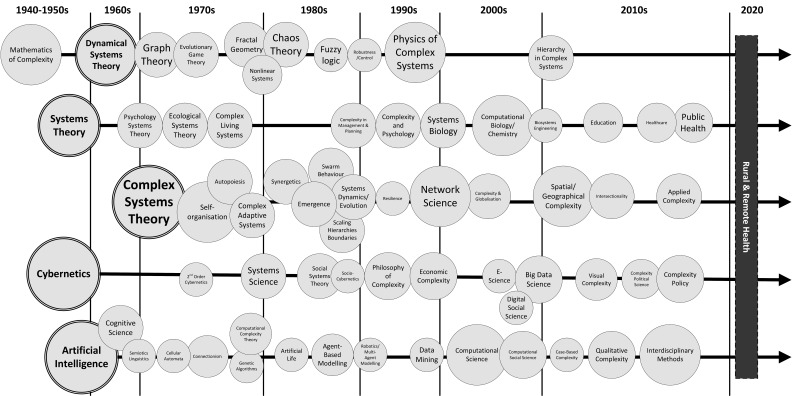
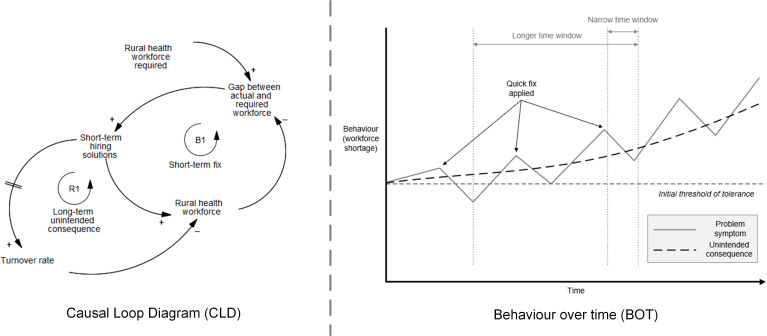
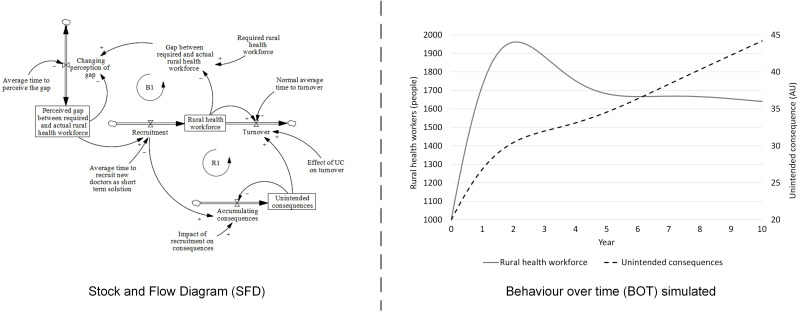
On a global scale, many major rural health issues have persisted for decades despite the introduction of new health interventions and public health policies. Although research efforts have generated valuable new knowledge about the aetiology of health, disease and health inequities in rural communities, rural health systems remain to be some of the most deprived and challenged in both the developing and developed world. While the reasons for this are many, a significant factor contributing to the current state of play is the pressing need for methodological innovation and relevant scientific approaches that have the capacity to support the translation of novel solutions into 'real world' rural contexts. Fortunately, complex systems approaches, which have seen an increase in popularity in the wider public health literature, could provide answers to some of the most resilient rural health problems in recent times. The purpose of this article is to promote the value and utility of a complex systems approach in rural health research. We explain the benefits of a complex systems approach and provide a background to the complexity sciences, including the main characteristics of complex systems. Two popular computational methods are described. The next step for rural health research involves exploring how a complex systems approach can help with the identification and evaluation of new and existing solutions to policy-resistant rural health issues. This includes generating awareness around the analytical trade-offs that occur between the use of traditional scientific methods and complex systems approaches.
从全球范围来看,尽管引入了新的卫生干预措施和公共卫生政策,许多主要的农村卫生问题仍持续存在了几十年。尽管研究工作为农村社区的病因、疾病和卫生不平等问题提供了宝贵的新知识,但农村卫生系统仍然是发展中国家和发达国家中最贫困和最具挑战性的系统之一。造成这种情况的原因有很多,导致目前这种状况的一个重要因素是迫切需要创新方法和相关科学方法,这些方法有能力将新的解决方案转化为“真实世界”的农村环境。幸运的是,复杂系统方法在更广泛的公共卫生文献中越来越受欢迎,它可能为解决最近一些最顽固的农村卫生问题提供答案。本文的目的是宣传复杂系统方法在农村卫生研究中的价值和实用性。我们解释了复杂系统方法的好处,并为复杂性科学提供了背景,包括复杂系统的主要特征。描述了两种流行的计算方法。农村卫生研究的下一步是探索复杂系统方法如何帮助确定和评估针对政策抵制的农村卫生问题的新的和现有的解决方案。这包括提高对在使用传统科学方法和复杂系统方法之间发生的分析权衡的认识。