Serna Laura
Facultad de Ciencias Ambientales y Bioquímica, Universidad de Castilla-La Mancha, Toledo, Spain.
Front Plant Sci. 2022 Sep 20;13:952146. doi: 10.3389/fpls.2022.952146. eCollection 2022.
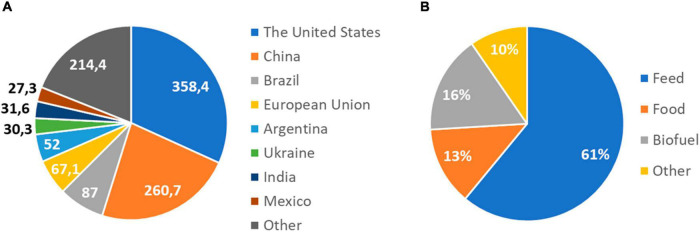
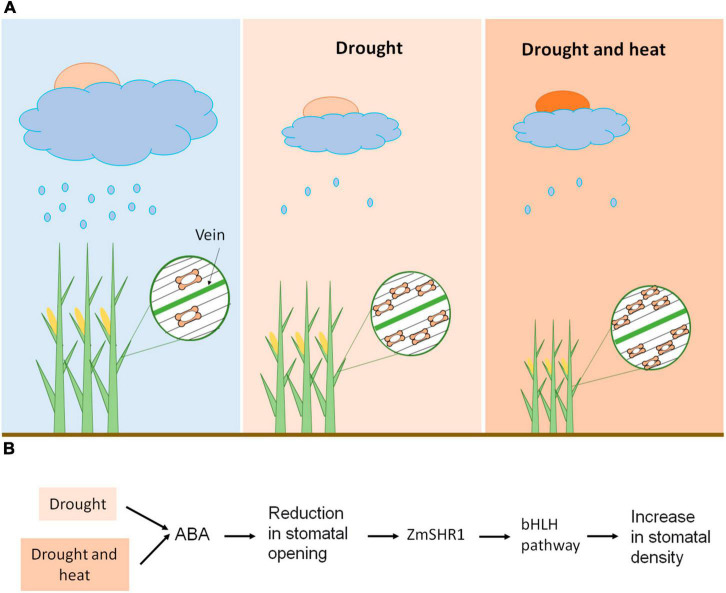
Drought and heat, in the context of climate change, are expected to increase in many agricultural areas across the globe. Among current abiotic stresses, they are the most limiting factors that influence crop growth and productivity. Maize is one of most widely produced crops of the world, being the first in grain production with a yield that exceeded 1.1 billion tons in 2021. Despite its wide distribution in semi-arid regions, it is highly vulnerable to climate change, which triggers important losses in its productivity. This article explores how maize yield may persevere through climate change by focusing on the stomatal regulation of gas exchange. The emerging picture unravels that maize copes with drought stress by reducing stomatal size and stomatal pore area, and increasing stomatal density, which, in turn, reduces transpiration and photosynthetic rate. When drought and heat co-occur, heat enhances stomatal response to drought stress. To avoid plant heat damage, the decline in stomatal aperture could trigger the expansion of the distance of action, from the longitudinal leaf veins, of ZmSHR1, which might act to positively regulate ZmSPCHs/ZmICE1 heterodimers, increasing the stomatal density. Only when drought is not very severe, elevated CO levels reduce yield losses. The knowledge of the upcoming climate changes together with the prediction of the developmental and physiological stomatal responses will allow not only to anticipate maize yield in the next years, but also to contribute to the correct decision-making in the management of this important crop.
在气候变化的背景下,全球许多农业地区的干旱和高温预计将会增加。在当前的非生物胁迫中,它们是影响作物生长和生产力的最主要限制因素。玉米是世界上种植最广泛的作物之一,其谷物产量居首位,2021年产量超过11亿吨。尽管它广泛分布于半干旱地区,但它极易受到气候变化的影响,气候变化会导致其生产力遭受重大损失。本文通过关注气体交换的气孔调节来探讨玉米产量如何在气候变化中得以维持。新出现的情况表明,玉米通过减小气孔大小和气孔孔面积以及增加气孔密度来应对干旱胁迫,这反过来又降低了蒸腾作用和光合速率。当干旱和高温同时出现时,高温会增强气孔对干旱胁迫的反应。为避免植物受到热损伤,气孔孔径的减小可能会触发ZmSHR1从纵向叶脉起作用的作用距离的扩大,ZmSHR1可能正向调节ZmSPCHs/ZmICE1异二聚体,从而增加气孔密度。只有在干旱不太严重时,二氧化碳浓度升高才会减少产量损失。了解即将到来的气候变化以及预测发育和生理气孔反应,不仅能够预测未来几年的玉米产量,还能有助于对这种重要作物的管理做出正确决策。