Institute of Molecular Precision Medicine and Hunan Key Laboratory of Molecular Precision Medicine, Department of General Surgery, Xiangya Hospital, Central South University, Changsha, Hunan, China.
Center for Medical Genetics and Hunan Key Laboratory of Medical Genetics, School of Life Sciences, Central South University, Changsha, Hunan, China.
Biol Direct. 2022 Oct 8;17(1):28. doi: 10.1186/s13062-022-00340-y.
The mechanism of cuproptosis, a novel copper-induced cell death by regulating tricarboxylic acid cycle (TCA)-related genes, has been reported to regulate oxidative phosphorylation system (OXPHOS) in cancers and can be regarded as potential therapeutic strategies in cancer; however, the characteristics of cuproptosis in pan-cancer have not been elucidated.
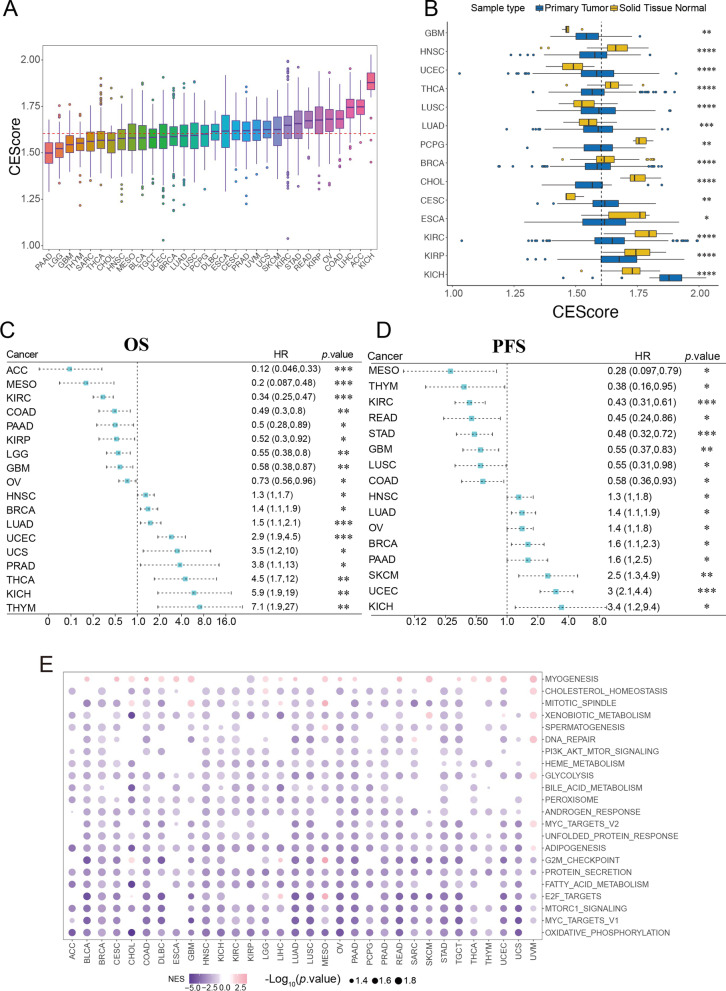
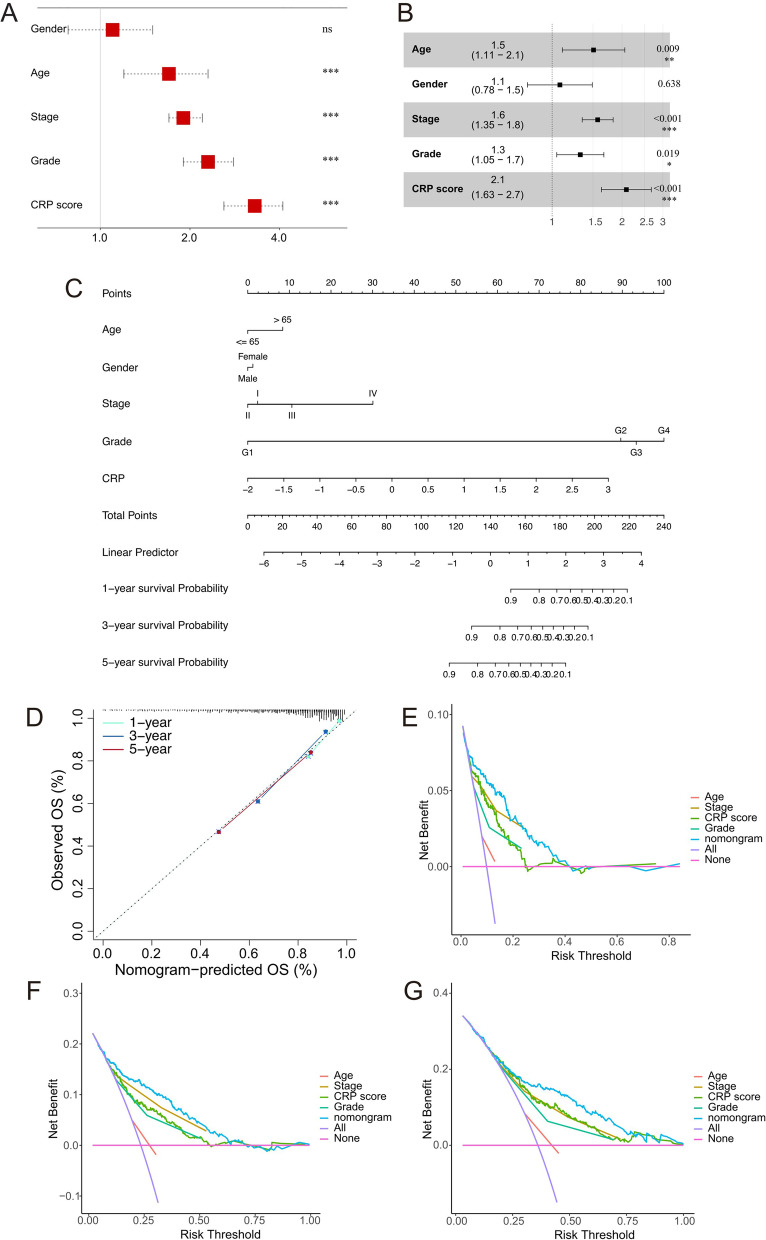
The multi-omics data of The Cancer Genome Atlas were used to evaluate the cuproptosis-associated characteristics across 32 tumor types. A cuproptosis enrichment score (CEScore) was established using a single sample gene enrichment analysis (ssGSEA) in pan-cancer. Spearman correlation analysis was used to identify pathway most associated with CEScore. Lasso-Cox regression was used to screen prognostic genes associated with OXPHOS and further construct a cuproptosis-related prognostic model in clear cell renal cell carcinoma (ccRCC).
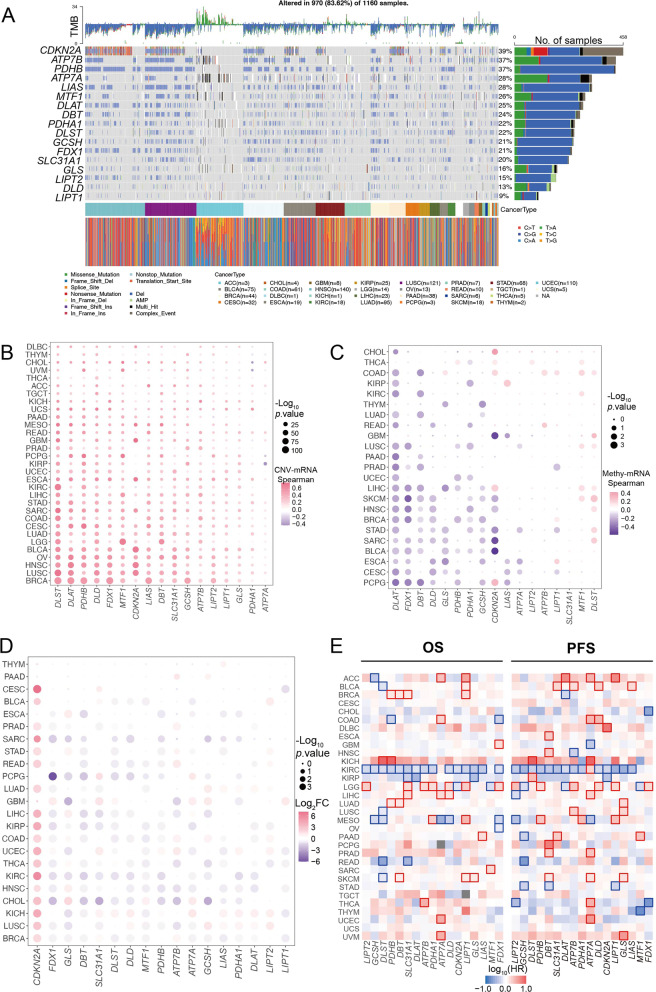
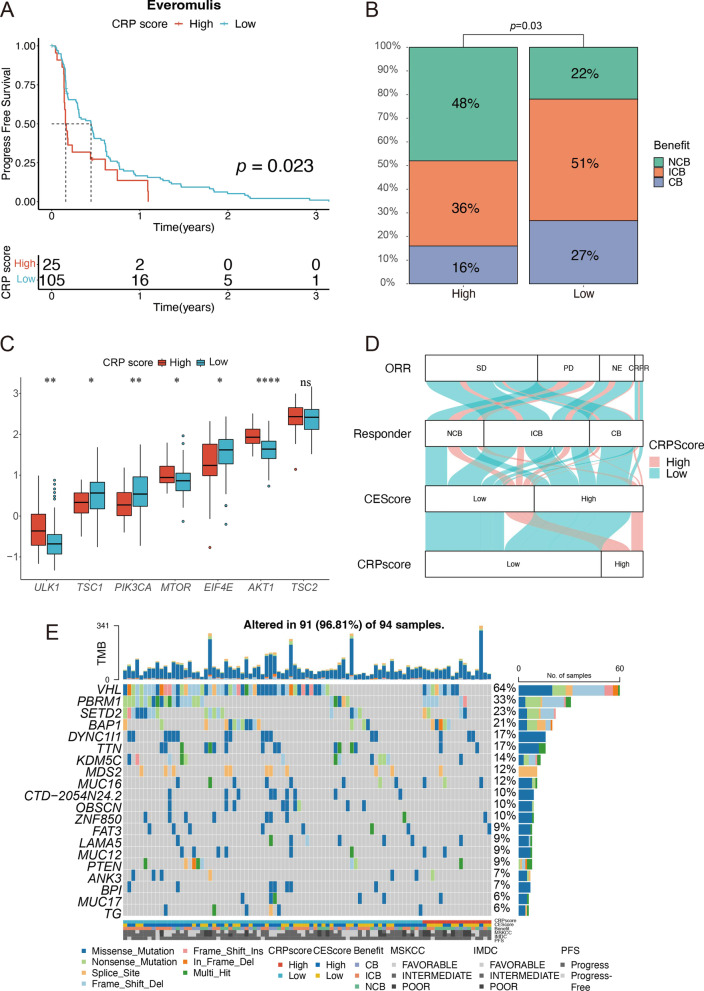
We revealed that most cuproptosis-related genes (CRGs) were differentially expressed between tumors and normal tissues, and somatic copy number alterations contributed to their aberrant expression. We established a CEScore index to indicate cuproptosis status which was associated with prognosis in most cancers. The CEScore was negatively correlated with OXPHOS and significantly featured prognosis in ccRCC. The ccRCC patients with high-risk scores show worse survival outcomes and bad clinical benefits of Everolimus (mTOR inhibitor).
Our findings indicate the importance of abnormal CRGs expression in cancers. In addition, identified several prognostic CRGs as potential markers for prognostic distinction and drug response in the specific tumor. These results accelerate the understanding of copper-induced death in tumor progression and provide cuproptosis-associated novel therapeutic strategies.
杯状细胞死亡是一种新的铜诱导细胞死亡方式,通过调节三羧酸循环(TCA)相关基因来调控氧化磷酸化系统(OXPHOS),可作为癌症潜在的治疗策略;然而,泛癌症中的杯状细胞死亡特征尚未阐明。
利用癌症基因组图谱的多组学数据评估 32 种肿瘤类型的杯状细胞死亡相关特征。使用泛癌症中的单样本基因富集分析(ssGSEA)建立杯状细胞死亡富集评分(CEScore)。采用斯皮尔曼相关性分析鉴定与 CEScore 最相关的通路。使用 Lasso-Cox 回归筛选与 OXPHOS 相关的预后基因,并进一步构建透明细胞肾细胞癌(ccRCC)中的杯状细胞死亡相关预后模型。
我们揭示了大多数杯状细胞死亡相关基因(CRGs)在肿瘤和正常组织之间存在差异表达,并且体细胞拷贝数改变导致了它们的异常表达。我们建立了一个 CEScore 指数来表示杯状细胞死亡状态,该状态与大多数癌症的预后相关。CEScore 与 OXPHOS 呈负相关,在 ccRCC 中显著特征预后。具有高风险评分的 ccRCC 患者生存结局较差,Everolimus(mTOR 抑制剂)的临床获益较差。
我们的研究结果表明,异常 CRGs 表达在癌症中具有重要意义。此外,鉴定出了一些预后 CRGs,作为特定肿瘤中预后区分和药物反应的潜在标志物。这些结果加速了对肿瘤进展中铜诱导死亡的理解,并为杯状细胞死亡相关的新治疗策略提供了依据。