Garg Sarita, Singla Rajeev K, Rahman Md Mominur, Sharma Rohit, Mittal Vineet
Department of Pharmaceutical Sciences, Maharshi Dayanand University, Rohtak, Haryana, India.
Institutes for Systems Genetics, Frontiers Science Center for Disease-related Molecular Network, West China Hospital, Sichuan University, Chengdu 610041, Sichuan, China.
Evid Based Complement Alternat Med. 2022 Sep 30;2022:4907585. doi: 10.1155/2022/4907585. eCollection 2022.
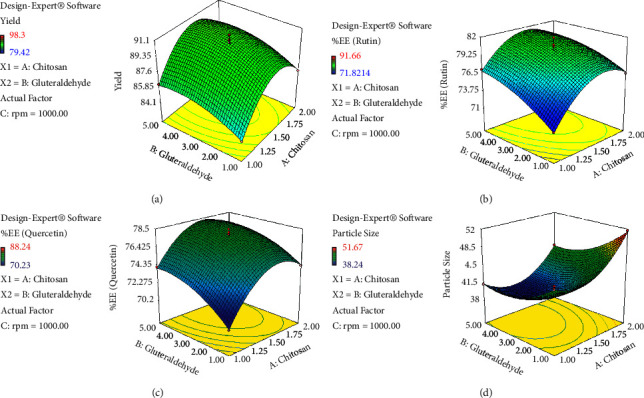
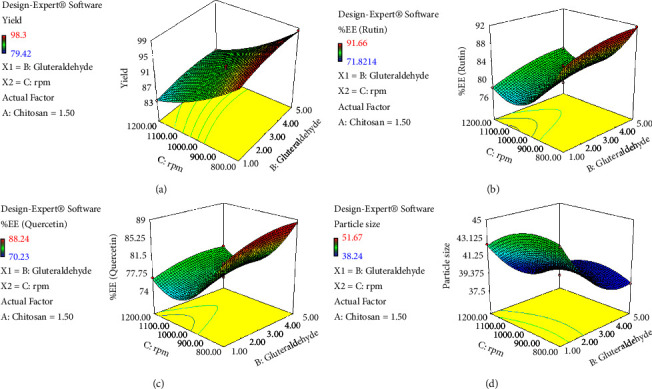
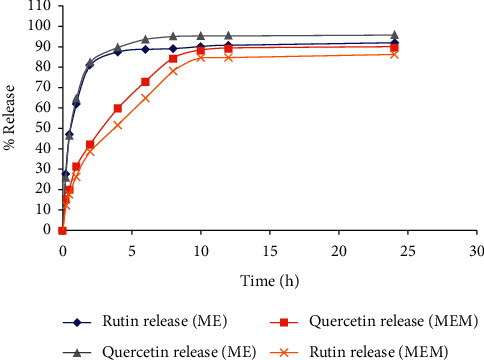
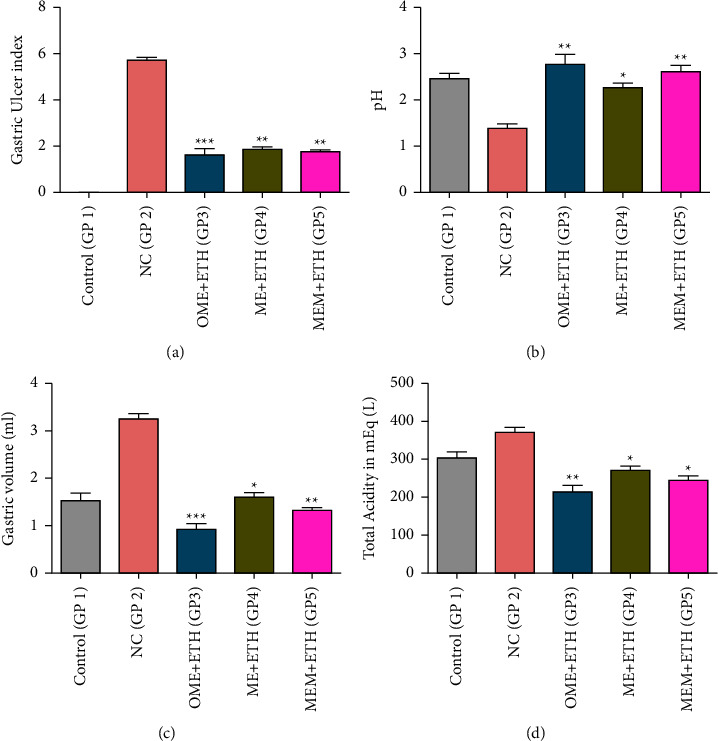
Due to an unhealthy lifestyle, gastric ulcers have become a very common disease these days. Moreover, the side effects linked with the prolonged use of conventional treatments have shifted the paradigm towards herbal therapies. The leaves of L. (Family-Moraceae) have been traditionally used for a large number of metabolic diseases. In the present research, we focused on the development of chitosan microspheres using extracts of leaves of L. and their evaluation for gastroprotective efficacy against ethanol-induced ulcers in experimental rats. The process of development of extract microsphere (MEM) is also optimized using the Box-Behnken design. The formulation was prepared at optimized conditions (chitosan concentration (1.66% w/w), volume of glutaraldehyde (4.69 mL), and stirrer rotation per minute, RPM, 854.8), and the percentage yield ( ) of the resulted microspheres is ∼95% with an encapsulation efficiency (EE) of ( ) ∼86%, ) ∼85%, and particle size ( ) of ∼40 m. The MEM prepared at optimized conditions can also be characterized for various parameters to ensure the uniformity of parameters. Also, the drug release studies indicated that the percentage release of rutin and quercetin from MEM was enhanced as compared to extract (ME) alone. Furthermore, analysis of the antiulcer potential of pretreatment with ME and MEM (500 mg/kg p.o.) in rats indicated that mucosal lesions, gastric juice volume, and total acidity were significantly altered as compared to ethanol-treated animals. Histopathology of tissue sections also confirmed the protection of gastric mucosa on pretreatment with MEM at 500 mg/kg p.o. On the basis of these findings, we can conclude that prepared microspheres can be used to develop a sustained release formulation of extract for the management of gastric ulcers. However, additional research is needed to establish the specific mechanisms of antiulcer efficacy.
由于不健康的生活方式,胃溃疡如今已成为一种非常常见的疾病。此外,与长期使用传统治疗方法相关的副作用已使治疗模式转向草药疗法。L.(桑科)的叶子传统上被用于治疗多种代谢性疾病。在本研究中,我们专注于使用L.叶子的提取物开发壳聚糖微球,并评估其对实验大鼠乙醇诱导溃疡的胃保护功效。还使用Box-Behnken设计优化了提取物微球(MEM)的制备工艺。在优化条件(壳聚糖浓度(1.66% w/w)、戊二醛体积(4.69 mL)和每分钟搅拌器转速,RPM,854.8)下制备制剂,所得微球的产率( )约为95%,包封率(EE)为( )约86%,( )约85%,粒径( )约为40 µm。在优化条件下制备的MEM还可针对各种参数进行表征,以确保参数的一致性。此外,药物释放研究表明,与单独的提取物(ME)相比,MEM中芦丁和槲皮素的释放百分比有所提高。此外,对大鼠用ME和MEM(500 mg/kg口服)预处理的抗溃疡潜力分析表明,与乙醇处理的动物相比,粘膜损伤、胃液体积和总酸度有显著改变。组织切片的组织病理学也证实,口服500 mg/kg的MEM预处理可保护胃粘膜。基于这些发现,我们可以得出结论,制备的微球可用于开发提取物的缓释制剂以治疗胃溃疡。然而,需要进一步的研究来确定其抗溃疡功效的具体机制。