Khor Kang Zi, Joseph Julia, Shamsuddin Farah, Lim Vuanghao, Moses Emmanuel J, Abdul Samad Nozlena
Integrative Medicine Cluster, Institut Perubatan dan Pergigian Termaju (IPPT), Sains@BERTAM, Universiti Sains Malaysia, Pulau Pinang, Malaysia.
Regenerative Medicine Cluster, Institut Perubatan dan Pergigian Termaju (IPPT), Sains@BERTAM, Universiti Sains Malaysia, Pulau Pinang, Malaysia.
Int J Nanomedicine. 2020 Aug 5;15:5661-5670. doi: 10.2147/IJN.S244834. eCollection 2020.
, commonly known as "moringa", is widely cultivated in tropical and subtropical regions across the globe. Extensive studies have shown that various parts of the moringa tree exhibit anti-cancer properties. This study determined the effects of sequential moringa leaf extracts and silver nanoparticles synthesized from moringa leaf extract on Kasumi-1 leukemia cells.
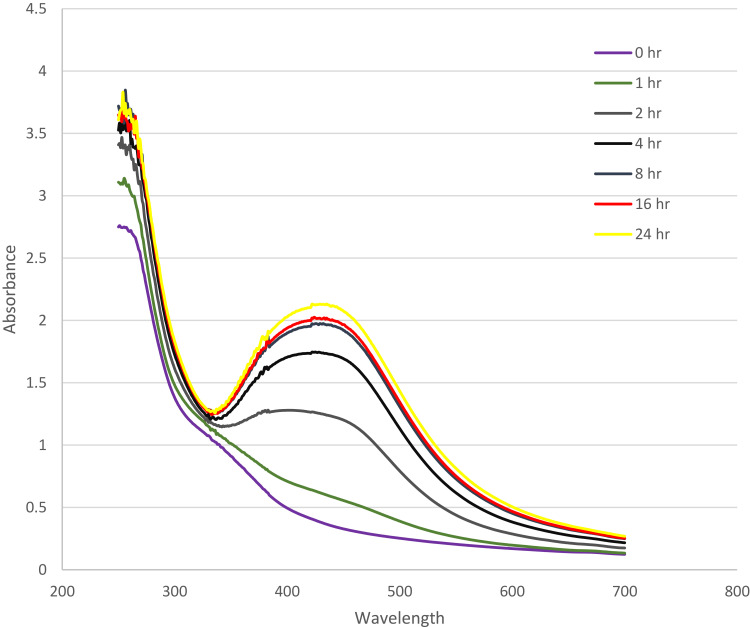
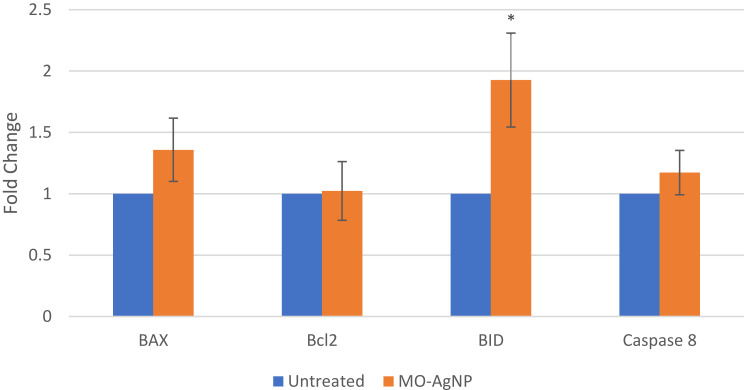
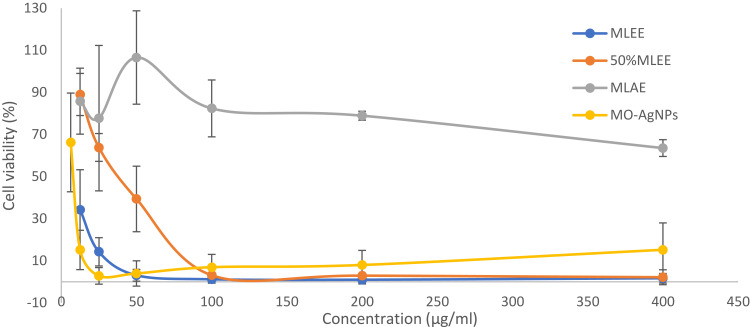
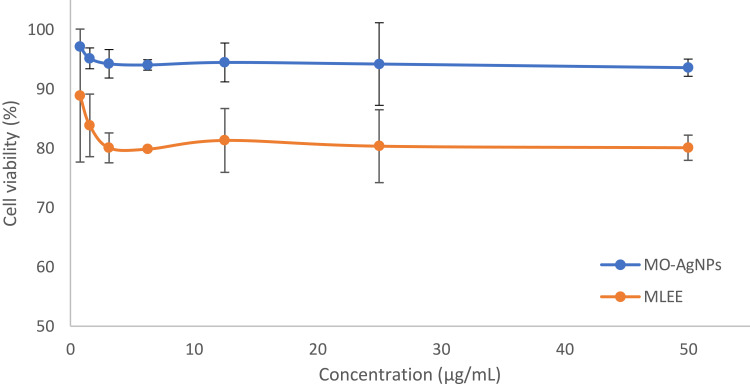
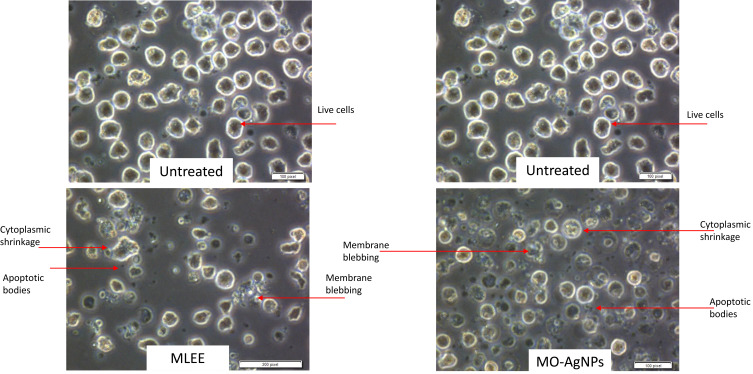
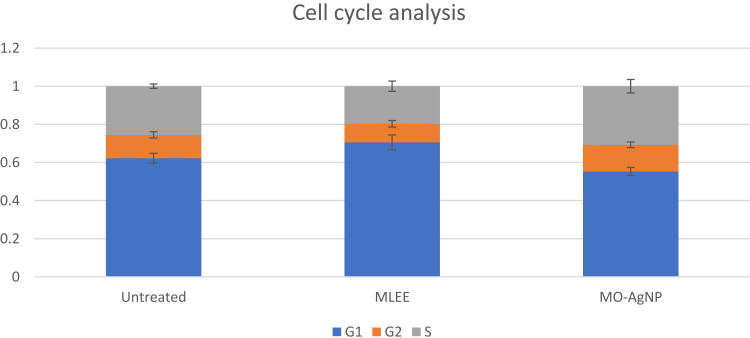
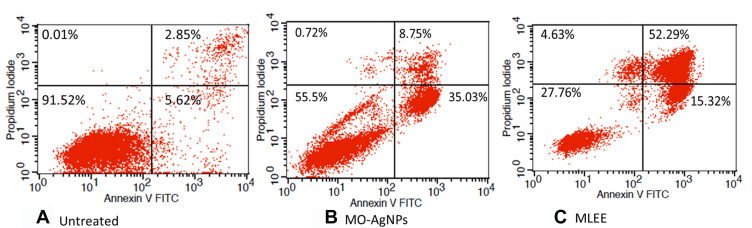
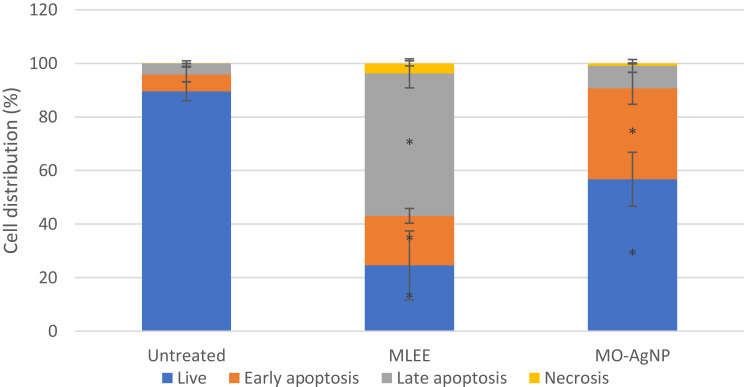
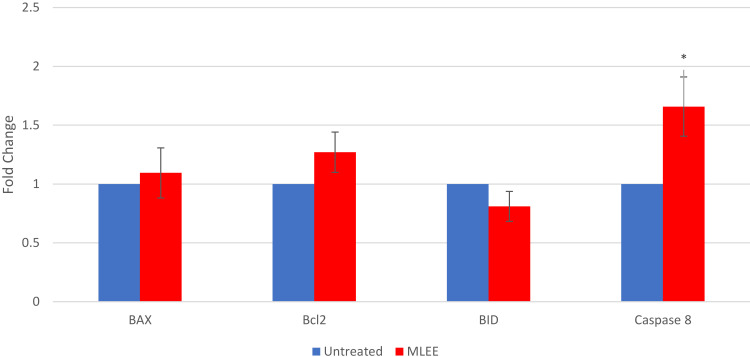
Dried moringa leaf powder was sequentially extracted with the assistance of ultrasound starting with absolute ethanol, followed by 50% ethanol, and finally, deionized water. The aqueous extract was utilized to synthesize silver nanoparticles. The optimum conditions to generate moringa silver nanoparticles (MO-AgNPs) were eight hours of incubation at 60°C with 1 mM silver nitrate and 1% moringa aqueous extract from sequential extraction. The three extracts and MO-AgNPs were used to treat Kasumi-1 cells for 24, 48, 72 hours with concentrations ranging from 400 to 12.5 µg/mL, while cell viability was determined with 3(4, 5-dimethythiazol-2-yl)-2, 5-diphenyltetrazolium bromide (MTT) assay. After 72 hours of treatment, the moringa leaf absolute ethanol extract displayed the strongest inhibitory effects on Kasumi-1 cells with IC of 10 µg/mL, in comparison to moringa leaf 50% ethanol extract (25 µg/mL) and aqueous extract (>400 µg/mL). Interestingly, MO-AgNPs exhibited the strongest cytotoxic effects on Kasumi-1 cells with an IC of 7.5 µg/mL. Cytotoxic study on normal CD34+ cells treated with up to 50ug/mL of either MO-AgNPs or ethanol extract still had more than 80% cell viability indicating that the treatments have selective cytotoxicity against the cancer cells. Morphological studies of Kasumi-1 cells treated with IC of moringa leaf ethanolic extract and MO-AgNPs show a lot of shrinking, dying cells and cell debris. Cell cycle studies displayed an increase in cells at the G1 phase for ethanol leaf extract, while MO-AgNPs caused cell cycle arrest at the S phase after treatment with IC dose for 24 hours. Moringa leaf ethanol extract and the nanoparticles induced apoptosis in Kasumi-1 cells as shown by annexin V - FITC assays. Gene expression analysis by qPCR verified these outcomes, as the moringa leaf ethanol extract led to significant upregulation of proapoptotic gene caspase 8, whereas the MO-AgNPs caused a significant increase of proapoptotic protein BID.
This study reveals that moringa ethanolic leaf extract and MO-AgNPs induced potent antiproliferative effects in Kasumi-1 cells by apoptosis.
辣木,俗称“鼓槌树”,在全球热带和亚热带地区广泛种植。大量研究表明,辣木树的各个部位均具有抗癌特性。本研究确定了辣木叶提取物及由辣木叶提取物合成的银纳米颗粒对Kasumi-1白血病细胞的作用。
以无水乙醇、50%乙醇,最后用去离子水,在超声辅助下依次对干燥的辣木叶粉末进行提取。用水提取物合成银纳米颗粒。生成辣木银纳米颗粒(MO-AgNPs)的最佳条件是在60°C下孵育8小时,加入1 mM硝酸银和1%依次提取得到的辣木叶水提取物。用三种提取物和MO-AgNPs以400至12.5 µg/mL的浓度处理Kasumi-1细胞24、48、72小时,同时用3-(4,5-二甲基噻唑-2-基)-2,5-二苯基四氮唑溴盐(MTT)法测定细胞活力。处理72小时后,辣木叶无水乙醇提取物对Kasumi-1细胞的抑制作用最强,IC50为10 µg/mL,相比之下,辣木叶50%乙醇提取物(25 µg/mL)和水提取物(>400 µg/mL)的抑制作用较弱。有趣的是,MO-AgNPs对Kasumi-1细胞表现出最强的细胞毒性作用,IC50为7.5 µg/mL。对用高达50 µg/mL的MO-AgNPs或乙醇提取物处理的正常CD34+细胞进行的细胞毒性研究表明,细胞活力仍超过80%,这表明这些处理对癌细胞具有选择性细胞毒性。用辣木叶乙醇提取物和MO-AgNPs的IC50处理Kasumi-1细胞的形态学研究显示,有大量细胞皱缩、死亡及细胞碎片。细胞周期研究显示,乙醇叶提取物处理后G1期细胞增加,而MO-AgNPs在以IC50剂量处理24小时后导致细胞周期停滞在S期。膜联蛋白V - FITC分析表明,辣木叶乙醇提取物和纳米颗粒可诱导Kasumi-1细胞凋亡。通过qPCR进行的基因表达分析证实了这些结果,因为辣木叶乙醇提取物导致促凋亡基因半胱天冬酶8显著上调,而MO-AgNPs导致促凋亡蛋白BID显著增加。
本研究表明,辣木叶乙醇提取物和MO-AgNPs通过诱导凋亡对Kasumi-1细胞产生强大的抗增殖作用。