Wu Leyang, Li Lin, Li Shufeng, Liu Lina, Xin Wenjie, Li Chenyang, Yin Xingpeng, Xu Xuebo, Bao Feifei, Hua Zichun
The State Key Laboratory of Pharmaceutical Biotechnology, School of Life Sciences, Nanjing University, Nanjing 210023, China.
Changzhou High-Tech Research Institute of Nanjing University and Jiangsu TargetPharma Laboratories Inc., Changzhou 213164, China.
Acta Pharm Sin B. 2022 Oct;12(10):3952-3971. doi: 10.1016/j.apsb.2022.05.006. Epub 2022 May 14.
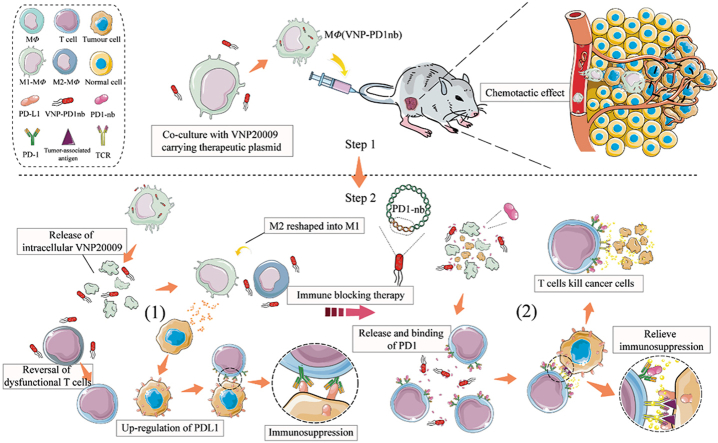
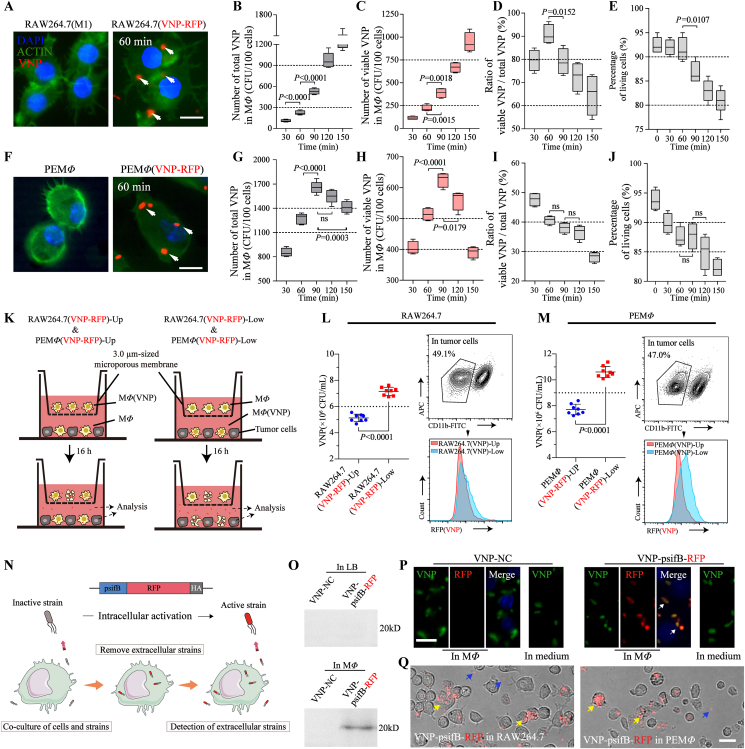
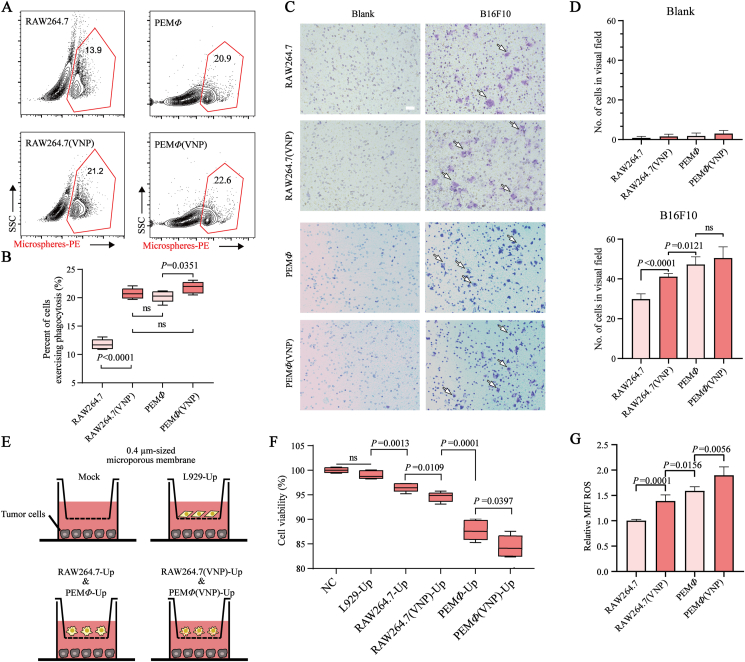
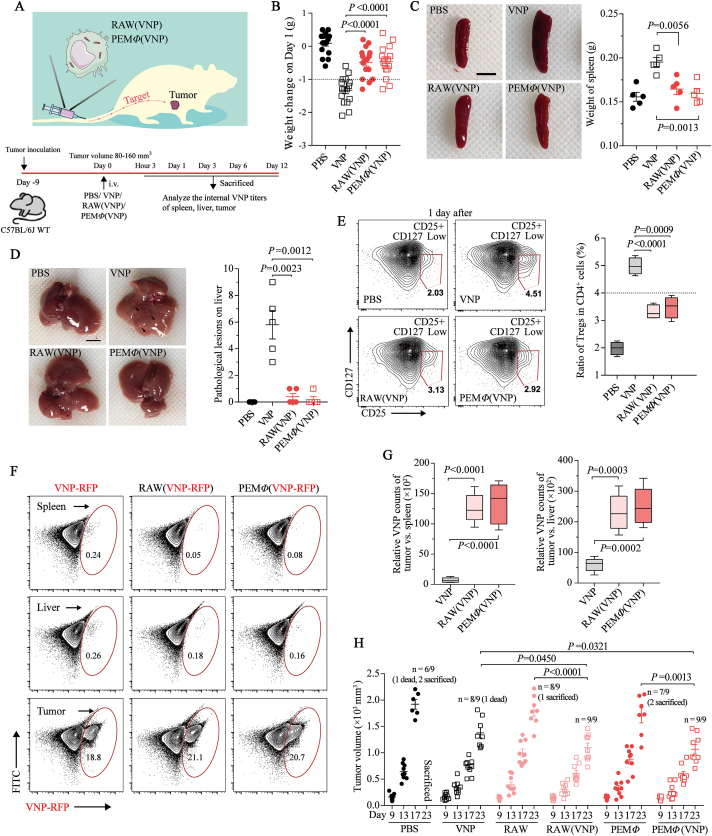
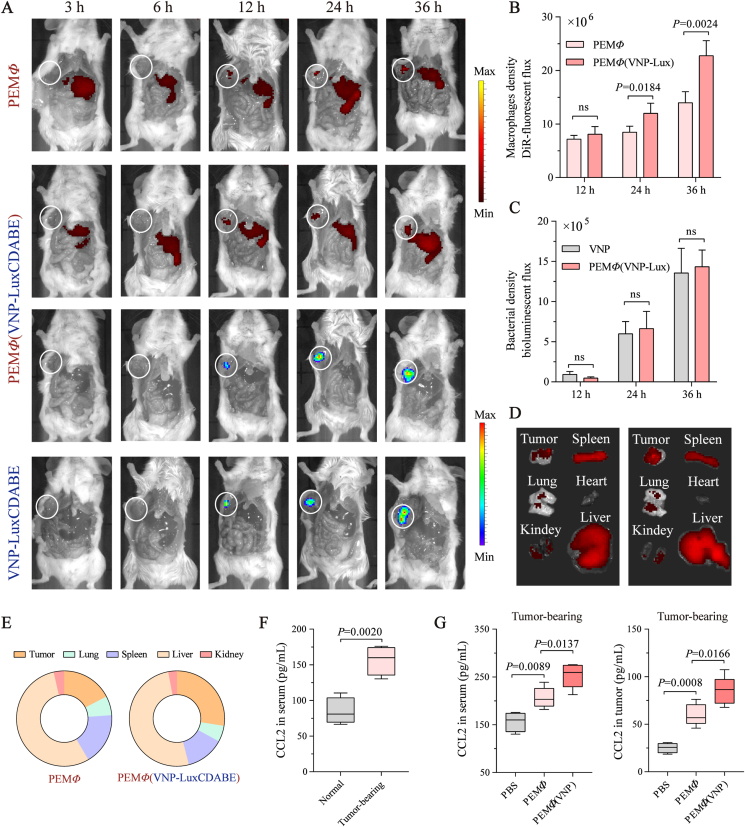
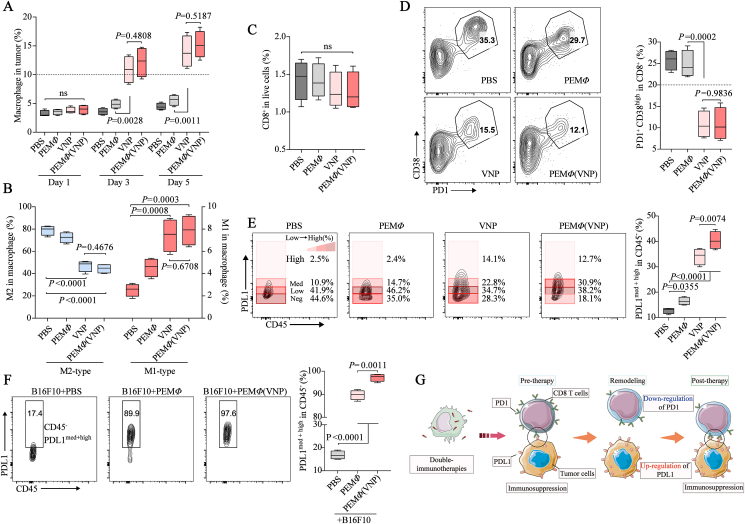
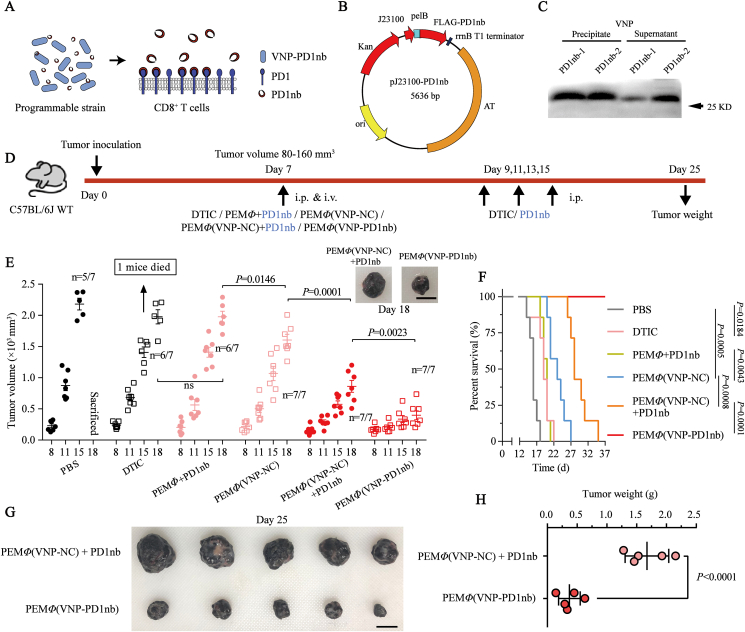
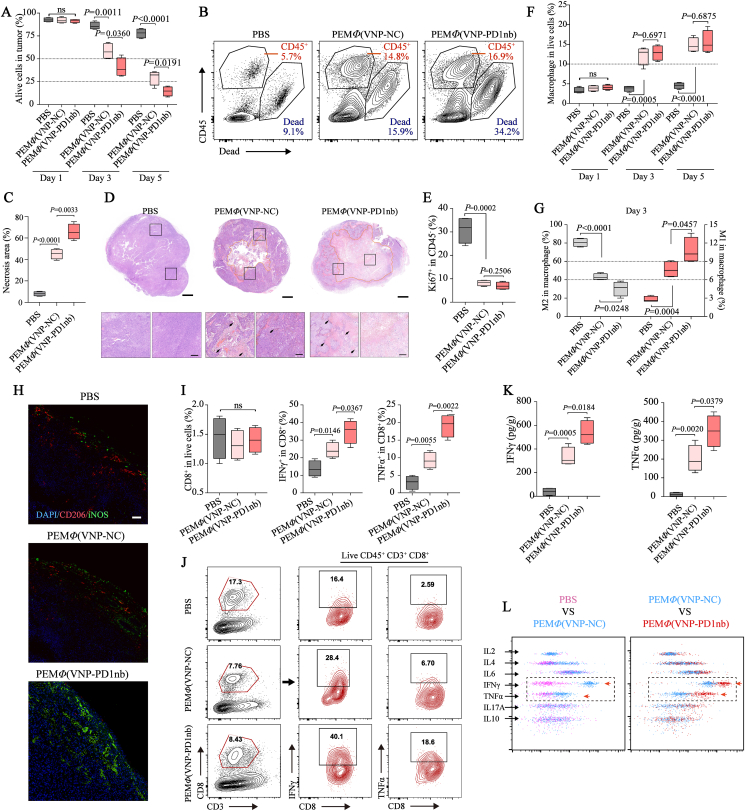
Bacterial antitumor therapy has great application potential given its unique characteristics, including genetic manipulation, tumor targeting specificity and immune system modulation. However, the nonnegligible side effects and limited efficacy of clinical treatment limit their biomedical applications. Engineered bacteria for therapeutic applications ideally need to avoid their accumulation in normal organs and possess potent antitumor activity. Here, we show that macrophage-mediated tumor-targeted delivery of VNP20009 can effectively reduce the toxicity caused by administrating VNP20009 alone in a melanoma mouse model. This benefits from tumor-induced chemotaxis for macrophages combined with their slow release of loaded strains. Inspired by changes in the tumor microenvironment, including a decrease in intratumoral dysfunctional CD8 T cells and an increase in PDL1 on the tumor cell surface, macrophages were loaded with the engineered strain VNP-PD1nb, which can express and secrete anti-PD1 nanoantibodies after they are released from macrophages. This novel triple-combined immunotherapy significantly inhibited melanoma tumors by reactivating the tumor microenvironment by increasing immune cell infiltration, inhibiting tumor cell proliferation, remodeling TAMs to an M1-like phenotype and prominently activating CD8 T cells. These data suggest that novel combination immunotherapy is expected to be a breakthrough relative to single immunotherapy.
细菌抗肿瘤疗法因其独特的特性,包括基因操作、肿瘤靶向特异性和免疫系统调节,具有巨大的应用潜力。然而,临床治疗中不可忽视的副作用和有限的疗效限制了它们的生物医学应用。用于治疗应用的工程菌理想情况下需要避免在正常器官中积累,并具有强大的抗肿瘤活性。在这里,我们表明,在黑色素瘤小鼠模型中,巨噬细胞介导的VNP20009肿瘤靶向递送可以有效降低单独施用VNP20009所引起的毒性。这得益于肿瘤诱导的巨噬细胞趋化作用及其对负载菌株的缓慢释放。受肿瘤微环境变化的启发,包括肿瘤内功能失调的CD8 T细胞减少和肿瘤细胞表面PDL1增加,巨噬细胞被加载了工程菌株VNP-PD1nb,该菌株在从巨噬细胞释放后可以表达和分泌抗PD1纳米抗体。这种新型三联免疫疗法通过增加免疫细胞浸润、抑制肿瘤细胞增殖、将肿瘤相关巨噬细胞重塑为M1样表型并显著激活CD8 T细胞来重新激活肿瘤微环境,从而显著抑制黑色素瘤肿瘤。这些数据表明,相对于单一免疫疗法,新型联合免疫疗法有望取得突破。