Department of Molecular and Cellular Physiology, Stanford University, Stanford, United States; Department of Neurology and Neurological Sciences, Stanford University, Stanford, United States; Department of Structural Biology, Stanford University, Stanford, United States; Department of Photon Science, Stanford University, Stanford, United States; Howard Hughes Medical Institute, Stanford University, Stanford, United States.
Department of Molecular and Cellular Physiology, Stanford University, Stanford, United States; Department of Neurology and Neurological Sciences, Stanford University, Stanford, United States; Department of Structural Biology, Stanford University, Stanford, United States; Department of Photon Science, Stanford University, Stanford, United States; Howard Hughes Medical Institute, Stanford University, Stanford, United States.
J Mol Biol. 2023 Jan 15;435(1):167853. doi: 10.1016/j.jmb.2022.167853. Epub 2022 Oct 13.
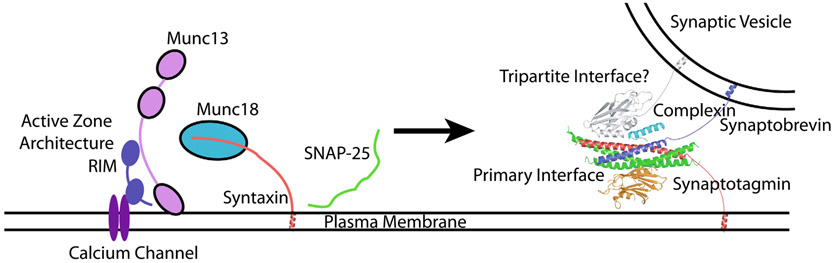
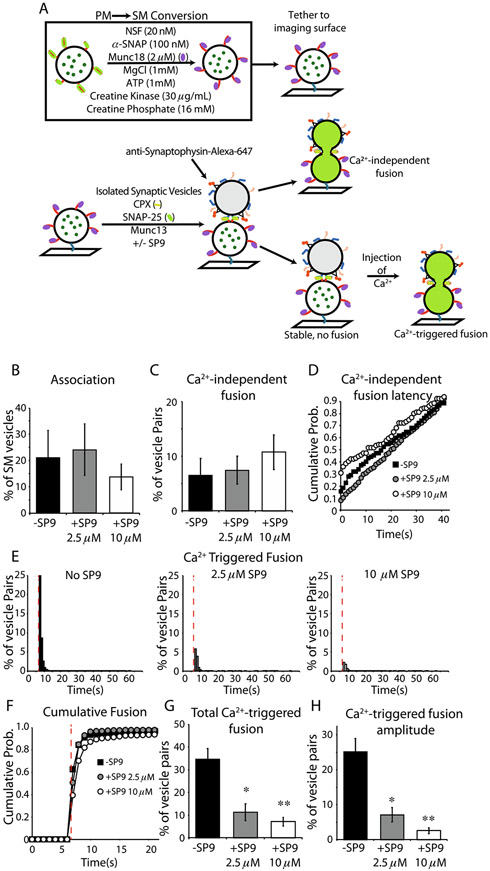
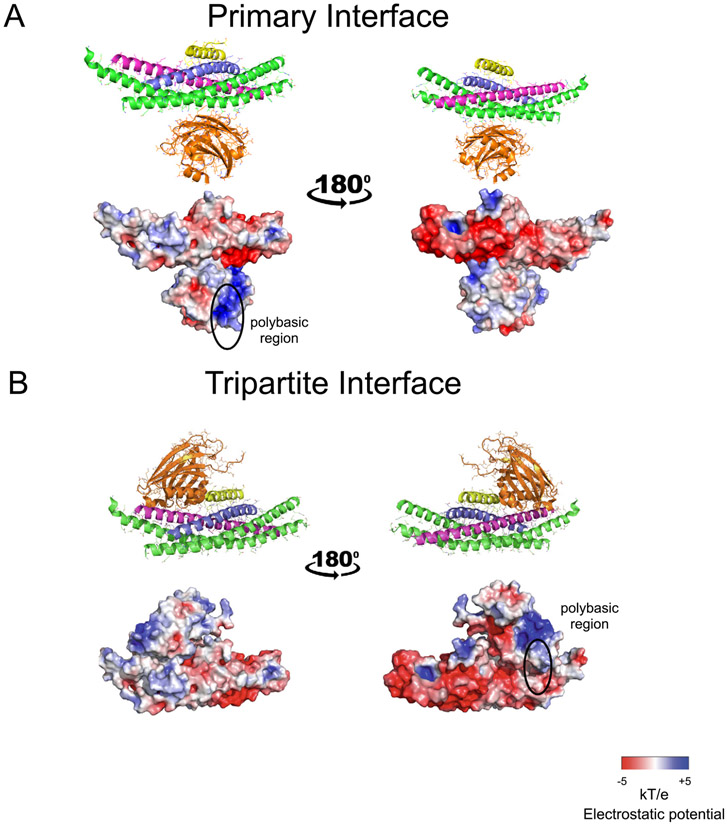
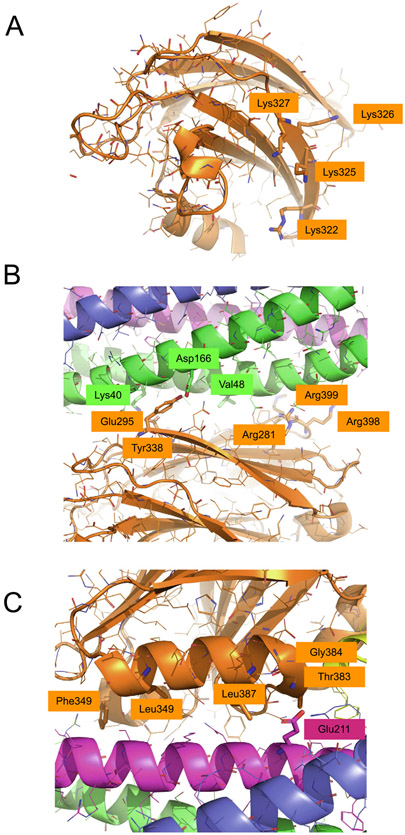
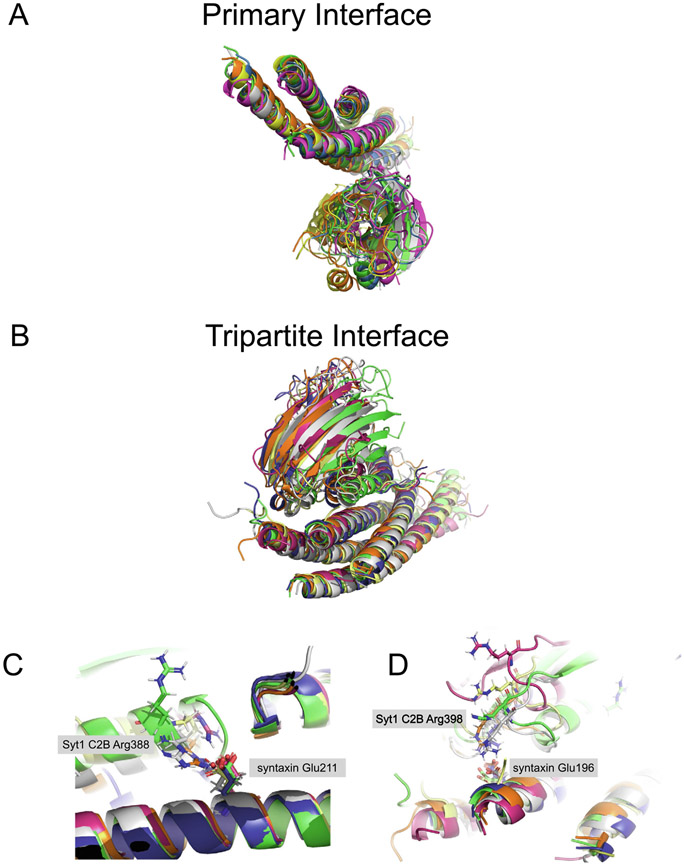
Synaptic neurotransmitter release is mediated by an orchestra of presynaptic proteins that precisely control and trigger fusion between synaptic vesicles and the neuron terminal at the active zone upon the arrival of an action potential. Critical to this process are the neuronal SNAREs (Soluble N-ethylmaleimide sensitive factor Attachment protein REceptor), the Ca-sensor synaptotagmin, the activator/regulator complexin, and other factors. Here, we review the interactions between the SNARE complex and synaptotagmin, with focus on the so-called primary interface between synaptotagmin and the SNARE complex that has been validated in terms of its physiological relevance. We discuss several other but less validated interfaces as well, including the so-called tripartite interface, and we discuss the pros and cons for these possible alternative interfaces. We also present new molecular dynamics simulations of the tripartite interface and new data of an inhibitor of the primary interface in a reconstituted system of synaptic vesicle fusion.
突触神经递质释放是由一系列的突触前蛋白介导的,这些蛋白精确地控制和触发突触小泡与神经元末梢在动作电位到达时在活性区融合。这一过程的关键是神经元 SNARE(可溶性 N-乙基马来酰亚胺敏感因子附着蛋白受体)、钙传感器突触融合蛋白、激活/调节复合物素和其他因素。在这里,我们回顾了 SNARE 复合物和突触融合蛋白之间的相互作用,重点讨论了突触融合蛋白和 SNARE 复合物之间所谓的主要界面,该界面在生理相关性方面得到了验证。我们还讨论了其他几个但验证程度较低的界面,包括所谓的三分界面,并讨论了这些可能的替代界面的优缺点。我们还展示了三分界面的新分子动力学模拟以及在突触小泡融合重建系统中主要界面抑制剂的新数据。