Department of Oncology, Wayne State University School of Medicine, Karmanos Cancer Institute, Detroit, Michigan.
Henry Ford Health System, Detroit, Michigan.
Am J Physiol Cell Physiol. 2022 Dec 1;323(6):C1624-C1632. doi: 10.1152/ajpcell.00424.2022. Epub 2022 Oct 24.
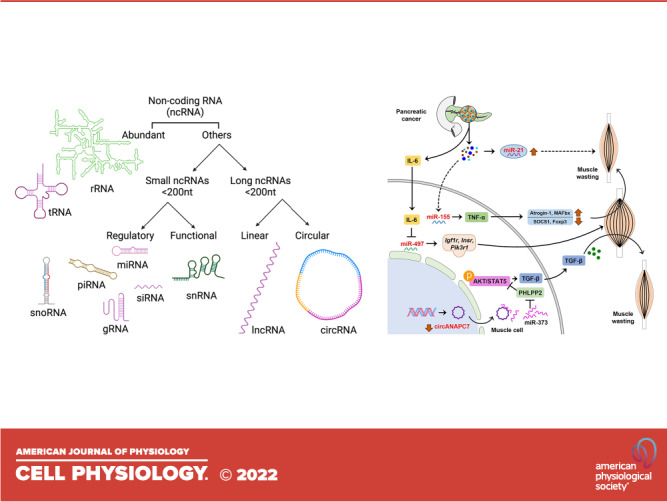
Cachexia is an acute syndrome that is very commonly observed in patients with cancer. Cachexia is the number one cause of death in patients with metastatic disease and is also the major factor for physical toxicity and financial burden. More importantly, the majority of patients with advanced-stage pancreatic ductal adenocarcinoma (PDAC) cancer undergo cachexia. Pancreatic cancer causes deaths of ∼50,000 Americans and about 400,000 people worldwide every year. The high mortality rates in metastatic PDAC are due to systemic pathologies and cachexia, which quickens death in these patients. About 90% of all patients with PDAC undergo wasting of muscle causing mobility loss and leading to a number of additional pathological conditions. PDAC-associated cancer cachexia emanates from complex signaling cues involving both mechanical and biological signals. Tumor invasion is associated with the loss of pancreatic function-induced digestive disorders and malabsorption, which causes subsequent weight loss and eventually promotes cachexia. Besides, systemic inflammation of patients with PDAC could release chemical cues (e.g., cytokine-mediated Atrogin-1/MAFbx expression) that participate in muscle wasting. Our understanding of genes, proteins, and cytokines involved in promoting cancer cachexia has evolved considerably. However, the role of epigenetic factors, particularly the role of noncoding RNAs (ncRNAs) in regulating PDAC-associated cachexia is less studied. In this review article, the most updated knowledge on the various ncRNAs including microRNAs (miRs), long noncoding RNA (lncRNAs), piwi interacting RNAs (PiwiRNAs), small nucleolar RNA (snoRNAs), and circular RNAs (circRNA) and their roles in cancer cachexia are described.
恶病质是一种常见的癌症患者急性综合征。恶病质是转移性疾病患者死亡的首要原因,也是导致身体毒性和经济负担的主要因素。更重要的是,大多数晚期胰腺导管腺癌 (PDAC) 患者都经历恶病质。胰腺癌导致每年约 5 万名美国人和全世界约 40 万人死亡。转移性 PDAC 的高死亡率归因于系统性病理和恶病质,这加速了这些患者的死亡。大约 90%的 PDAC 患者都会出现肌肉消耗,导致活动能力丧失,并导致许多其他病理状况。PDAC 相关的癌症恶病质源于涉及机械和生物信号的复杂信号提示。肿瘤侵袭与胰腺功能丧失引起的消化紊乱和吸收不良有关,这会导致随后的体重减轻,并最终促进恶病质。此外,PDAC 患者的全身炎症会释放化学提示(例如,细胞因子介导的 Atrogin-1/MAFbx 表达),这些提示参与肌肉消耗。我们对促进癌症恶病质的基因、蛋白质和细胞因子的理解已经有了很大的发展。然而,表观遗传因素的作用,特别是非编码 RNA(ncRNAs)在调节 PDAC 相关恶病质中的作用,研究得还比较少。在这篇综述文章中,描述了各种 ncRNAs(包括 microRNAs (miRs)、长链非编码 RNA (lncRNAs)、piwi 相互作用 RNA (PiwiRNAs)、小核仁 RNA (snoRNAs) 和环状 RNA (circRNA))的最新知识及其在癌症恶病质中的作用。