Joint BioEnergy Institute, Emeryville, CA, USA.
Biological Systems and Engineering Division, Lawrence Berkeley National Laboratory, Berkeley, CA, USA.
Microbiome. 2022 Oct 25;10(1):183. doi: 10.1186/s40168-022-01377-x.
Plant cell walls are interwoven structures recalcitrant to degradation. Native and adapted microbiomes can be particularly effective at plant cell wall deconstruction. Although most understanding of biological cell wall deconstruction has been obtained from isolates, cultivated microbiomes that break down cell walls have emerged as new sources for biotechnologically relevant microbes and enzymes. These microbiomes provide a unique resource to identify key interacting functional microbial groups and to guide the design of specialized synthetic microbial communities.
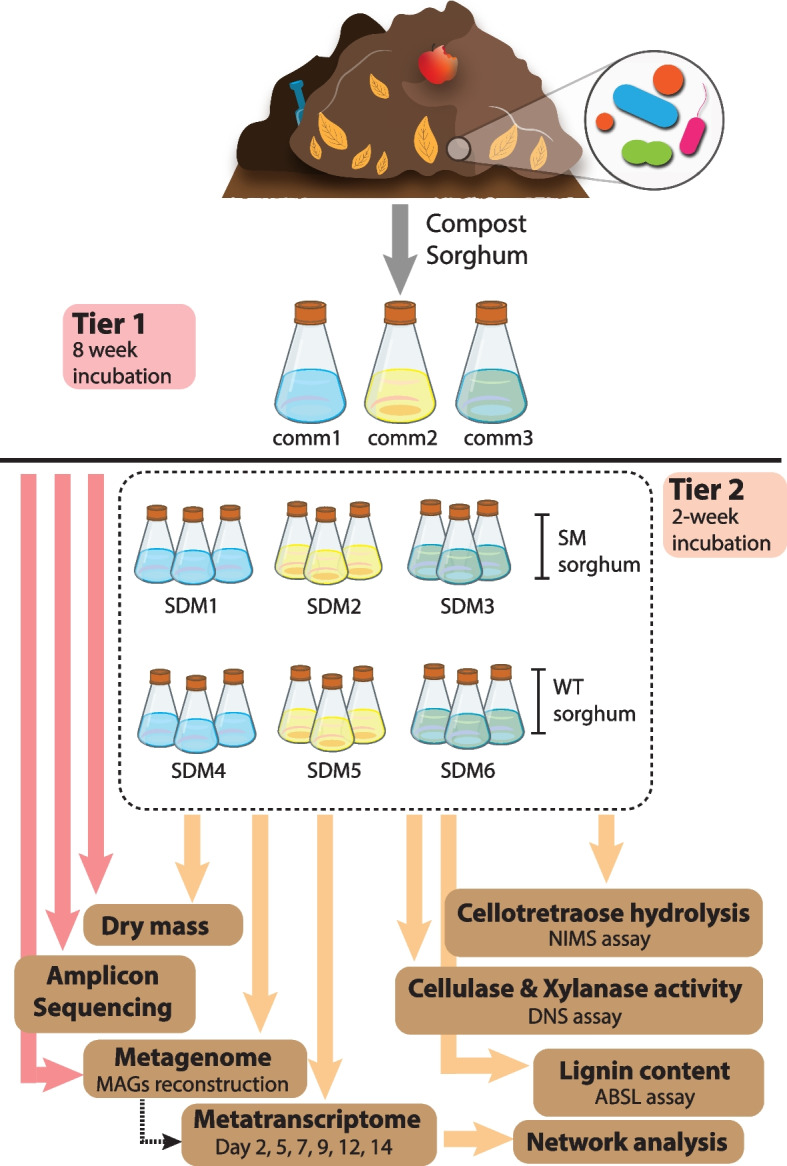
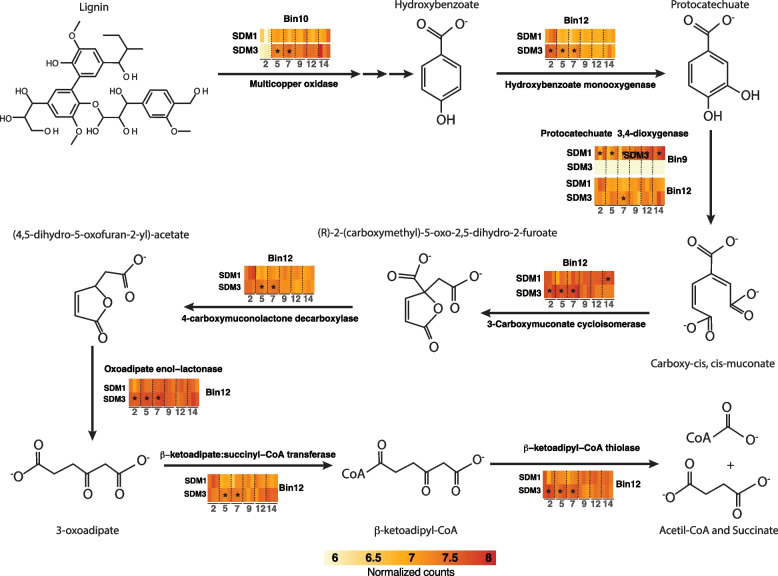
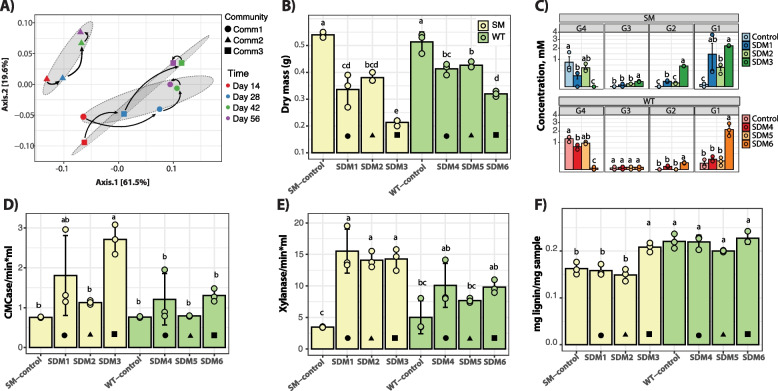
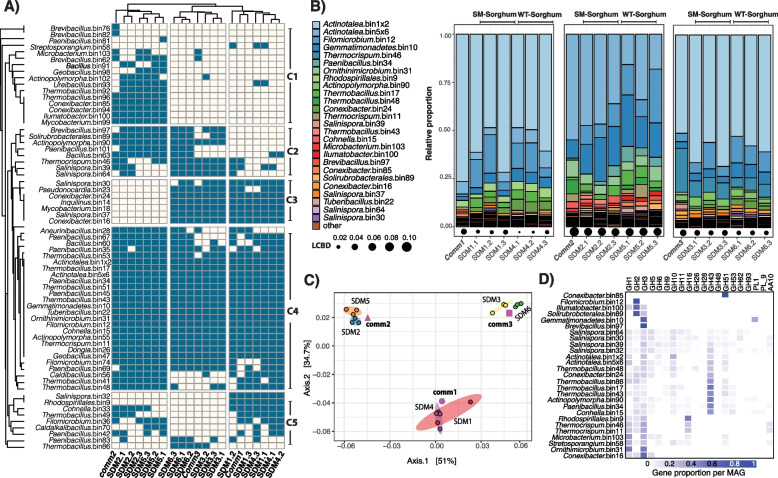
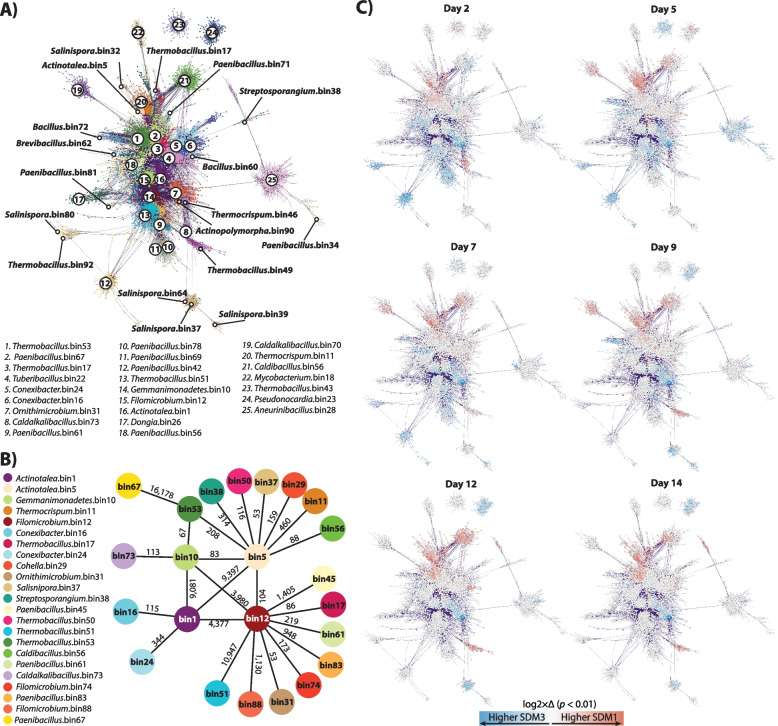
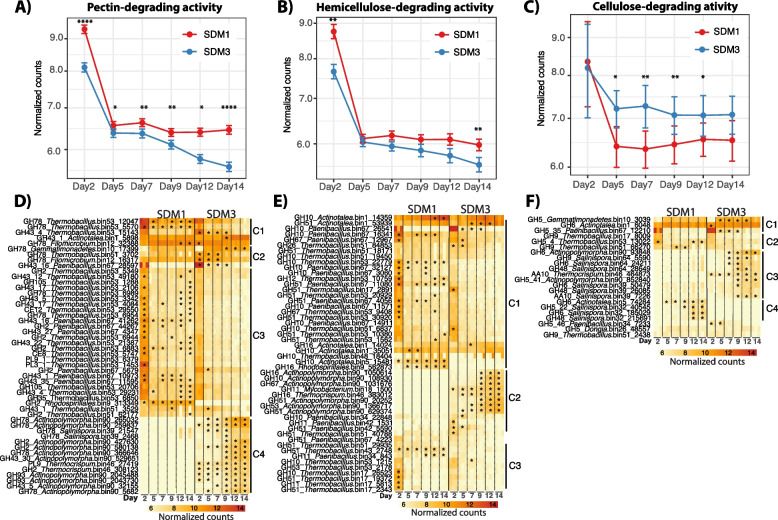
To establish a system assessing comparative microbiome performance, parallel microbiomes were cultivated on sorghum (Sorghum bicolor L. Moench) from compost inocula. Biomass loss and biochemical assays indicated that these microbiomes diverged in their ability to deconstruct biomass. Network reconstructions from gene expression dynamics identified key groups and potential interactions within the adapted sorghum-degrading communities, including Actinotalea, Filomicrobium, and Gemmatimonadetes populations. Functional analysis demonstrated that the microbiomes proceeded through successive stages that are linked to enzymes that deconstruct plant cell wall polymers. The combination of network and functional analysis highlighted the importance of cellulose-degrading Actinobacteria in differentiating the performance of these microbiomes.
The two-tier cultivation of compost-derived microbiomes on sorghum led to the establishment of microbiomes for which community structure and performance could be assessed. The work reinforces the observation that subtle differences in community composition and the genomic content of strains may lead to significant differences in community performance. Video Abstract.
植物细胞壁是交织结构,难以降解。原生和适应的微生物群落特别擅长植物细胞壁的解构。尽管大多数对生物细胞壁解构的理解都是从分离物中获得的,但能够降解细胞壁的培养微生物群落已成为生物技术相关微生物和酶的新来源。这些微生物群落为识别关键相互作用的功能微生物群体提供了独特的资源,并为专门的合成微生物群落的设计提供了指导。
为了建立一个评估比较微生物组性能的系统,我们从堆肥接种物中平行培养了高粱( Sorghum bicolor L. Moench )上的微生物组。生物量损失和生化分析表明,这些微生物组在解构生物质的能力上存在差异。基于基因表达动态的网络重建确定了适应高粱降解群落中的关键群体和潜在相互作用,包括 Actinotalea 、 Filomicrobium 和 Gemmatimonadetes 种群。功能分析表明,微生物组经历了与解构植物细胞壁聚合物的酶相关的连续阶段。网络和功能分析的结合突出了纤维素降解放线菌在区分这些微生物组性能方面的重要性。
在高粱上两级培养堆肥衍生的微生物组,建立了可以评估群落结构和性能的微生物组。这项工作强化了这样一种观察结果,即群落组成和菌株基因组内容的细微差异可能导致群落性能的显著差异。视频摘要。